
Eat Your Way Through Seoul: 12 Delicious Korean Street Foods & Where to Find Them
Hit the streets of Seoul for a taste of these mouth-watering delicacies!

Almost every turn in Seoul brings another reason to stop and eat. One street might tempt you with skewers of fish cake simmering in hot broth, while the next fills the air with the scent of frying pancakes, grilled meat and caramelising sugar.
The city’s food scene extends far beyond conventional roadside stalls. Traditional markets, dedicated food alleys and tiny restaurants also serve many of the snacks and casual dishes that have kept Seoulites coming back for generations.
From spicy rice cakes and fish-shaped pastries to chewy noodles and glossy fried chicken, here are 12 Korean street foods and market favourites to hunt down on your next trip to Seoul.
1. Tteokbokki (Spicy rice cake)
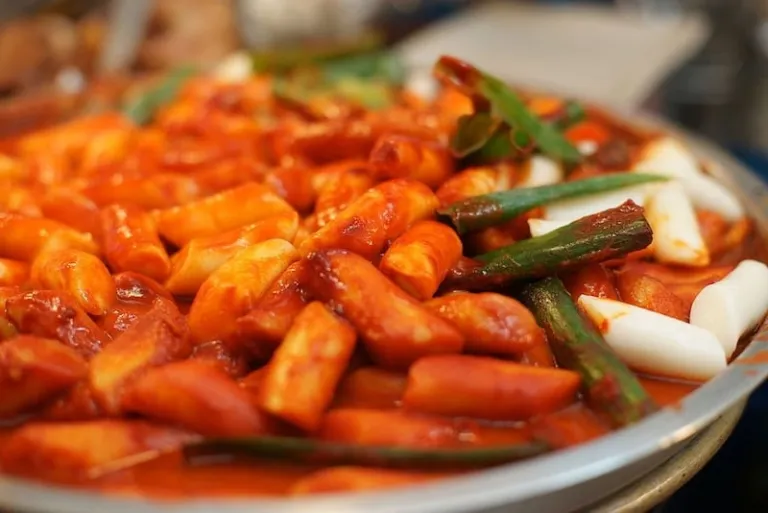
Image credit: Popo le Chien
For those who love spicy food, tteokbokki is a must-try delicacy in Seoul! It consists of cylindrical Korean rice cakes that are soaked and seasoned with a vibrant chilli sauce. While tteokbokki can be found in Gwangjang Market and Myeongdong Shopping Street, you can take your street food binge up a notch by heading to Tteokbokki Town in Sindang, known for having some of the best tteokbokki eateries in Seoul. Check out Mabongnim Halmeoni Tteokbokki for their generous helpings of soft and chewy tteokbokki.
If you feel like preparing this snack at home, you can grab instant tteokbokki packs from Korean convenience stores as well!
2. Hotteok (Stuffed pancake)
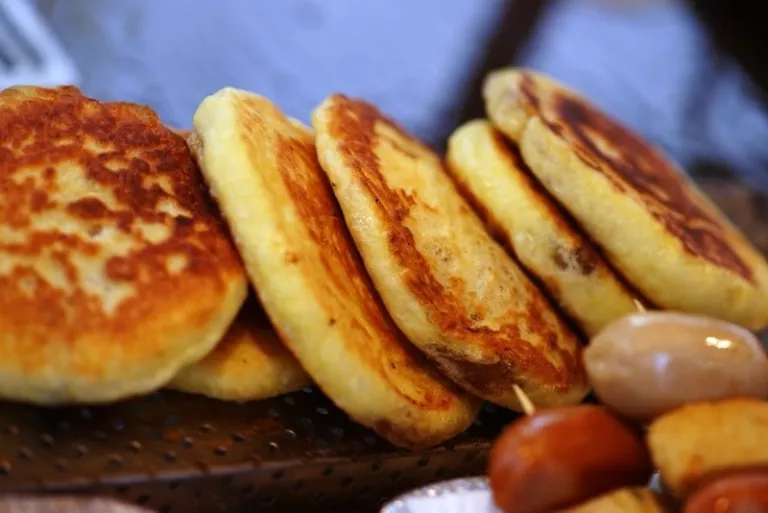
Image credit: Republic of Korea
Few things beat biting into a freshly fried hotteok on a cold day. The dough is crisp and golden on the outside, while the centre is usually filled with a molten mixture of brown sugar, cinnamon and chopped nuts.
Savoury versions are also worth seeking out, with fillings such as japchae, vegetables or seeds. Hotteok is especially common during autumn and winter, although some established stalls sell it throughout the year.
Exploring Bukchon Hanok Village or Samcheong-dong? Keep an eye out for a busy hotteok stall and eat yours carefully. That sugary centre can be dangerously hot when it first comes off the griddle!
3. Odeng (Fish cake)
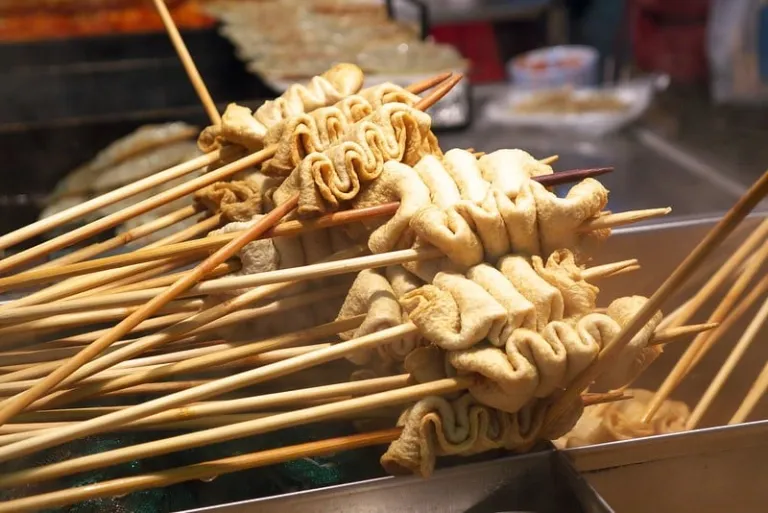
Image credit: travel oriented
Ranking high among our priorities for a street food binge in Seoul is eomuk or odeng. These fish cakes are skewered on a wooden stick and left to boil in a broth. Luckily, you won’t have to make too much of an effort to find them, as they can be seen everywhere, from the hawker stalls and food trucks in commercial districts like Myeongdong to traditional Korean markets like Gwangjang Market and Namdaemun Market.
4. Bungeoppang (Fish-shaped bread)
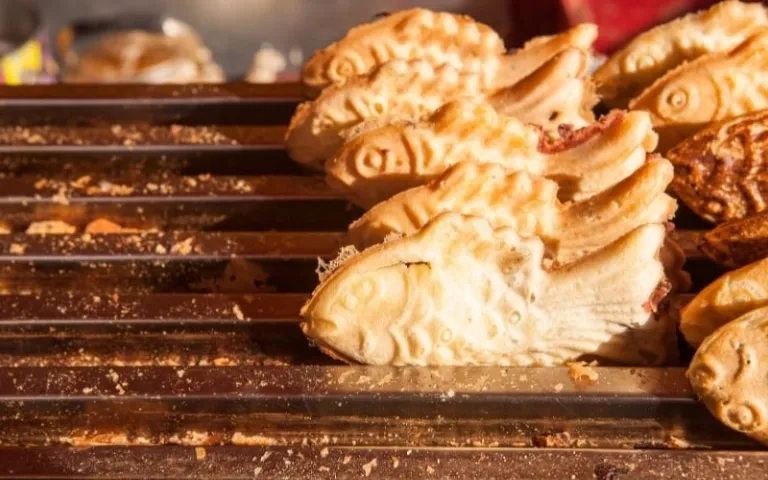
Despite its fishy appearance, bungeoppang is a sweet pastry traditionally filled with red bean paste. Batter is poured into a fish-shaped mould, filled and cooked until the outside turns golden and lightly crisp.
You may also come across versions filled with custard, chocolate, sweet potato or cheese. Bungeoppang is most closely associated with Korea’s colder months, when street vendors begin appearing beside subway stations, markets and shopping districts.
Namdaemun Market is a good place to begin looking, but availability changes with the season. Spot a queue gathering around a steaming fish-shaped mould? That is usually your cue to join it.
5. Gyeranppang (Egg bread)
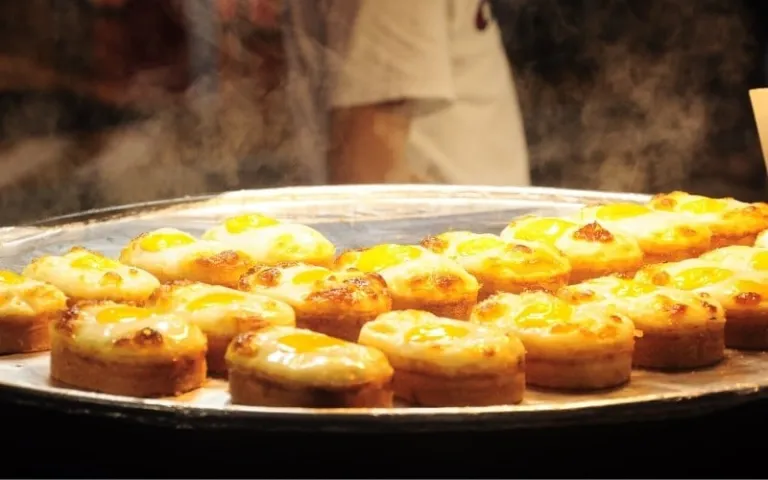
Who can look at gyeranppang without being reminded of Myeongdong Shopping Street? Truly, it’s hard to say what makes egg bread look more tempting: their muffin-like appearance, or the glistening, freshly cooked egg on top that’s just begging to be eaten! Either way, gyeranppang makes a fantastic breakfast snack for when you’re just heading out to start your day. Better yet, pop these goodies into your mouth to boost your energy and protein between shopping trips in Seoul!
Also read: 12 Must-Try Korean Street Foods in Myeongdong
6. Pajeon (Savoury pancake)
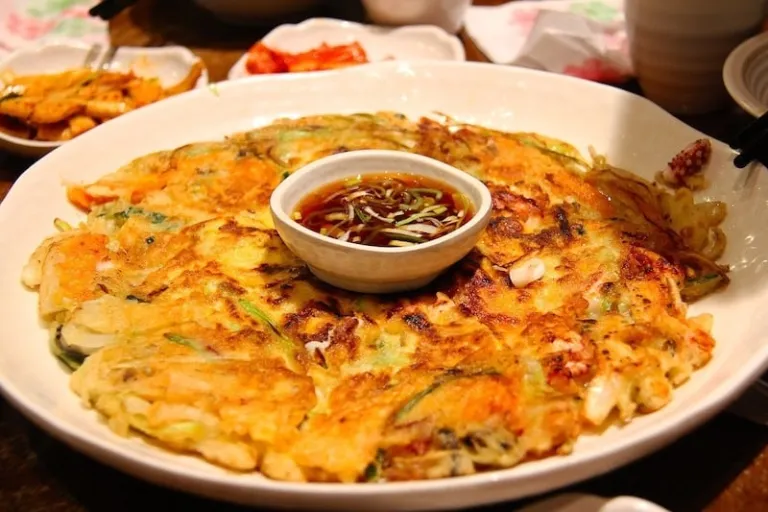
Crispy around the edges and satisfying enough to share, jeon refers to a broad family of ingredients coated in batter or egg before being pan-fried.
Pajeon is made with spring onions, while haemul pajeon adds seafood such as squid, prawns or shellfish. Other popular varieties include kimchi jeon, gochu jeon and bindaetteok, although the latter is a separate mung bean pancake rather than a type of pajeon.
For a full-on pancake feast, head to Hoegi Station Pajeon Alley, where restaurants serve oversized plates best enjoyed with a bowl of makgeolli. Gwangjang Market is another excellent stop for freshly fried bindaetteok.
7. Kimbap (Seaweed rice rolls)
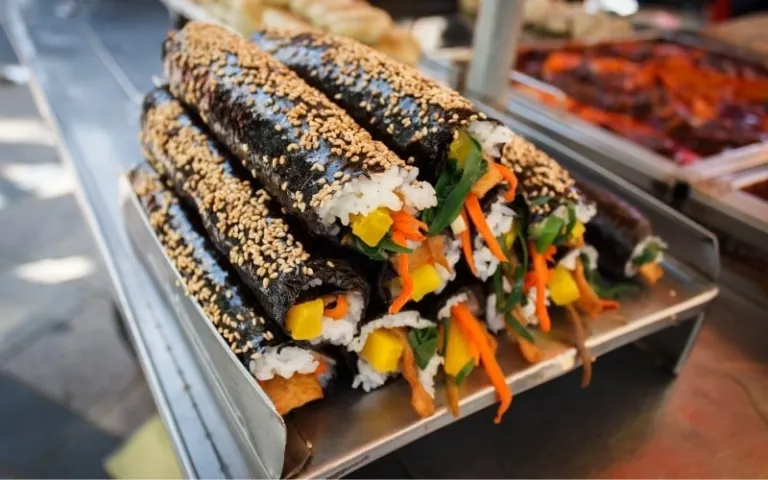
Another convenient market snack is gimbap, made by rolling seasoned rice and fillings inside a sheet of roasted seaweed. Common ingredients include vegetables, egg, pickled radish, fish cake and meat, although every shop seems to have its own combination.
At Gwangjang Market, look out for mayak gimbap. These smaller rolls are typically filled with carrot, spinach and pickled radish before being served with a punchy mustard dipping sauce.
Their nickname suggests that they are dangerously addictive, and after finishing one plate, you may understand why.
8. Jokbal (Pig’s trotters)
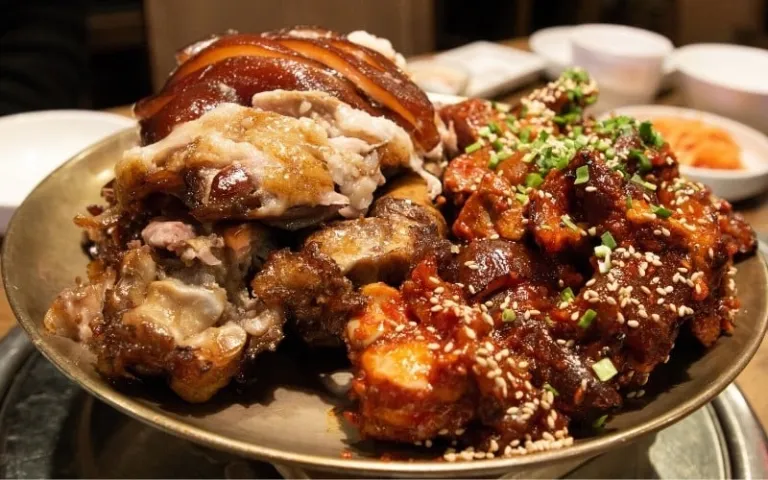
Jokbal consists of pig’s trotters slowly braised in a seasoned mixture that may include soy sauce, garlic, ginger and aromatic spices. The finished meat is glossy, tender and usually sliced before being served with lettuce, garlic, dipping sauces and side dishes.
For a lively market experience, visit Gongdeok Market’s Jokbal Alley, where several restaurants serve enormous platters made for sharing. Jokbal also pairs especially well with soju, making this a satisfying stop for anyone curious about Korean drinking culture.
Another established option is Manjok Ohyang Jokbal near City Hall Station, known for preparing its pork with a fragrant five-spice blend.
Also read: 15 Korean Dishes to Try That You Always See in K-Dramas
9. Yangnyeom tongdak (Korean fried chicken)
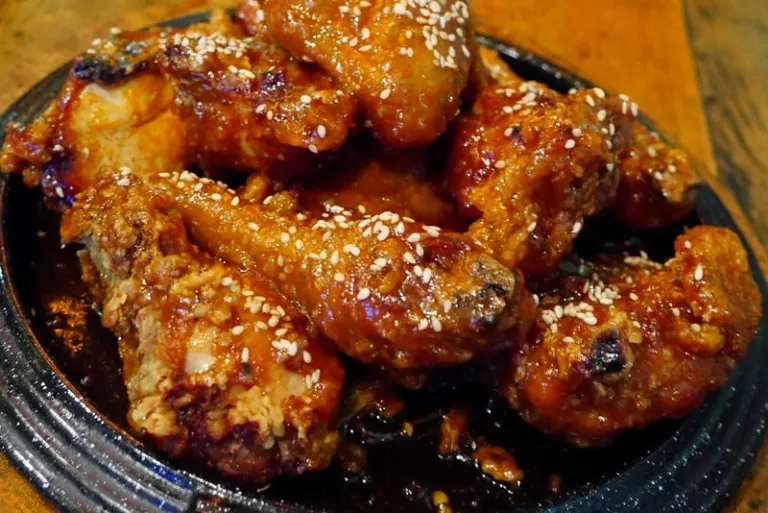
Image credit: travel oriented
Craving fried chicken without committing to an entire bucket? Look for dakgangjeong or cup chicken, which turns bite-sized pieces of fried chicken into an easy snack you can carry around Seoul.
Dakgangjeong is coated in a sticky sweet-and-spicy glaze, sometimes with nuts or seeds scattered over the top. Cup chicken may also include rice cakes, potato pieces or different sauces, depending on the vendor.
You can find versions around markets, university neighbourhoods and busy shopping districts such as Myeongdong and Hongdae. Order a small cup for a quick snack, or grab a larger serving and enjoy it with an ice-cold beer.
Also read: [Updated 2020] Top Korean Celebrity Restaurants Every Hallyu Fan Must Know!
10. Japchae (Stir-fried glass noodles with mixed vegetables)
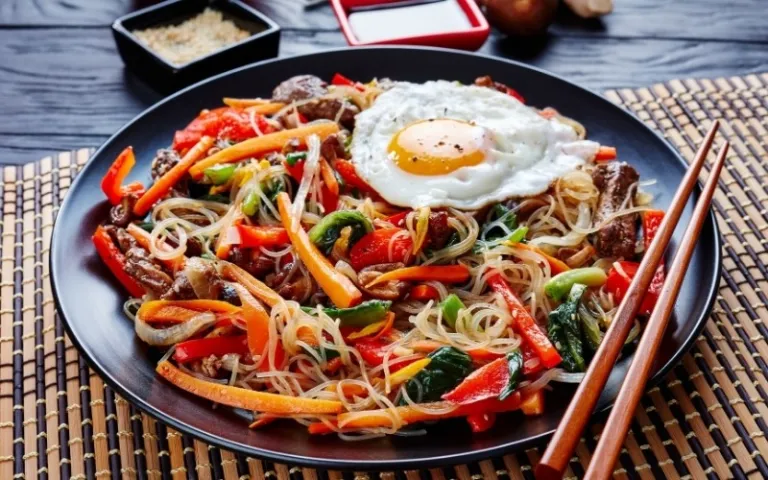
Japchae is a classic Korean dish produced by stir-frying dangmyeon, which are chewy and slippery glass noodles that are made of potato starch. Ingredients include stir-fried vegetables and assorted toppings, such as strips of egg, carrots, mushrooms, spinach, and marinated slices of beef, topped with sesame seeds. The result is both savoury and slightly sweet. Help yourself to this colourful and balanced meal at the go-to place of Korean street food in Seoul: Gwangjang Market.
11. Mandu (Dumplings)
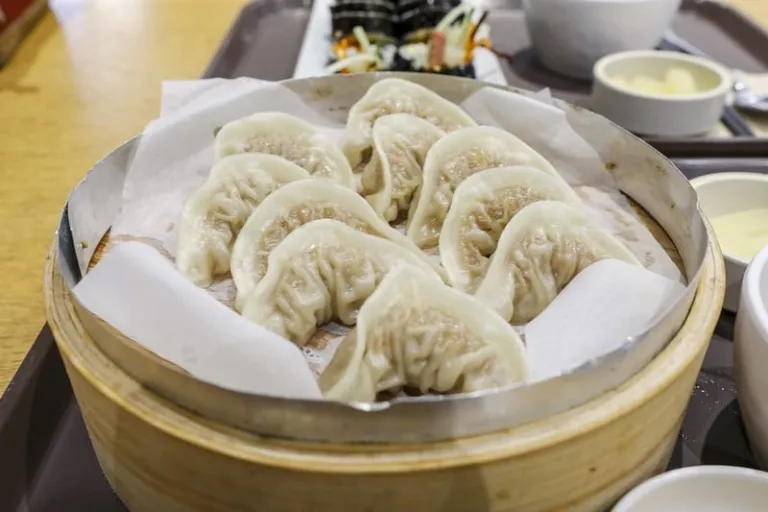
Image credit: bryan…
No food crawl around Seoul is complete without mandu. These Korean dumplings may be stuffed with pork, beef, tofu, kimchi, vegetables or glass noodles before being steamed, boiled or pan-fried.
Markets such as Namdaemun and Gwangjang offer plenty of casual options, but travellers looking for a sit-down meal can head to Myeongdong Kyoja. Operating since 1966, the famous restaurant keeps its menu short and specialises in comforting bowls of kalguksu alongside generously filled steamed mandu.
The service is quick, but resist the temptation to bite into your dumplings immediately. They arrive piping hot.
12. Kalguksu (Knife-cut noodles)
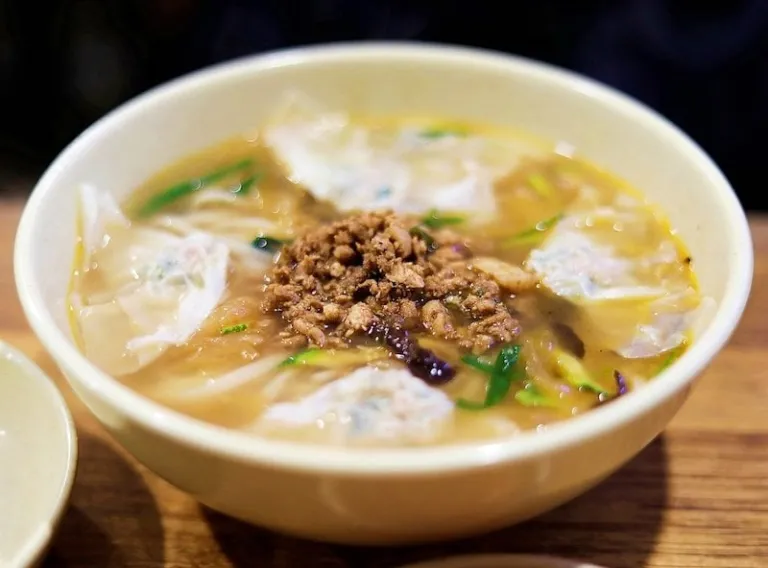
A steaming bowl of kalguksu is perfect when you need something more substantial than a snack. Its name translates to “knife noodles”, referring to dough that is rolled flat and sliced into strands before being cooked in broth.
At Gwangjang Market, Gohyang Kalguksu gained international attention after its owner, Cho Yonsoon, appeared in Netflix’s Street Food: Asia. Pull up a seat and watch the noodles being rolled and cut by hand before disappearing into a comforting bowl of broth.
The stall remains extremely popular, so arrive earlier in the day if you hope to avoid the longest queues or missing out after the noodles sell out.
Whether you are following the crowds through Gwangjang Market, warming up with winter snacks beside a subway station or sharing pancakes and makgeolli in Hoegi, Seoul makes it almost impossible to remain hungry for long.
Come with an empty stomach, carry some cash for smaller stalls and avoid planning every meal too strictly. Half the fun is following the aroma of something sizzling and discovering your next favourite Korean snack by accident.

About Author

Tiffany wrote articles on travel, food, and pop culture for TripZilla. As she plans her next adventure, she enjoys writing about the coolest places to stay around the world and where to find them.
Recommended Reads
6 Epic Train Journeys Starting from Singapore: To Bangkok, Korea & Even Europe
Cruises & Land Journeys
Unexplored Korea: Scenic Cultural Cities of Suncheon and Yeosu
Culture & Heritage