
Is South Korea Truly The Perfect Destination for Solo Travel?
South Korea’s calling to all solo travellers.

Travelling alone can feel liberating, intimidating and exciting all at once. Choosing the right destination makes all the difference, especially when it comes to getting around, finding things to do and feeling comfortable without a travel companion.
South Korea ticks many of those boxes. Its cities are connected by efficient transport, solo-friendly activities are easy to find and travellers can move between historic neighbourhoods, mountain trails, shopping districts and coastal destinations without arranging a complicated itinerary.
Whether you are planning your first solo holiday or simply looking for somewhere new to explore independently, here is why South Korea deserves a place near the top of your list.
1. South Korea has tons of activities geared towards solo travellers
One of the best parts of travelling alone is having complete control over your schedule. You can spend an entire afternoon exploring a museum, change your plans at the last minute or eat your way through a traditional market without negotiating with anyone else.
South Korea provides plenty of experiences that work just as well alone as they do with company.
Meet other travellers
Travelling solo does not mean spending the entire trip by yourself.
Seoul, Busan, Jeju and other major destinations have hostels and guesthouses with shared lounges, organised activities and communal spaces where travellers can meet. Some properties arrange walking tours, group dinners or nightlife outings, although programmes vary between accommodations.
Neighbourhoods such as Hongdae and Itaewon in Seoul also have lively international communities, cafés, bars and events where meeting other travellers feels relatively natural.
Just remember to check recent accommodation reviews before booking, particularly when the social atmosphere is an important part of your stay.
Explore South Korea’s natural scenery
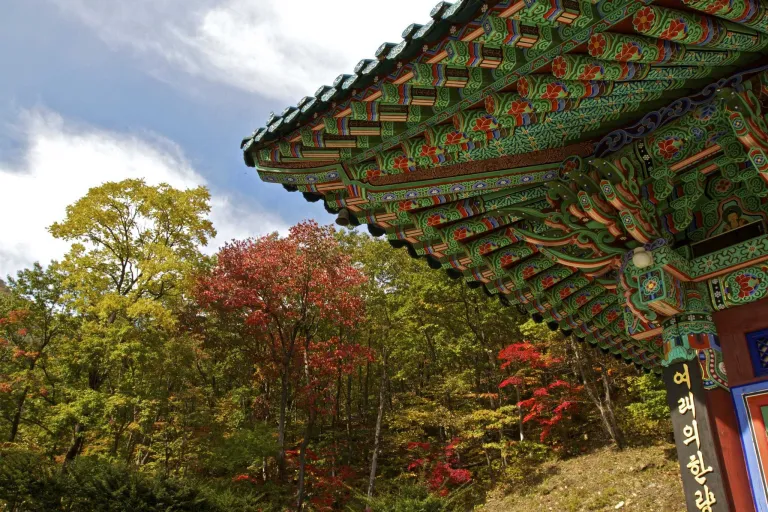
Image credit: Chris Campbell
South Korea’s mountainous landscapes make it a rewarding destination for travellers who prefer walking trails to busy shopping streets.
Bukhansan National Park can be reached from Seoul, while Seoraksan National Park offers dramatic peaks and forest scenery in Gangwon State. On Jeju Island, Hallasan rises from the centre of the island and provides several hiking routes of varying lengths and difficulty.
Many popular trails are clearly marked, but conditions can change according to the season. Snow, heavy rain, heat and trail closures may affect access, particularly on higher or more demanding routes.
Check current conditions before setting off, wear suitable shoes and begin longer hikes early. Solo hikers should also share their plans with someone and avoid unfamiliar trails after dark.
Discover palaces, markets and traditional neighbourhoods
South Korea’s cultural attractions are generally easy to explore independently.
In Seoul, solo travellers can visit Gyeongbokgung Palace, walk through the alleys of Ikseon-dong or explore the food stalls and fabric shops of Gwangjang Market.
Bukchon Hanok Village offers views of traditional Korean houses, although it remains a residential area rather than an open-air museum. Visitors should keep noise to a minimum and follow current tourist access restrictions around its busiest streets.
Beyond the capital, destinations such as Gyeongju, Jeonju and Andong offer further opportunities to experience historic architecture, traditional food and Korean cultural heritage.
Guided tours are widely available for travellers who want more historical context, but they are not essential for visiting most major attractions.
Enjoy South Korea’s café and shopping culture
Spending time alone in a café is completely normal in South Korea.
From elaborate themed cafés to small neighbourhood coffee shops, there are plenty of places where solo travellers can pause between activities without feeling out of place.
Shopping districts are equally easy to explore independently. Myeongdong is known for beauty products and fashion, while Seongsu has become popular for cafés, pop-up stores and contemporary retail concepts. Busan’s Nampo-dong and Seomyeon offer their own mix of shopping, food and entertainment.
Pop-up events and store line-ups change frequently, so treat social media recommendations as inspiration rather than a permanent guide.
Eat your way through the country
South Korea’s food culture can present one small challenge for solo travellers: some dishes and restaurants are designed for groups.
Korean barbecue restaurants may require a minimum order of two portions, while larger dishes such as dakgalbi, hotpot and shared stews are often easier to enjoy with company.
However, travelling alone does not mean missing out.
Markets and street-food areas are ideal for sampling smaller portions of dishes such as tteokbokki, gimbap, mandu and hotteok. Cafeteria-style restaurants, noodle shops, soup restaurants and convenience stores also make eating alone straightforward.
Look for dishes such as bibimbap, samgyetang, seolleongtang, kalguksu and dwaeji gukbap, which are commonly served as individual meals.
Some restaurants now specifically cater to solo diners with counter seating or individual grills. Searching for the Korean term honbap, meaning eating alone, can help you find suitable recommendations.
2. South Korea’s transport system is ideal for solo travellers
South Korea’s extensive transport network is one of the strongest reasons to visit alone.
In Seoul, Busan, Daegu and other major cities, subways and buses connect most neighbourhoods and attractions. Signs and announcements frequently include English, particularly on urban rail systems.
A rechargeable transport card such as T-money can be used across much of the country on subways and buses, as well as in selected taxis and convenience stores.
Seoul also offers short-term versions of its Climate Card for visitors who expect to use eligible public transport frequently. However, its coverage does not include every route or transport service, so compare it with a standard pay-as-you-go card before buying.
For navigation, local apps such as Naver Map and KakaoMap are generally more reliable in South Korea than relying entirely on Google Maps. Papago can help translate signs, menus and basic conversations.
Travelling between cities
High-speed KTX trains connect Seoul with destinations such as Busan, Daegu, Daejeon and Gyeongju’s nearby Singyeongju Station.
Intercity and express buses provide access to many places not directly served by high-speed rail. Domestic flights can also be useful for routes to Jeju Island.
Train tickets can sell out during weekends, public holidays and major travel periods such as Seollal and Chuseok. Reserve longer journeys in advance when your itinerary depends on a particular departure.
Solo travellers also have the advantage of being able to take whichever single seat remains available when popular services are nearly full.
Getting around by taxi
Taxis are widely available in cities, and ride-hailing platforms can reduce the language barrier by allowing travellers to enter the destination in advance.
Have the Korean address ready when possible, particularly for smaller guesthouses or businesses. Outside major cities, drivers may speak limited English.
Late-night transport can become less frequent after subway services end, so check the final train or bus time before staying out.
3. South Korea ranks as one of the safest countries
South Korea is widely regarded as a relatively safe destination, and many travellers feel comfortable walking through its cities independently.
Public areas are generally well-lit, convenience stores open late and transport networks remain busy into the evening. Seoul was ranked the world’s top city for solo travel in Tripadvisor’s 2025 Travellers’ Choice awards, with its public transport and combination of historic and modern attractions highlighted among its strengths.
However, no destination is completely risk-free.
Keep track of your belongings in crowded markets, nightlife districts and public transport. Avoid leaving drinks unattended, remain aware of your surroundings and do not share your accommodation details with strangers.
Travellers heading out at night should know how they will return before the subway closes. It is also wise to avoid becoming heavily intoxicated when alone, even in areas that feel safe.
Solo female travellers may receive unwanted attention in nightlife areas or encounter situations that feel uncomfortable. Trust your instincts, leave when something does not feel right and seek help from staff, police or other people nearby.
Save important emergency numbers
South Korea’s main emergency numbers are:
112 for police
119 for fire and ambulance services
1330 for the Korea Travel Helpline and tourism assistance
The 1330 service provides travel information and interpretation support in multiple languages.
Save the address of your accommodation in Korean and keep a copy of your passport details and insurance information somewhere secure.
Overcome the language barrier
English is commonly used at major airports, railway stations, hotels and popular attractions. However, communication may become more difficult in smaller restaurants, rural areas and less tourist-oriented towns.
Translation apps such as Papago can help with menus, signs and simple conversations. Download the Korean language pack in advance in case mobile reception is weak.
Learning a few basic phrases also goes a long way. Even simple expressions such as annyeonghaseyo for hello and gamsahamnida for thank you can make everyday interactions smoother.
Stay connected
A local SIM card, eSIM or portable Wi-Fi device makes solo travel considerably easier.
Reliable mobile data allows you to navigate, translate text, check transport schedules and contact your accommodation without depending on public Wi-Fi.
Arrange connectivity before arriving or purchase a suitable option at the airport. Make sure your phone is unlocked if you plan to use a local SIM.
So, is South Korea ideal for solo travel?
For many travellers, the answer is yes.
South Korea combines convenient public transport, varied attractions and a generally comfortable environment for exploring independently. You can spend one day hiking above Seoul, the next discovering a historic city and the evening eating street food beside a busy market.
There are still challenges. Some restaurants are designed for groups, the language barrier becomes more noticeable outside major cities and popular attractions can require advance reservations.
None of these should discourage a solo trip. With a transport card, reliable mobile data and a little preparation, South Korea is one of the easier destinations in East Asia to navigate alone.
The greatest advantage is the freedom to experience it your way. Fill the itinerary with palaces and museums, chase cafés and K-pop landmarks or leave the cities behind for mountain trails and coastal views.
South Korea gives solo travellers plenty of space to choose their own adventure without ever feeling completely disconnected.

About Author

Being a street photographer and travel writer, Stuart is always searching for the perfect shot that tells a story. He's got his heart set on adventuring around Asia using South Korea as his base and creates content to help aspiring photographers document their own travels through the continent.