Cecelia Chang
When Southeast Asians think of travelling in South Korea, Seoul usually tops the list. But when it comes to the winter season, Gangwon deserves a spot on your radar! Especially if you’re experiencing snow for the first time. Home to ski resorts, snow-covered mountains, and charming coastal towns, Gangwon offers a slower, more scenic winter escape that feels worlds away from the city.
I’ll be sharing my 3-day Gangwon winter itinerary, along with practical tips on how to get around the region, and a must-bring winter packing list tailored for Singaporeans and Southeast Asians who may be unfamiliar with sub-zero temperatures.
Also read: I Explored Gyeongnam & Jeju Island – Here Are 6 Things I Love Most
Want to enjoy a true Korean winter without the crowds of Seoul? This guide is for you!
3-Day Gangwon winter itinerary
Day 1: Arrival in Chuncheon → Chuncheon Myeongdong Dakgalbi Street → Gongjicheon Recreation Area
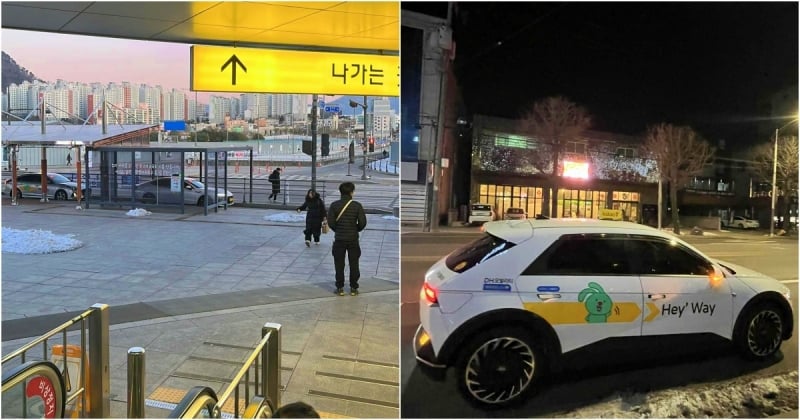
After arriving at the Incheon Airport, we took the train to Seoul Station, then to Chuncheon Station. The entire journey takes about three hours. Learn from our mistake and take the express train from the airport to Seoul! It saves plenty of time.
Unfortunately (and very painfully), our flight was delayed by six hours, so it was already evening by the time we arrived in Chuncheon. Right outside the station, we spotted the Gangwon Tourist Taxi booth, where we had pre-booked a three-hour tour for 30,000 won. A lifesaver after such a long day of travel!
Book your Gangwon Tourist Taxi here
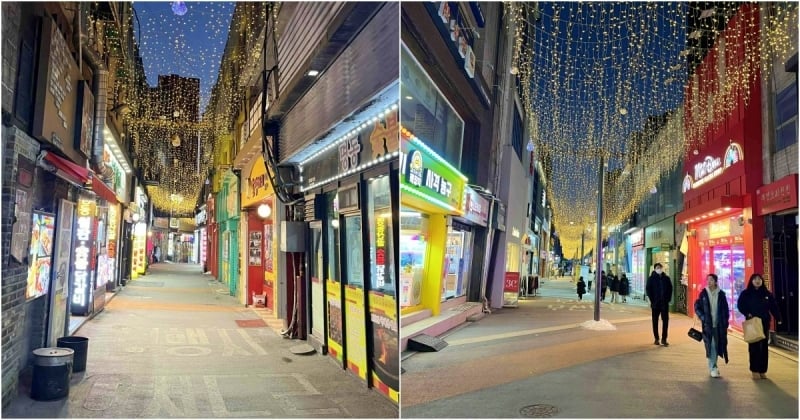
First stop of our Gangwon itinerary? It’s Chuncheon Myeongdong Dakgalbi Street, a lively stretch lined with glowing signboards and sizzling dakgalbi restaurants. Why dakgalbi specifically, you may ask? Well. Chuncheon is the birthplace of the popular dakgalbi (also known as the traditional South Korean spicy stir-fried chicken) after all!
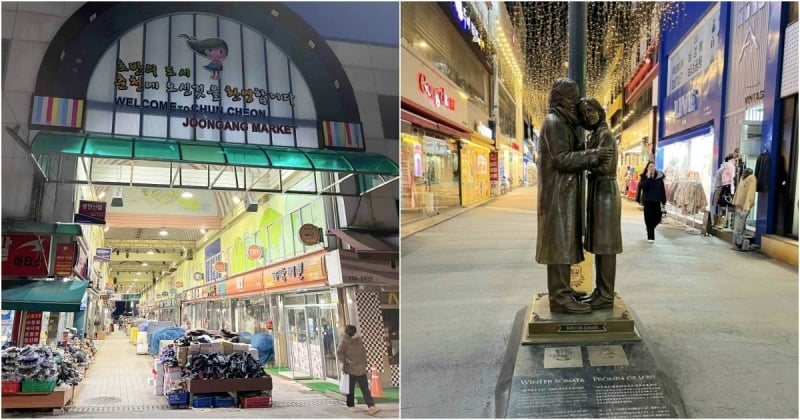
Just a few minutes’ walk from the street is Chuncheon Jungang Market. It was already closed by the time we arrived. Nevertheless, in the morning, the market comes alive with stalls selling hanbok (traditional Korean clothing), everyday apparel, fresh ingredients, and local eats. You’ll also find restaurants specialising in noodles, blood sausage soup, and other comforting Korean dishes.
We also spotted a statue dedicated to the famous Winter Sonata drama along the way. How romantic!
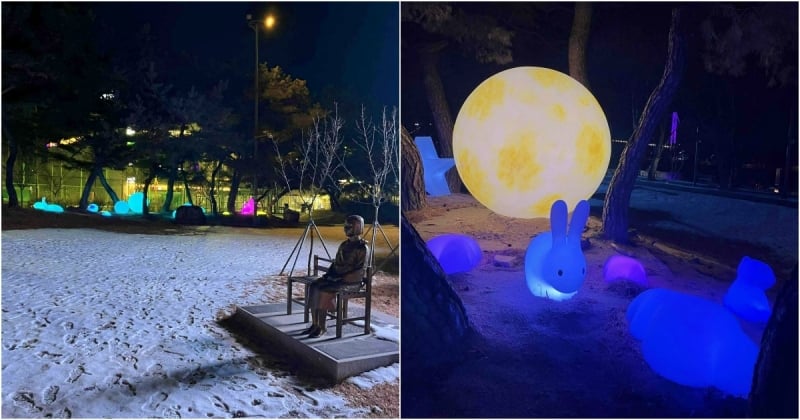
Next, we headed to Gongjicheon Recreation Area, home to the Gongjicheon Sculpture Park and the scenic Gongjicheon Stream. The area was dotted with adorable rabbit and moon decorations, making it a surprisingly cute photo spot. With temperatures dipping to minus 10 degrees and below, the ground was already blanketed in snow. We stayed for a brief while before making our way to dinner.
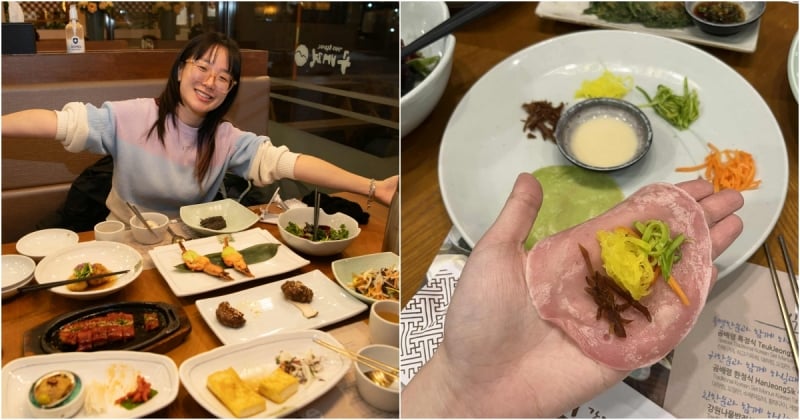
Have you ever heard of “medicine food”? Even though I have been to South Korea several times, this was my first time having such a unique style of cuisine. Gombaeryeong, a local restaurant in Chuncheon, specialises in Korean table d’hôte meals with a strong focus on health, featuring fresh mountain plants.
The flavours were noticeably different from what you’d find at typical Korean restaurants, as the dishes are seasoned using traditional methods, making the entire meal feel both healthy and memorable.
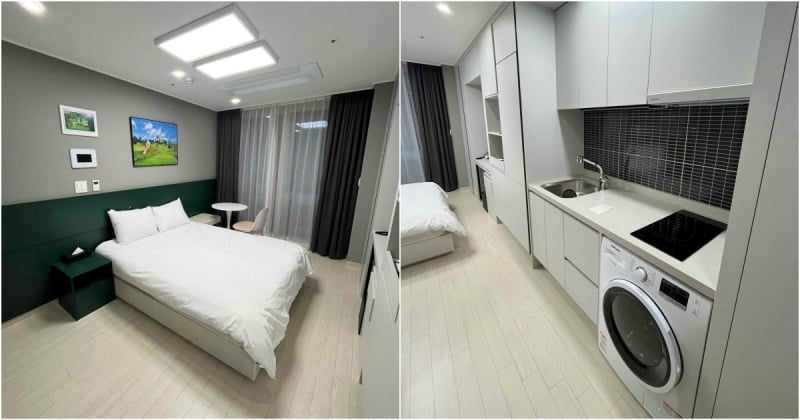
After dinner, the Gangwon Tourist Taxi took us back to our hotel for the next two nights: Bella Stay Hotel. The room was spacious and well-equipped, with thoughtful amenities, like a washing machine right inside the room. Still, my favourite part had to be the cosy bed and the heated toilet seat. It feels like the warm hug I didn’t know I needed in the middle of winter.
Day 2: Vivaldi Ski Park → Alpaca World → Hongcheon River Fishing and Ggong Ggong Festival → Hongcheon Fine Arts Museum
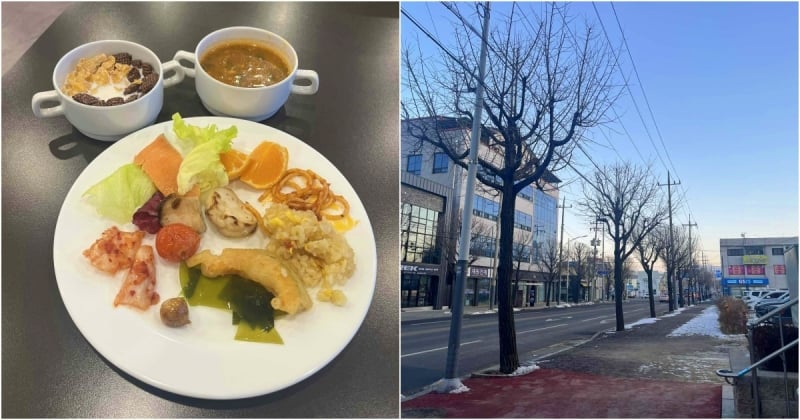
Day two of our Gangwon winter itinerary was an absolute highlight! After having a simple breakfast at the hotel, we set off for the renowned Vivaldi Ski Park.
If you’re anything like me, craving snow fun but don’t know how to ski or simply don’t plan to, this place has you covered. Vivaldi Ski Park is home to Snowy Land, South Korea’s largest snow-themed park designed purely for winter fun.
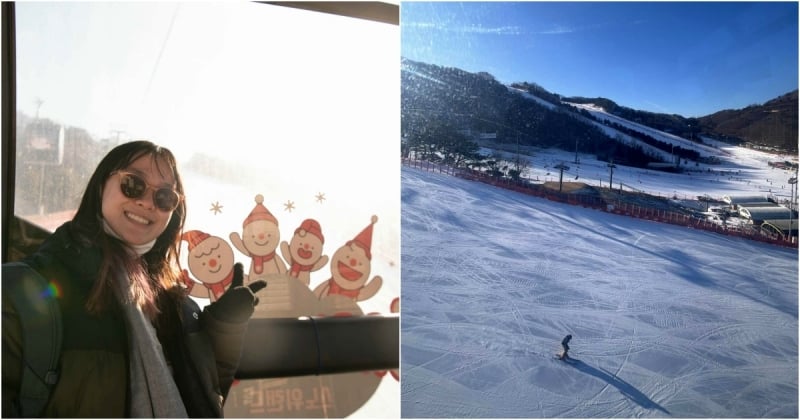
Shimmering snow under the sunlight… so this is what winter in Gangwon looks like. I was completely mesmerised as we rode the gondola up the mountain, taking in sweeping views of families skiing down the slopes below. Honestly, I’m already telling myself that I have to try skiing the next time I’m here.
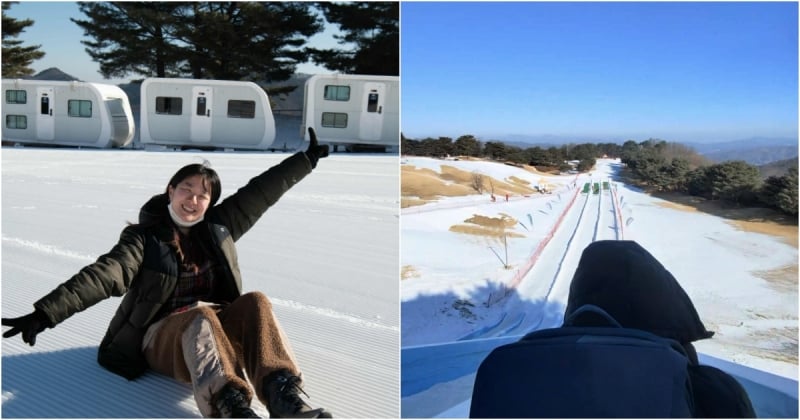
Snowy Land features a range of well-maintained sledding hills, from traditional sleds to tube sleds and even rafting-style ones. And before you think this is just another kid-friendly snow playground…think again. We tried out the tube sled from the highest point (there are two height options), and it was extremely breathtaking!
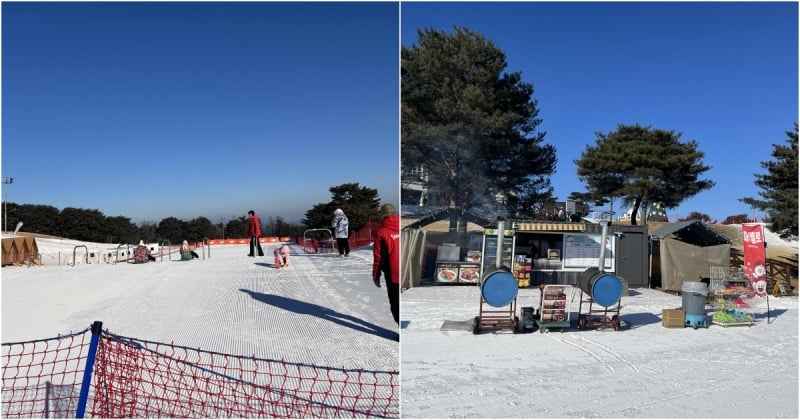
P.S. There are also stalls selling hot food like chicken skewers and baked sweet potatoes, with a seating area for you to enjoy a break from the cold. Don’t forget to stop by Snowy Cafe and grab a hot drink, too!
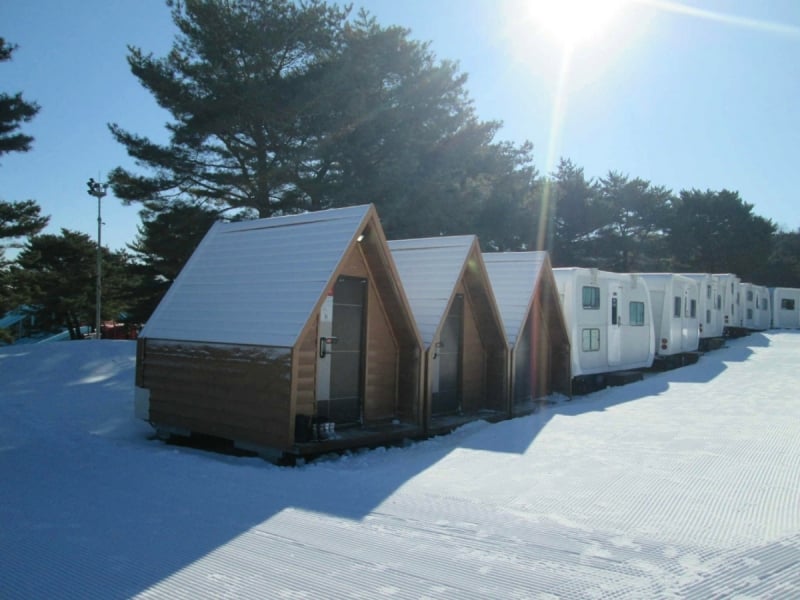
As reluctant as I was, we had to say goodbye to Snowy Land at Vivaldi and move on to our next stop.
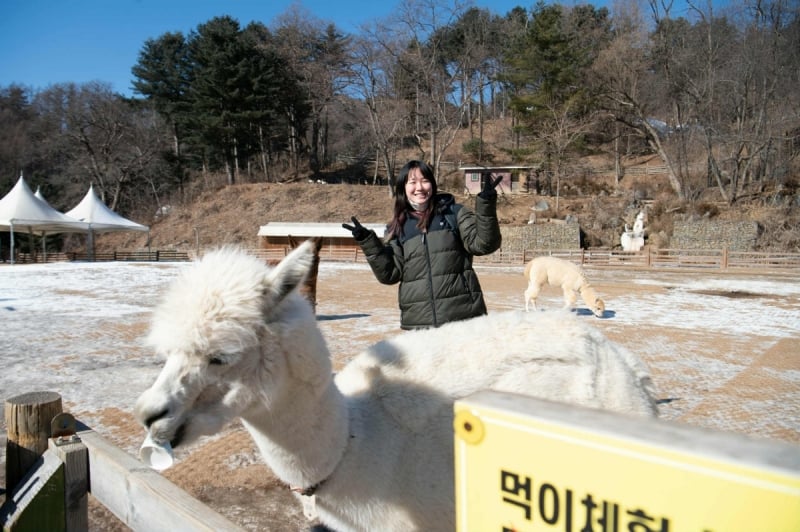
Situated in Hongcheon, Alpaca World is another must-visit spot for your winter Gangwon itinerary. The alpacas roam freely around the park, so don’t be surprised if one casually wanders past you!
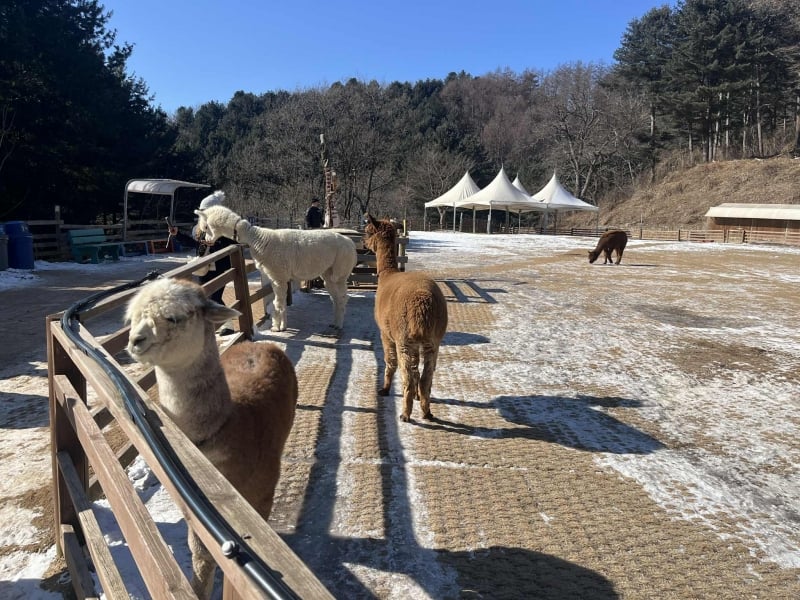
Visitors can purchase alpaca coins for a fun feeding experience and have a chance to get up close with these fluffy cuties for photos. Petting adorable alpacas in the chilly winter air, what’s not to love?
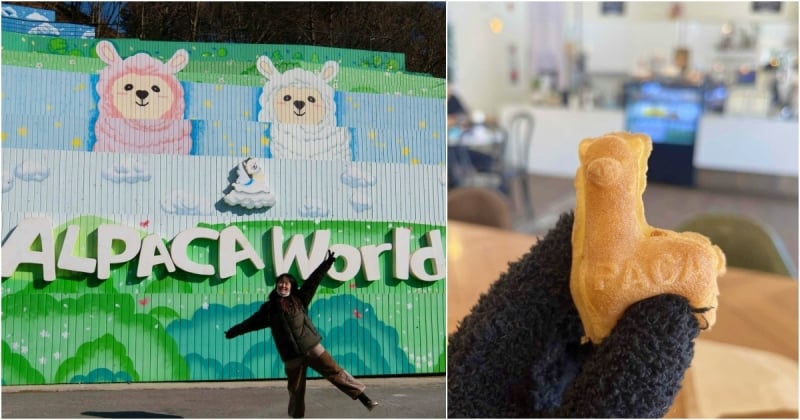
TripZilla tip: If you’re ever at Alpaca World, please promise me to get the alpaca cakes from the cafe. It’s one of the best desserts ever!
Just a short drive from Alpaca World is the Hongcheon River Fishing and Ggong Ggong Festival, low-key my favourite part of the entire trip! “Ggong Ggong” means solid, or the sound you make when knocking on something solid (like ice!), which perfectly captures the spirit of this winter festival. Held every January, the event’s biggest draw is a chance to catch ginger-fed trout through the frozen river.
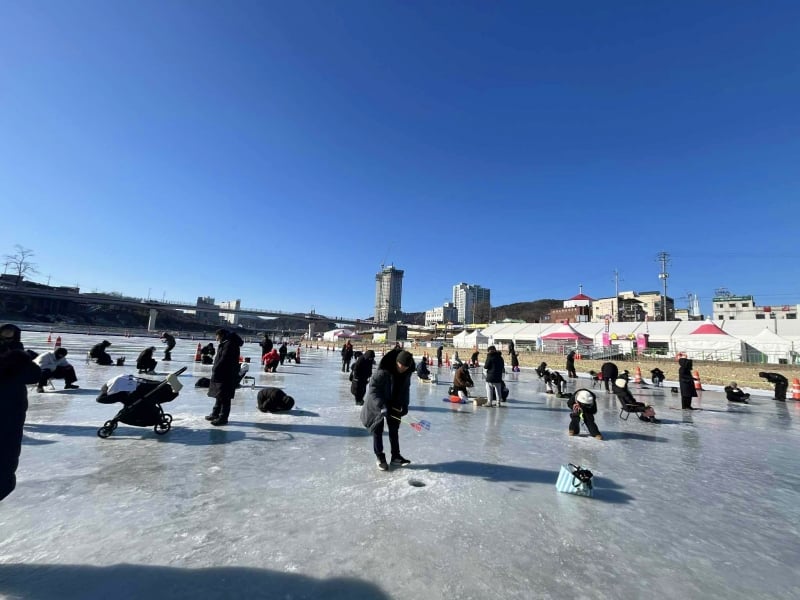
As one of South Korea’s leading winter festivals, ice fishing is only the beginning. Beyond that, visitors can try traditional Korean ice sledding, tube sledding, indoor fishing, and even explore an indoor local market. It’s basically a winter playground!
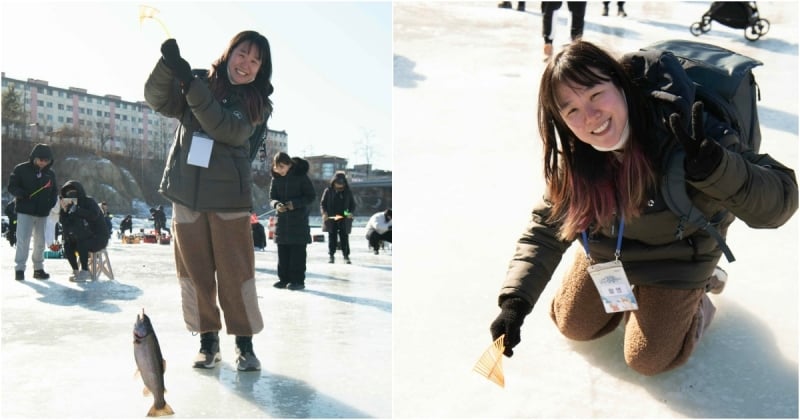
It was my first time ice fishing, and it felt super cool (quite literally, too)! After a fair amount of patience, we finally caught a fresh trout straight from the river. You can choose to bake it or eat it raw. We went for the latter, and it was soooo divine! No surprise there, these trout were fed with ginger, after all!
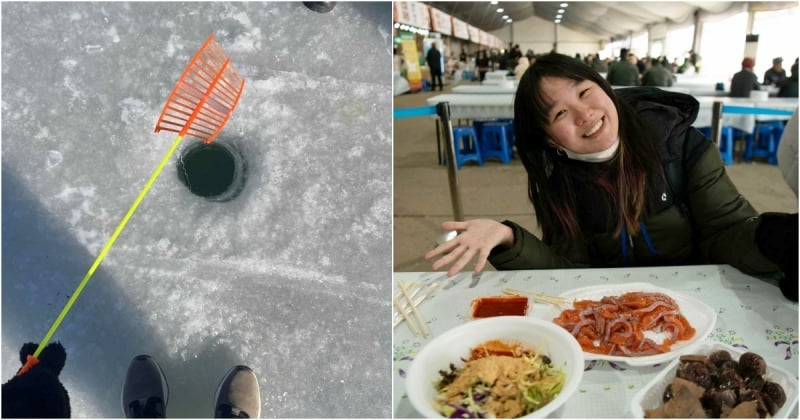
Fun fact: The river ice here is 25cm to 30cm thick! And fishing holes are manually drilled early each morning.
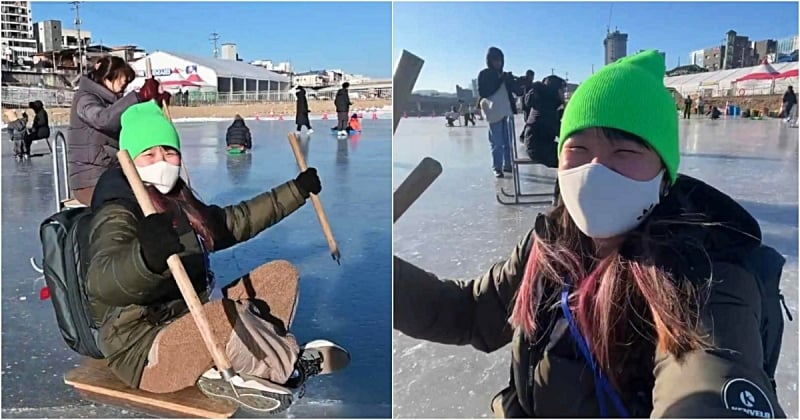
Another unforgettable experience was traditional Korean ice sledding, known as eoreum-sseolmae. You sit on a wooden board and use two poles to push yourself forward. To be frank, it’s quite hard to get moving. My pro tip? Get someone to push you from behind! It’s way more fun that way.
Tube sledding on ice is also a one-of-a-kind thrill, with momentum that easily rivals snow sledding! Good things eventually came to an end, and we proceeded to the Hongcheon Art Museum afterwards.
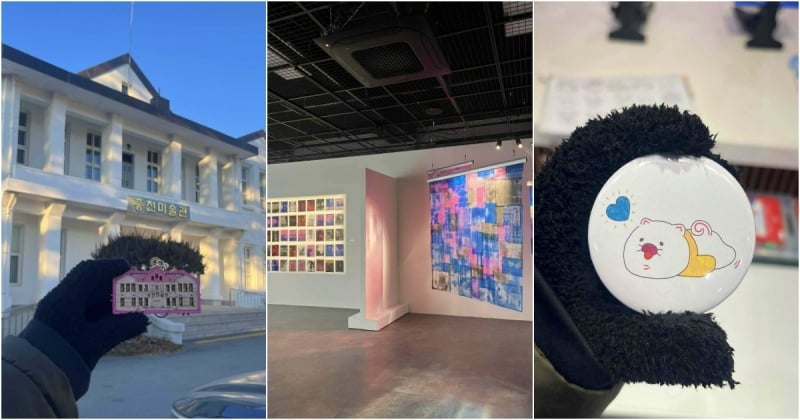
The museum is a quiet space that offers a nice change of pace after a day out in the cold. While it isn’t large, there’s a simple interactive corner where visitors can colour a design on paper, and the staff will help turn it into a free pin or mirror to take home.
That evening, we returned to Chuncheon for dinner. And since Chuncheon is best known for dakgalbi, can you guess what we had? Dakgalbi pizza. Yes.
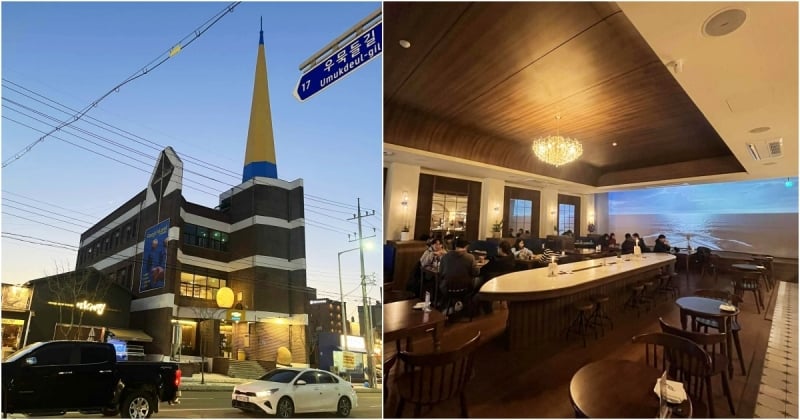
We dined at Gamja Island, a gorgeous restaurant that stands out both inside and out. From the street, the building catches your eye immediately with its bold yellow-and-blue cone-shaped rooftop. Step inside, and you’re greeted by a warm, classic interior. It’s ideal for date nights or a cosy gathering with friends.
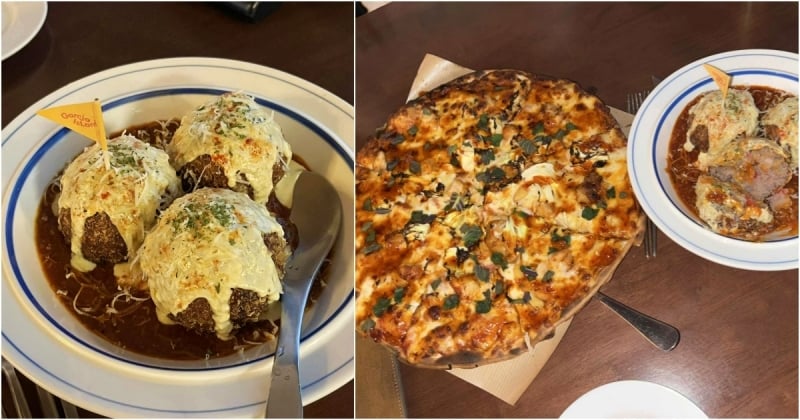
But what actually caught my heart wasn’t how aesthetically pleasing the space is, but the scrumptious food! We ordered the dakgalbi pizza and the Floating Gamja Island, one of the house specials, and both tasted just as good as they looked. The latter was my personal favourite: a potato bursting with flavour, wrapped in a perfectly crispy outer layer. So, so good.
What’s more, Gamja Island specialises in craft beers with quirky flavours like potato, peach, and corn. Cheers to a wonderful Day 2 in Gangwon!
Day 3: Chuncheon → Sokcho Beach → Sokcho Eye → Abai Village → Sokcho Tourist & Fishery Market
We bid farewell to Chuncheon and departed for Sokcho in the early morning. It’s an entirely different side of this Gangwon winter itinerary, and I was looking forward to how it would unfold.
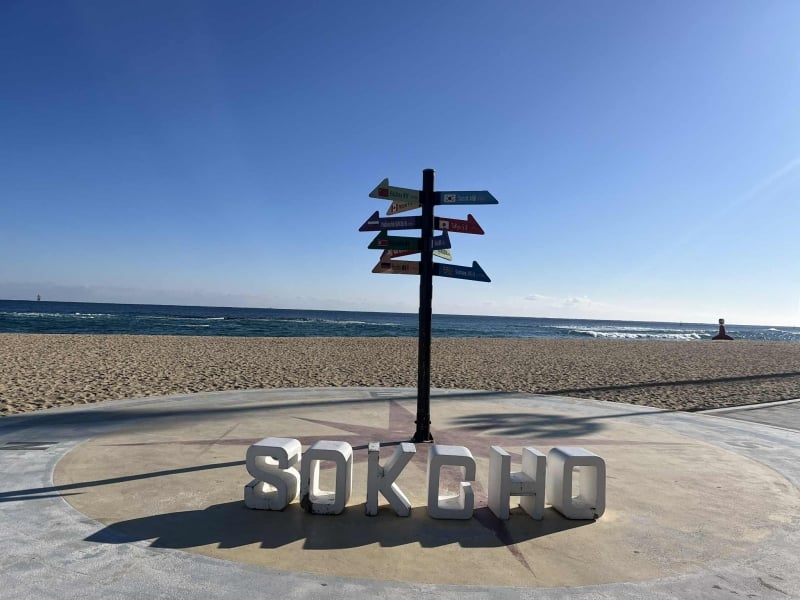
As with Chuncheon, we had pre-booked a Gangwon Tourist Taxi for our time in Sokcho. Unfortunately, the cable car at Seoraksan National Park was closed that day, and the Gangwon Tourist Taxi receptionist advised against visiting the park due to poor weather conditions. In the end, we had no choice but to give this renowned destination a miss.
Book your Gangwon Tourist Taxi here
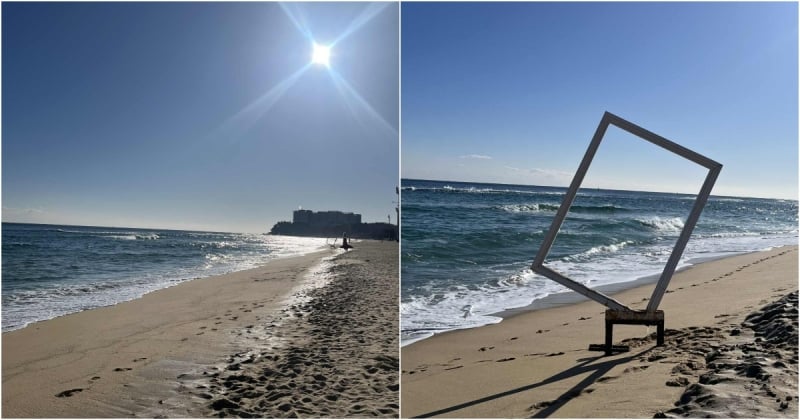
Our first stop was Sokcho Beach, only a few minutes’ drive from the Sokcho Express Bus Terminal. Turquoise water sparkled under the winter sunlight and chilly breeze; the Sokcho Beach is truly mesmerising! There are also swings and charming photo spots along the shoreline.
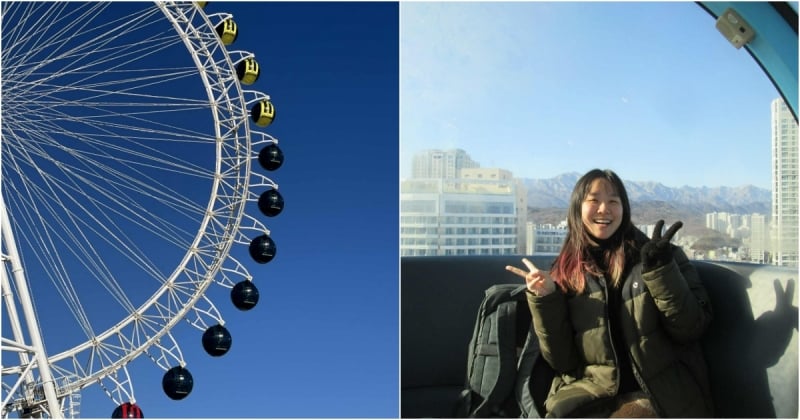
Right next to the beach stands Sokcho Eye, a towering 65-metre Ferris wheel that immediately caught our attention. Of course, we couldn’t resist taking a ride. From the top, we saw people strolling and posing along the shore. The snow-dusted Seoraksan hills at the back made such an amazing backdrop for our pictures, too!
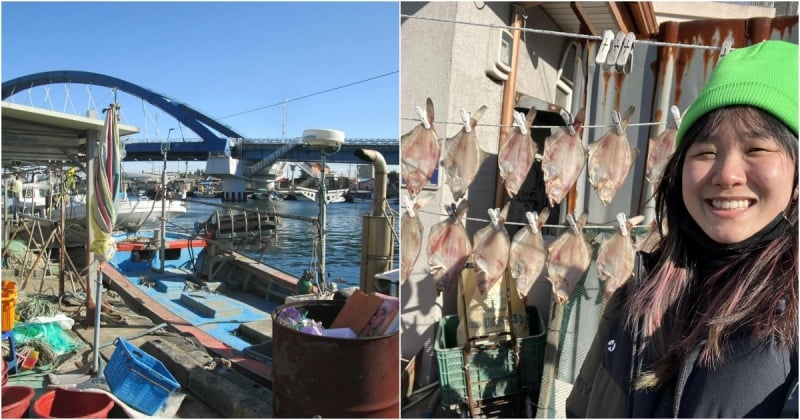
Then, we headed to Abai Village, a quaint village formed by refugees from North Korea during the Korean War. The name “abai” comes from a dialect in Hamgyeong-do and affectionately means a friendly old man, like a grandfather.
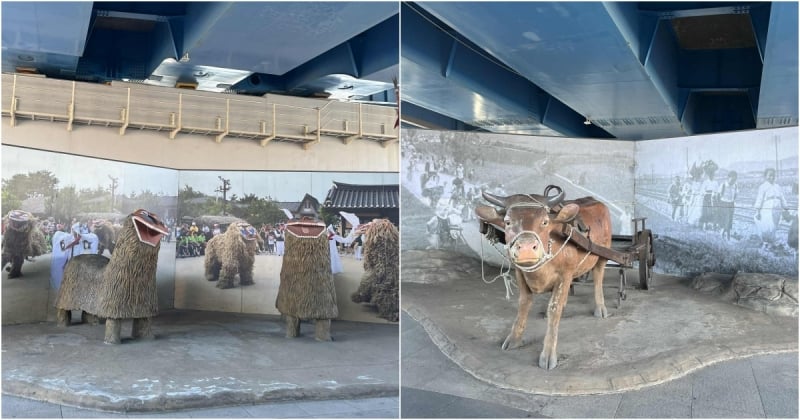
Walking through the village feels like stepping back in time. Murals and small exhibits capture the history of its residents.
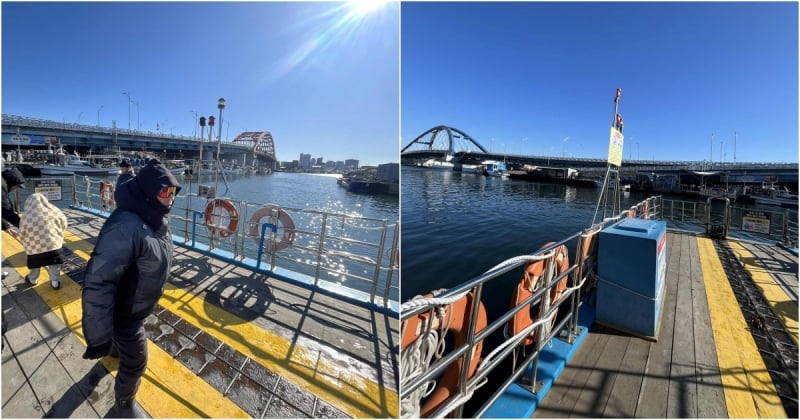
But when you’re here, one thing you should not miss out on is taking the Abai Ferry. It’s no ordinary ferry. It’s a gaetbae, a small boat without an engine, guided across the waterway by manually pulling a wire from one side to the other!
TripZilla tip: The journey takes less than five minutes, and you pay for the return ticket separately. It’s only 1,000won per person, per ride.
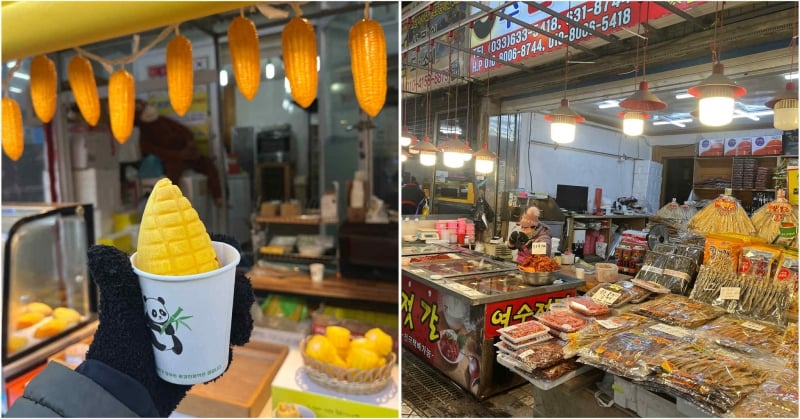
After crossing to the other side, which is home to the Sokcho Tourist & Fishery Market, it’s time for a proper food hunt. We sampled marinated squid from the bustling stalls and couldn’t resist some adorable corn bread! So comfortable and just right for the freezing weather. While walking back, we stumbled upon a shop selling dried fish snacks. I had to grab one to take home!
P.S. The dried fish isn’t just a tasty snack; it can also be used to make a rich, flavourful broth.
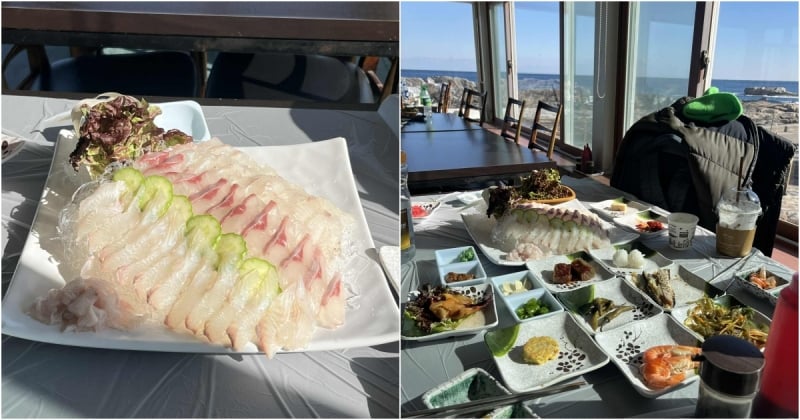
The Gangwon Tourist Taxi driver then dropped us at the area near the Sokcho Lighthouse. That’s where we found this serene restaurant called Yeonggeumjeong Hoetjip overlooking the beach! Turns out, it’s a sashimi restaurant. Here, we indulged in sliced raw fish served with rarely seen side dishes like sea squirt!
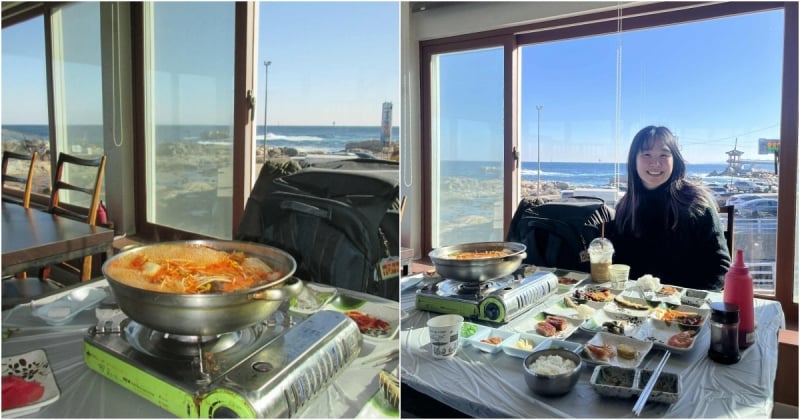
We wrapped up the meal with a comforting bowl of spicy fish stew paired with rice. While the food itself was decent, what truly made this dining experience memorable for me was the view. Through the large windows, we watched waves crash against the rocks. You can even spot the Yeonggeumjeong Sunrise Pavilion from here!
And as much as I didn’t want to, it was finally time to say goodbye to Sokcho. We headed to the Sokcho Intercity Bus Terminal and boarded a premium bus back to Seoul. That was the end of our Gangwon itinerary in winter!
Also read: How to Travel Around South Korea by Intercity Bus: A First-Timer’s Guide
A Full Guide on the Gangwon Tourist Taxi
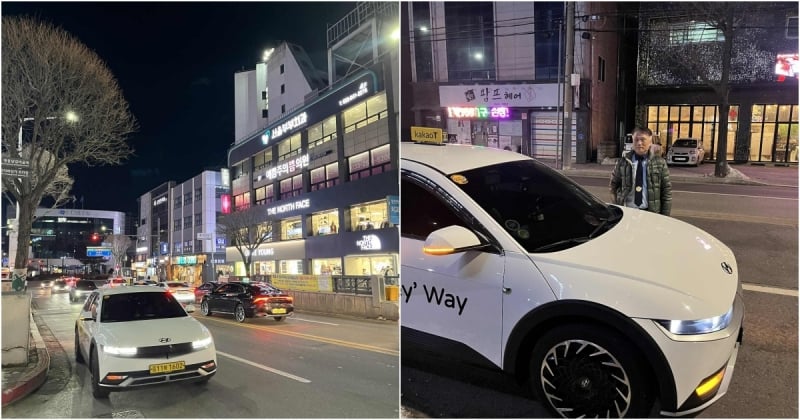
The Gangwon Tourist Taxi is an incredibly affordable way to explore the region, costing just 30,000 won for the first three hours, with a supplemental charge of 30,000 won for each additional hour. While you can choose from pre-set tour packages, the beauty of this service is the flexibility to customise your own itinerary!
You can either book your Gangwon Tourist Taxi in advance here or walk into the Gangwon Tourist Taxi booth and book one. We highly recommend booking ahead. This ensures your driver is waiting for you exactly when you arrive, and payment can be conveniently settled online via credit card.
Finding the Gangwon Tourist Taxi booths is also a breeze. They’re usually located right beside major transit hubs. For instance, the Chuncheon Gangwon Taxi booth is beside Chuncheon Station, while the Sokcho Gangwon Taxi booths are next to the Sokcho Intercity Bus Terminal and Sokcho Express Bus Terminal, respectively.
Best of all? The receptionists at the Gangwon Tourist Taxi booths speak English, so there’s no problem communicating. And did I mention that the drivers are extremely helpful and friendly? It’s a stress-free experience from start to finish!
Book your Gangwon Tourist Taxi here
Winter Must-Haves (as a Southeast Asian)
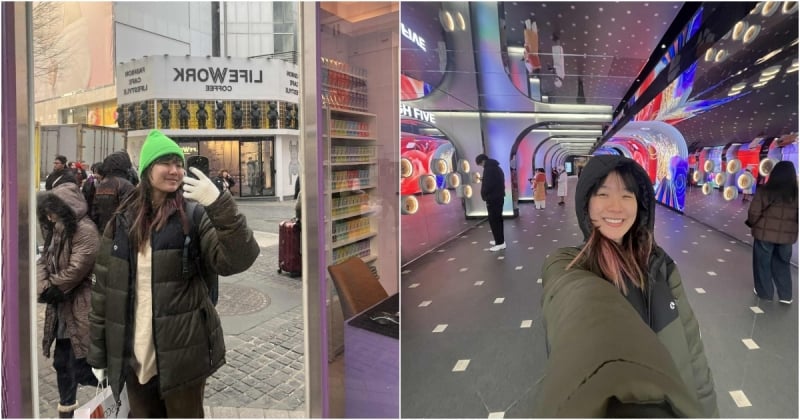
As a Southeast Asian who is so used to the heat, the idea of a true winter was honestly a little intimidating. I packed the standard ‘survival kit’: Heattech, plenty of layers, and a heavy puffer jacket. But these are really just the bare minimum.
If you’re heading to South Korea, the real game-changers are the accessories: a warm beanie, earmuffs, and a face mask to block the biting wind.
TripZilla tip: Make sure your gloves are touchscreen-compatible. There is nothing more frustrating than missing a beautiful shot because you’re struggling to tap the screen!
If you’re shooting with a camera, follow the proper warming protocols and bring plenty of backups. Battery life drops rapidly in the cold. The same goes for your phone and powerbanks, of course.
Also read: All the Exciting Things to Expect in Gangwon Province — South Korea’s Winter Wonderland!
Looking back, this 3-day winter itinerary in Gangwon felt especially meaningful. Not just because of the weather, but because it allowed me to experience so many things I had never tried before. From traditional Korean ice sledding to ice fishing on a frozen river, these moments were both humbling and unforgettable, especially for someone coming from a tropical climate.
I’m truly grateful for this opportunity to see a different side of Korea, one that feels deeply seasonal, local, and quietly magical in winter. If you’re looking to step out of your comfort zone and experience winter beyond Seoul, Gangwon is well worth the journey! For more information about travelling to Gangwon and planning your Gangwon winter itinerary, check out @visitgangwon_en and @gogogangwon!
All images credited to Cecelia Chang.