Sudhiksha
Hong Kong reveals itself best at street level. Walk its pavements and staircases, and the city’s contrasts come into sharp focus. Colonial relics sit beside glass towers. Quiet temples hide behind neon signs. Old neighbourhoods hum next to glossy malls. On foot, these layers feel immediate and alive. Here is how you can experience Hong Kong’s old and new sides through walks that tell its story, one step at a time.
Also read: Where to Go Last Minute CNY Shopping in Singapore and Johor Bahru
Charting the course of your Hong Kong walking routes:
1. Trace history from Central to Sheung Wan
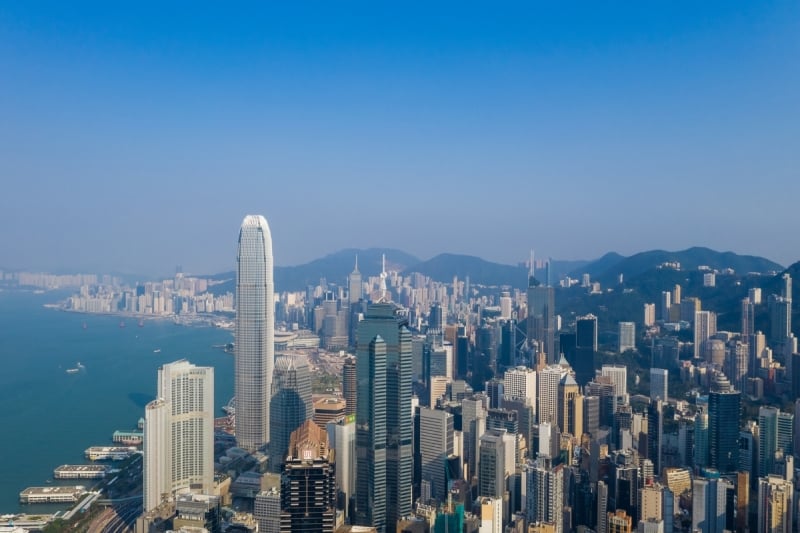
Image credit: Leung Cho Pan via Canva Pro
Start in Central, the city’s historic and financial core. Begin near Statue Square, where colonial-era buildings still frame the skyline. The former Legislative Council Building, now the Court of Final Appeal, anchors this area with neoclassical confidence. Just across the road, sleek office towers signal Hong Kong’s modern ambitions.
From here, walk west towards Sheung Wan. As you move along Des Voeux Road Central, the atmosphere shifts. Luxury boutiques give way to dried seafood shops, herbal medicine stores, and traditional signboards. Transition streets like Wellington Street and Hollywood Road reveal antique shops and contemporary galleries side by side.
Pause at Man Mo Temple, one of Hong Kong’s oldest temples. Inside, coils of incense hang low, filling the air with smoke and calm. Step back outside, and cafés and design studios reappear within minutes. This short walk captures Hong Kong’s ability to preserve tradition while embracing change.
2. Climb the Central–Mid-Levels Escalators
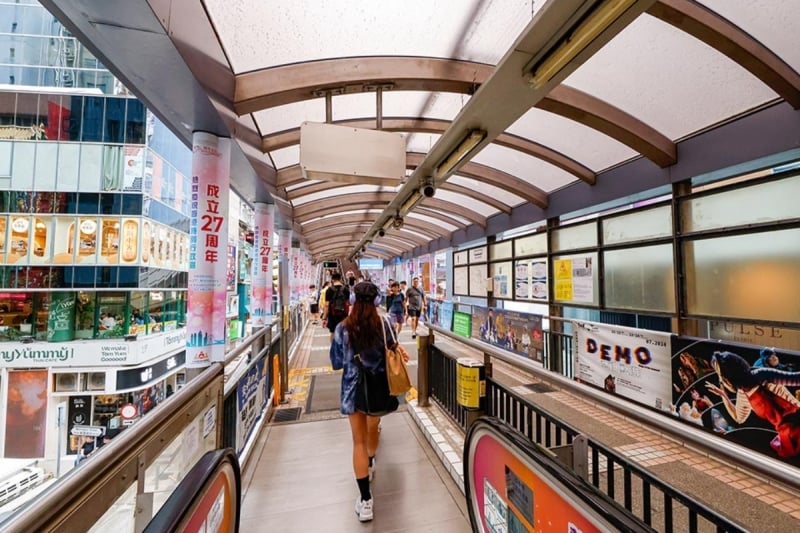
Image credit: Hong Kong Tourism Board
Next, follow the Central–Mid-Levels Escalators, the world’s longest outdoor covered escalator system. More than a transport link, it acts as a moving neighbourhood guide. During the day, it carries residents downhill. In the evening, it flows upwards, ferrying people home.
Step off at different points to explore side streets. On Elgin Street and Staunton Street, trendy wine bars and bakeries sit in former tong lau buildings. Original balconies and tiled façades remain, even as interiors evolve. This blend feels effortless and lived-in.
As you climb higher, the streets quieten. Residential blocks replace nightlife hubs. The city feels slower here, yet the skyline remains close. This walk shows how Hong Kong adapts vertically, layering old structures into modern daily life.
3. Wander through Wan Chai’s past and present
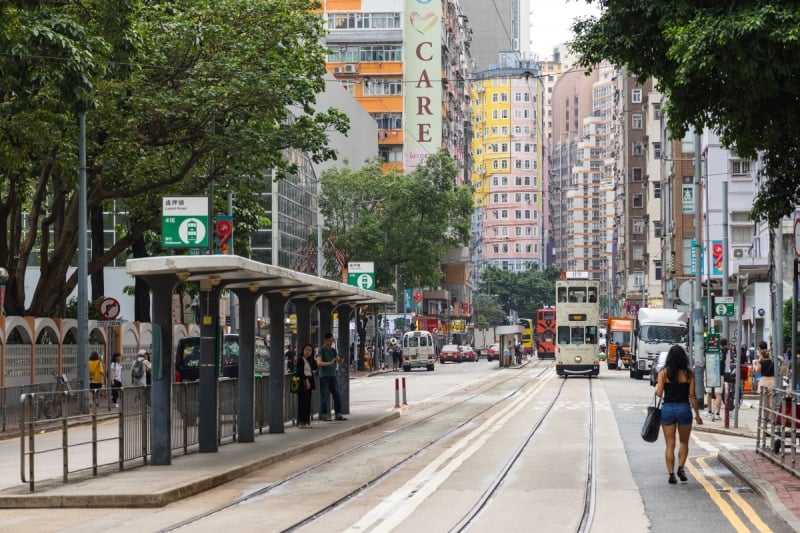
Image credit: Leung Cho Pan via Canva Pro
Cross Victoria Harbour and head to Wan Chai, a district shaped by reinvention. Start near Queen’s Road East, where blue-painted heritage houses still stand. These restored tenements recall a pre-war Wan Chai, once known for family homes and small trades.
Walk towards Tai Yuen Street and Cross Street Market. Vendors sell fresh produce, dried goods, and snacks. The sounds are familiar and comforting. Locals shop quickly, chatting as they go. This is everyday Hong Kong, unchanged by time.
Continue towards the harbourfront. Glass-fronted convention centres and luxury hotels soon dominate the view. The transition feels abrupt, yet deliberate. Wan Chai’s walk highlights how redevelopment and heritage coexist, sometimes uncomfortably, but always visibly.
4. Step into creativity in Sham Shui Po
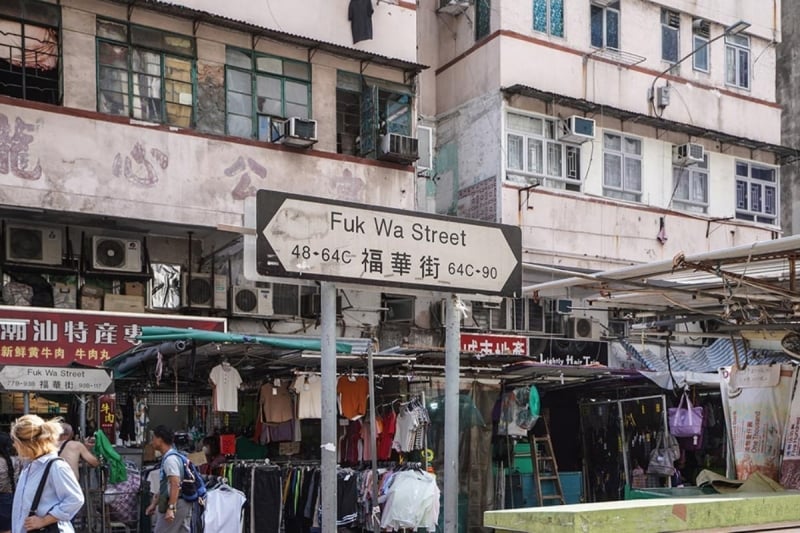
Image credit: Hong Kong Tourism Board
Head north to Sham Shui Po for a different rhythm from other Hong Kong walking routes. This neighbourhood wears its history openly. Electronics stalls spill onto pavements. Fabric shops stack bolts of cloth from floor to ceiling. The area feels busy, practical, and unapologetically local.
Yet change is underway. Walk along Tai Nan Street, and you will spot minimalist cafés, independent bookstores, and design studios. Young creatives move into ageing buildings, drawn by character and affordability. They do not erase the old. Instead, they adapt it.
Street art pops up on blank walls. Former factories host exhibitions and pop-ups. As you walk, the contrast feels raw and honest. Sham Shui Po shows how new ideas grow from old foundations, not replacements.
5. Follow tradition along the Ping Shan Heritage Trail
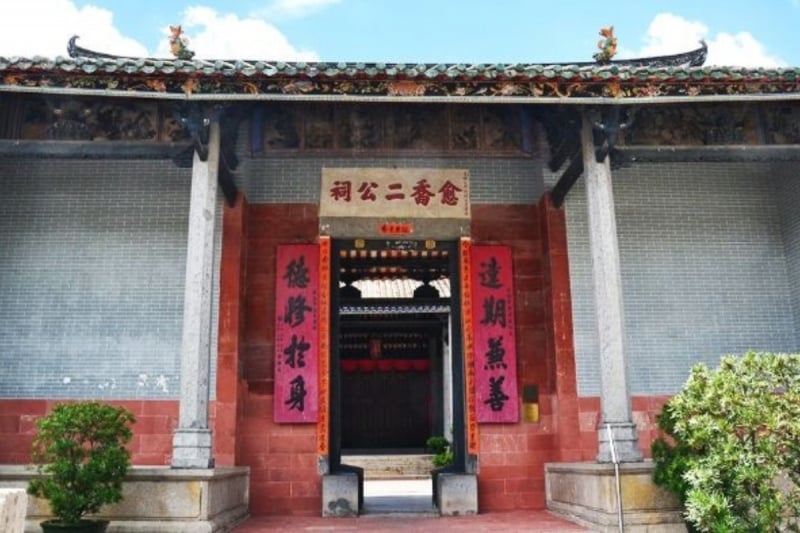
Image credit: Hong Kong Tourism Board
For a deeper look into Hong Kong’s rural past, take the MTR to Yuen Long and follow the Ping Shan Heritage Trail. This flat, well-marked walk connects ancestral halls, pagodas, and village houses belonging to the Tang clan.
Here, skyscrapers disappear. Fish ponds and quiet lanes take their place. The Tsui Sing Lau Pagoda, built more than six centuries ago, stands as a rare surviving example of ancient architecture in the region. Nearby, ancestral halls display wooden carvings and muted colours, telling stories of lineage and land.
Modern housing estates sit just beyond the villages. The contrast feels striking but respectful. This walk reminds you that Hong Kong’s story did not begin with its skyline. It started in clans, fields, and family ties.
6. Balance nature and city on Lamma Island
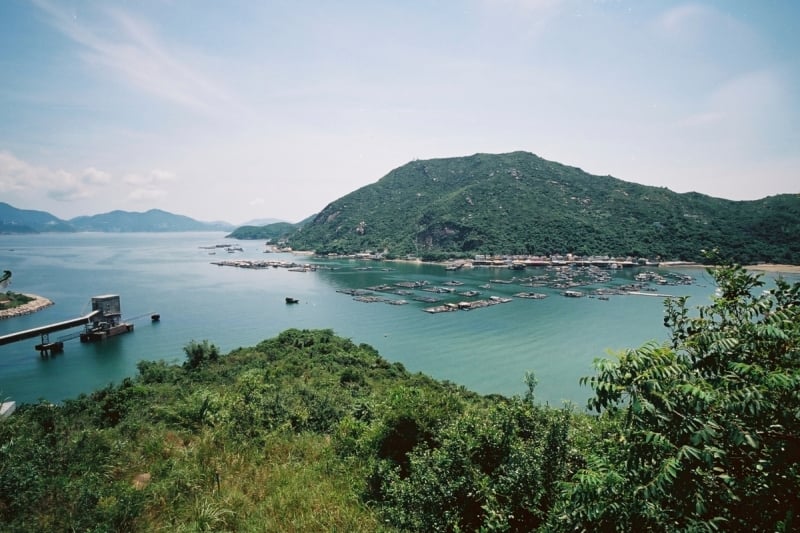
Image credit: Getty images via Canva Pro
Finish your adventure trailing past Hong Kong walking routes with a ferry ride to Lamma Island, then walk between Yung Shue Wan and Sok Kwu Wan. The trail winds through villages, beaches, and shaded hillsides. It feels relaxed, yet distinctly Hong Kong.
Seafood restaurants line the waterfront. Small homes sit beside yoga studios and artist workshops. There are no cars here, only footsteps and bicycle bells. From certain viewpoints, container ships pass quietly in the distance, framed by green slopes.
This walk shows another side of the city. Hong Kong does not always rush. Sometimes, it pauses. On foot, you sense this balance between urban intensity and island calm.
Walking Hong Kong connects these contrasts into one story. Old and new do not compete here. They overlap, intersect, and reshape each other daily. Lace up comfortable shoes, follow your curiosity, and let the city unfold with every step.
Also read: 10 Best Things to Do in Hong Kong With Kids (Including Hidden Gems!)
Step into the city, one stride at a time
In Hong Kong, every walk feels like a conversation between past and present. One moment, you tread on stone steps worn smooth by decades of use. In the next instance, you cross a skybridge framed by steel and glass. Walking lets you read these layers at your own pace. No rush. No filter. Just the rhythm of your footsteps guides you through a city that never stops moving, yet always leaves room for those willing to explore it on foot.