Dex Quek
Is your ideal holiday a place where there are more cats than humans? Though only a handful of places in the world fit that description to a T, other islands teeming with cats exist. We’ve curated a guide to cat islands to visit, complete with trip planning details. Read on for ten cat islands in the world for an immersive vacation.

Also read: Where to Find the World’s Friendliest Street Cats
Real-life Cat Island in Aoshima, Japan
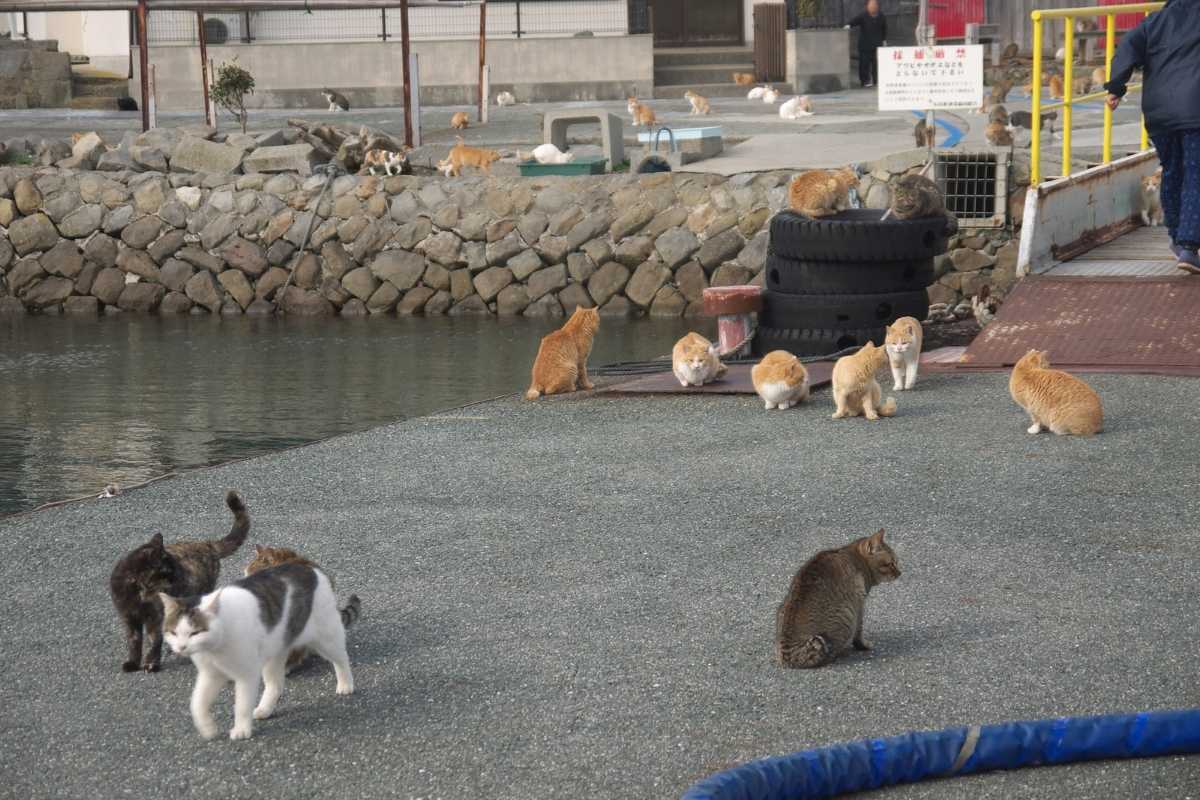
Image credit: ES3N via Canva Pro
For feline enthusiasts and anyone seeking social reprieve, Japan’s “cat islands” offer an experience that borders on the surreal. Aoshima hosts about 100 cats compared to just 15 human residents, transforming every harbourside stroll into a furry parade. You’ll find cats lounging on pathways, clustered near the ferry dock, and generally behaving as though they own the place (given the numbers, they essentially do).
Getting to Aoshima requires commitment but rewards the effort handsomely. Fly into Matsuyama Airport 90 minutes from Tokyo, then catch a bus or train to Nagahama Port for the 35-minute ferry crossing that costs roughly ¥1,000.
Since the island offers no accommodation, base yourself in Imabari or Matsuyama, where business hotels run ¥8,000-15,000 per night, and day-trip to the island whilst exploring nearby attractions like the spectacular Shimanami Kaido cycling route or the historic Dogo Onsen hot springs.
Istanbul, Turkey: A city nicknamed after cats
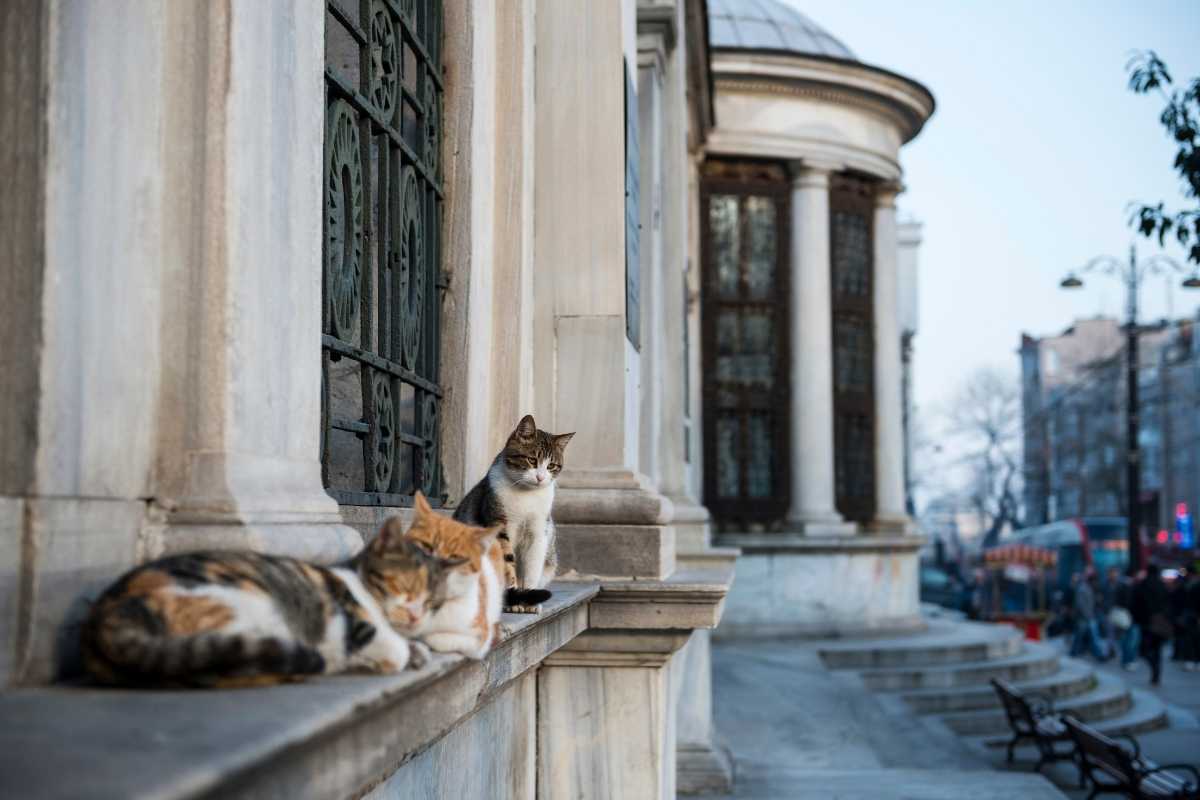
Image credit: Joel Carillet via Canva Pro
Istanbul, affectionately dubbed “Catstanbul”, takes cat culture to an entirely different scale with an estimated 100,000 to one million feral cats woven into the city’s cultural fabric. Protected by a no-kill policy and community trap-neuter-vaccinate-return programmes, these ubiquitous friendly strays lounge in Hagia Sophia‘s gardens, Topkapi Palace courtyards, Cihangir cafés, and Balat‘s colourful alleys, where locals provide food, water, and shelters as a matter of civic pride.
Fly into Istanbul Airport or Sabiha Gökçen, then metro or tram to the city centre for TRY 50-100, staying in Sultanahmet‘s historic core at hotels like AJWA Sultanahmet (€150+ per night) or trendy Cihangir at Witt Istanbul Hotel (€100–300). Either way, you’ll reside amongst the city’s most cat-dense neighbourhoods for that night.
Spend an afternoon with cats of Houtong Cat Village, Taiwan
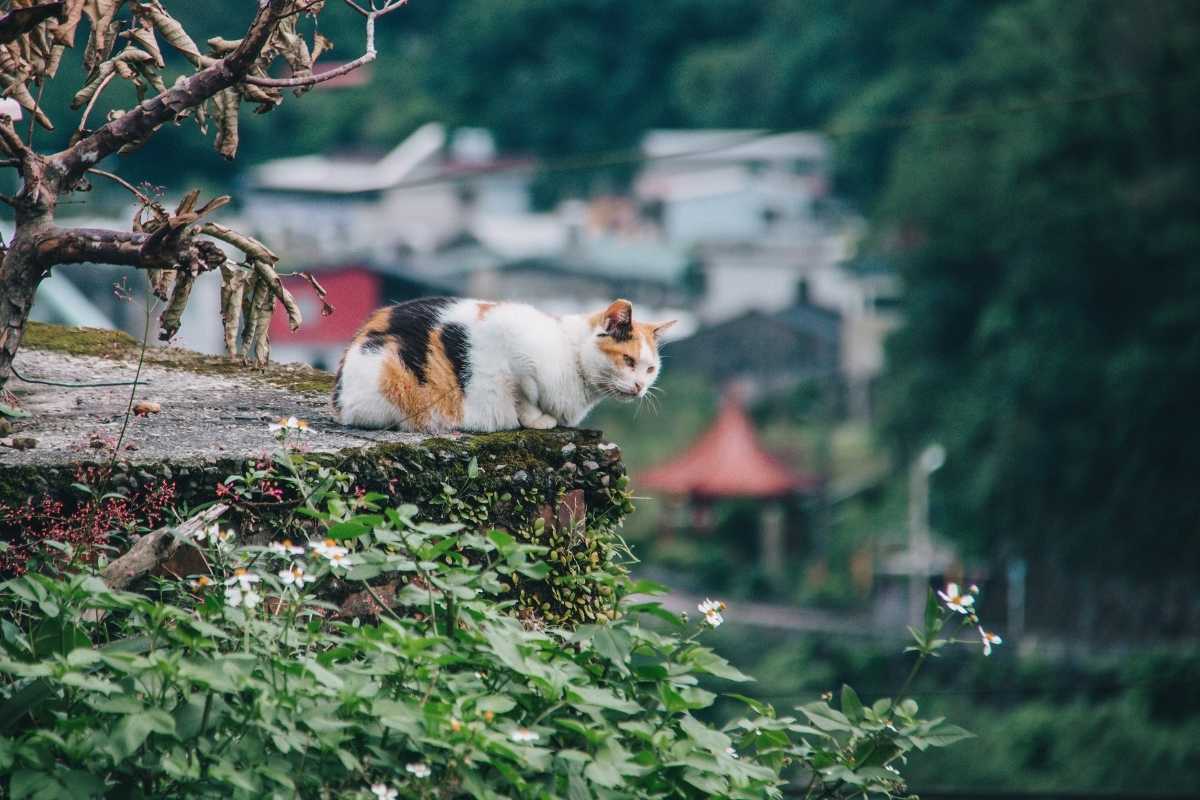
Image credit: merraya via Canva Pro
Taiwan’s Houtong Cat Village proves you needn’t visit a remote island to achieve cat saturation. This former mining village near Taipei reinvented its brand around its 80-200 friendly cats, developing cat-themed cafés, art installations, and shelter programmes that make it accessible yet purposeful.
Direct trains from Taipei Main Station reach Houtong in 45-60 minutes for just NT$100, and nearby Ruifang or Jiufen offer charming B&Bs at NT$2,000-4,000 per night, perfect for combining your cat fix with Jiufen’s famous tea houses or Pingxi‘s sky lantern tradition.
Prowl amongst street cats in old town alleys in Budva, Montenegro
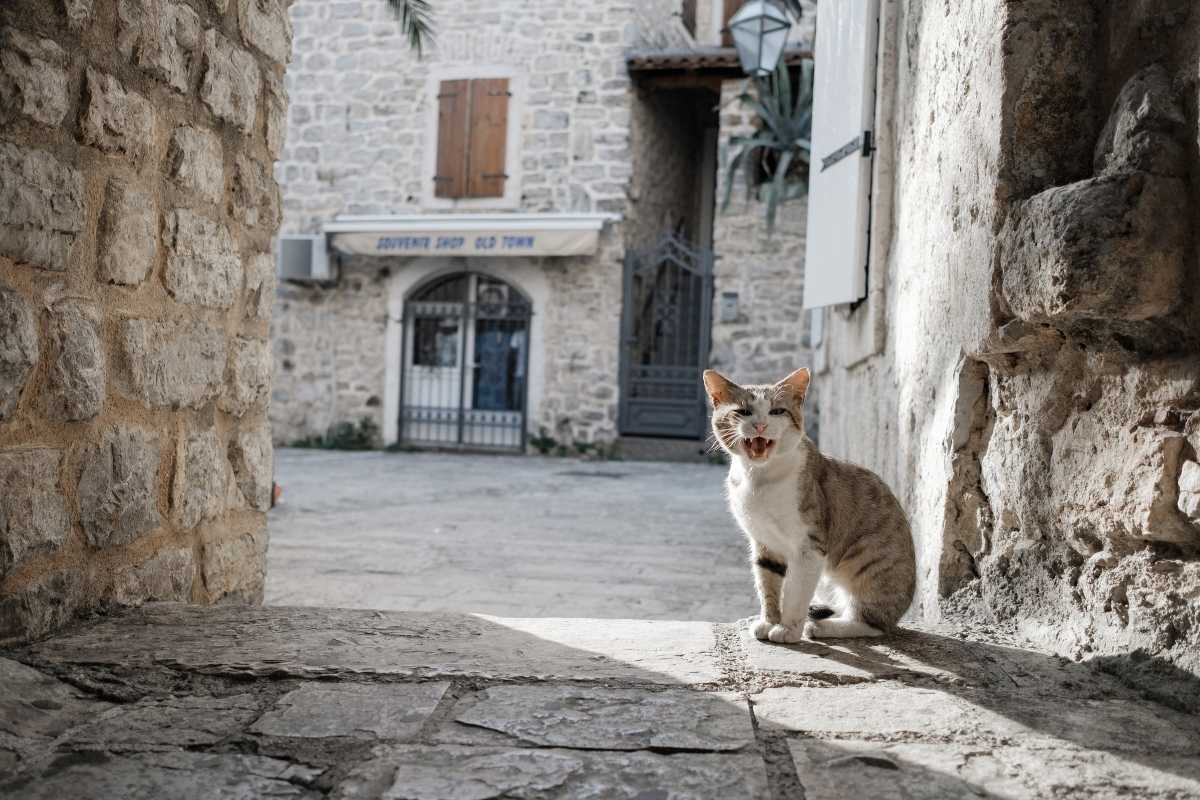
Image credit: boyarkinamarina via Canva Pro
Montenegro’s Budva presents a Mediterranean alternative where street cats weave between beach umbrellas and old town cobblestones, fed by locals who’ve embraced their feline neighbours. Fly into Tivat or Podgorica Airport, then bus or taxi to Budva for €10-20, where guesthouses and hotels range from budget €30 options to €150 beachfront properties.
The cats here thrive thanks to trap-neuter-release programmes, meaning you’ll encounter healthier, friendlier animals as you explore Mogren Beach or take day trips to cat-famous Kotor Bay, just an hour’s drive away.
The European country with the highest cat concentration: Malta
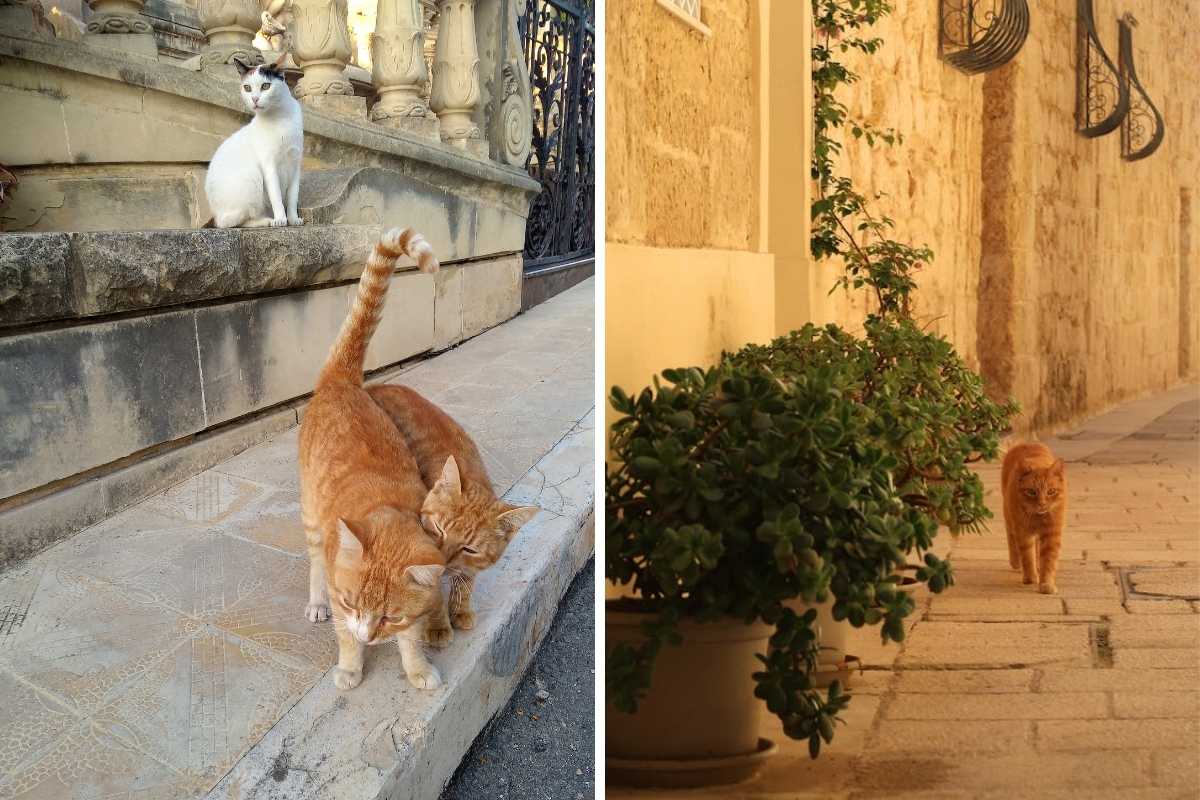
Image credit: Strangebirdy via Canva Pro (left), the_literate_traveller _ (right)
Malta deserves special mention as perhaps the world’s ultimate cat destination, with roughly 316 felines per square kilometre. Every corner of Valletta‘s fortified streets, Mdina‘s medieval alleys, and the harbours reveals cats being fed by devoted locals who’ve maintained this tradition for generations.
Flights land at Malta International Airport with easy bus connections island-wide for €2-10. Pet-friendly accommodation in Valletta or St. Julian‘s costs €80-200 per night, placing you within constant whisker-distance of your favourite animal.
Chase the heat in Cyprus to find feline friends
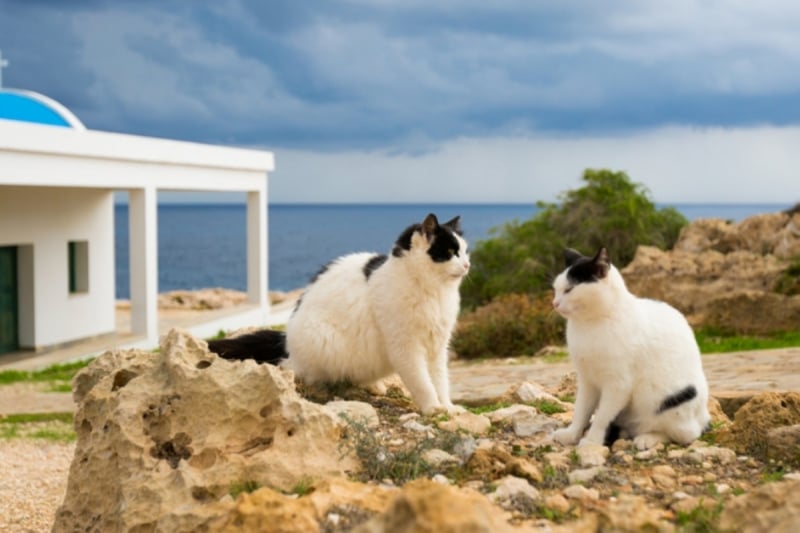
Image credit: Explore.com
Cyprus is an island where the sun warms both the land and its legendary feline residents. Visitors exploring Paphos or Limassol will notice the cats immediately. They glide along streets and lounge in sunlit squares, glossy, confident, and majestic. Hikers walking coastal paths or heading into the Troodos Mountains often find them weaving between legs or resting on sun-warmed rocks.
Archaeological digs reveal Neolithic graves dating back to 7500 BC, where humans were buried alongside cats. According to legend, the area was once overrun by giant, venomous snakes, and ships of cats were sent to fight them. Today, these feline descendants still patrol towns and villages, giving visitors a glimpse of the island’s unique history while adding charm to every trail and street.
Visitors can fly into Paphos or Larnaca Airport, then rent a car or use local buses to explore Limassol and coastal villages. Allow 3 to 4 hours for wandering streets, visiting feeding spots, and hiking nearby trails. Bring a small pack of cat treats if you plan to hike. Panoramic views of the Mediterranean await at many of the mountain trails they roam.
Pounce on paradise at Cat Island, Rodrigues
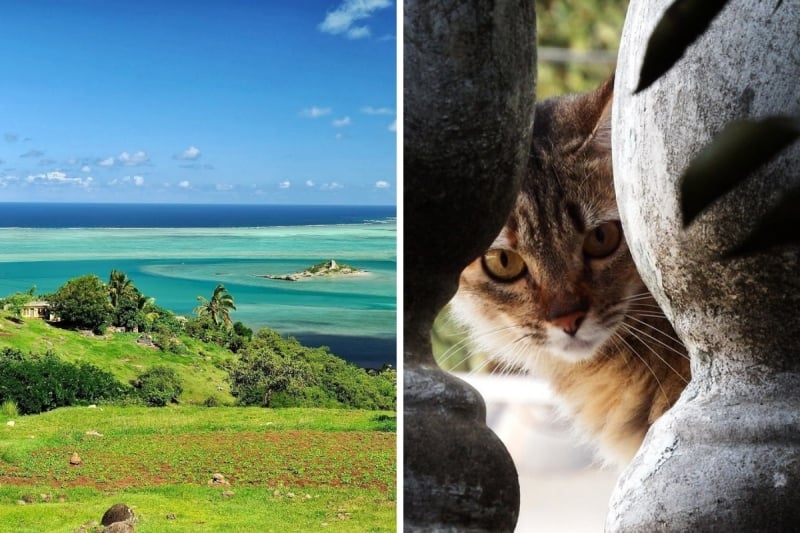
Image credit: Visit Today (left),Flickr (right)
Just off Rodrigues, Mauritius, Cat Island is a small islet surrounded by turquoise lagoons and soft white sand. Boats depart regularly from Mourouk, with a short 10-15 minute ride across calm waters, bringing travellers to a beach that feels instantly serene. Walking along the sand, visitors can enjoy shallow lagoons ideal for swimming and snorkeling.
A few relaxed felines wander the beach, weaving between picnics or dozing in the shade. Their presence adds charm without overwhelming the scenery, making the island perfect for a quiet day by the water. Local operators run daily trips from Rodrigues’ main port in Mourouk.
Most visitors spend 2 to 3 hours on the island, which is ideal for a swim, short walks, and relaxing on the beach. Bring sunscreen, water, and a towel; early morning or late afternoon visits offer the calmest waters and best light.
Follow the lava to find cats on Hawaiʻi’s Big Island
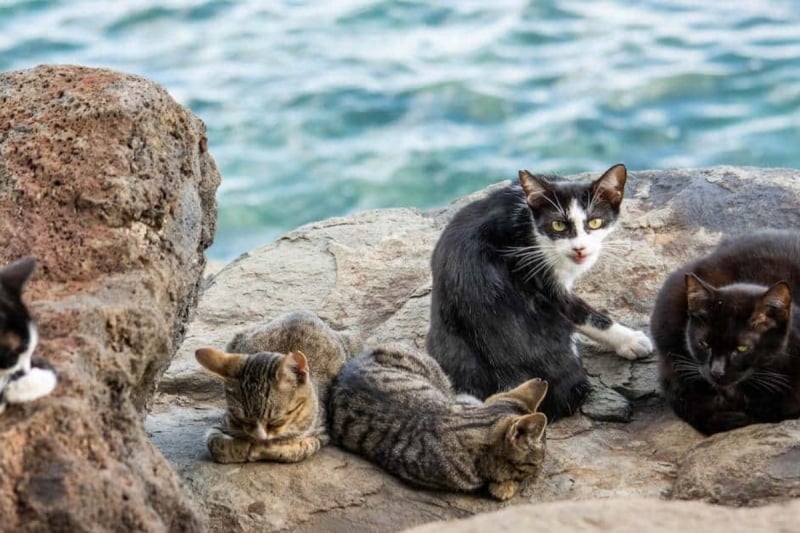
Image credit: Sentient Media
Cats appear along the Big Island where lava once flowed. Black-sand beaches at Punaluʻu, quiet streets in Hilo, and coastal towns near Kona are prime spots. Volcanic landscapes frame the scenery, with steam vents and crashing waves adding drama to any walk or hike.
Many of the cats are cared for by local volunteers and slip easily into daily life. Visitors often see them resting near temples, cafés, and coastal trails. They provide quiet companionship for hikers trekking lava fields or explorers enjoying sunset swims.
Visitors can fly into Hilo or Kona International Airport. Renting a car is essential to explore multiple towns and beaches in a single day. Spend up to half a day exploring one beach and nearby trails. Always watch for cats near lava paths and bring water and sun protection.
Pause for paws at the steps of Syros, Greece
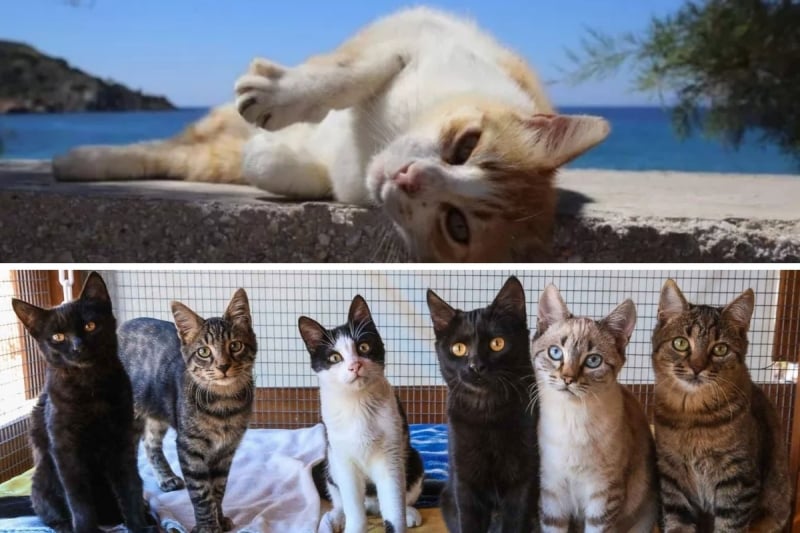
Image credit: Animal Action Greece (top), Syros Cats (bottom)
On Syros, cats dominate the hillsides before visitors do. In Ermoupoli, marble steps and sun-warmed walls become their territory, offering endless opportunities to observe their routines. Walking between neoclassical streets and terraces with sea views, travellers often spot cats lounging in the sun or trailing quietly between steps.
The cats follow the island’s rhythm, moving slowly and comfortably in the shade as the day softens. Church bells echo across the hills, and the evening light turns golden, creating the perfect backdrop for a stroll.
Ferries from Mykonos or Athens bring travellers to Syros’ port in Ermoupoli. Walking between the main town and Ano Syros takes 2 to 3 hours at a relaxed pace, leaving time to pause and enjoy the views and architecture fully. Early morning or late afternoon is best for cooler steps and soft lighting.
Wander with whiskers at the Gili Islands, Indonesia
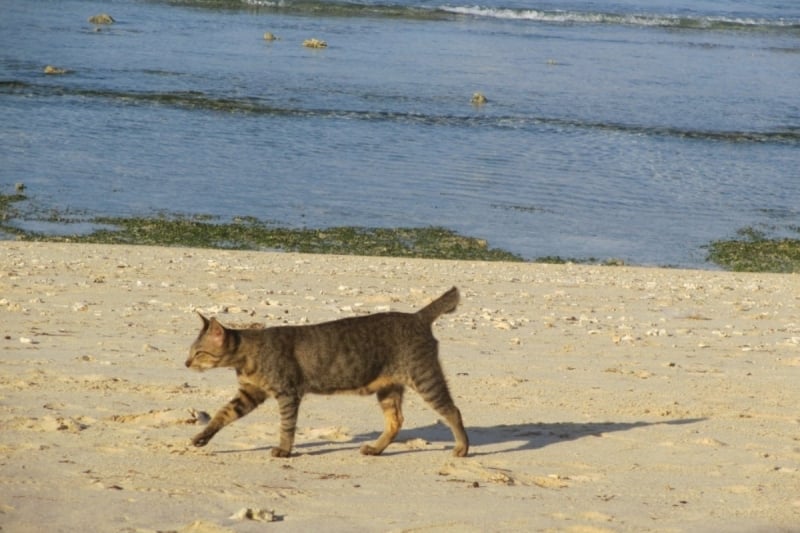
Image credit: Manvsworld
On the Gili Islands, cats move with the tide. They stroll across powdery beaches on Gili Air and Gili Trawangan, slipping between cafés, shops, and shaded paths. With no cars, the streets remain calm, making it easy to observe or interact with the cats.
Residents provide food quietly, and the cats come and go on their own terms. They nap on sand, stretch along walls, or follow the cooler air near the shoreline. Visitors will notice how the cats blend naturally into the island’s slow rhythm.
Boats from Bali or Lombok reach the Gilis in 1 to 2 hours. Explore a single island in four hours, ideal for beach walks, cafés, and sunset watching. Bring comfortable footwear, sunscreen, and a camera; evening light and cooler air make it perfect for strolling with feline companions.
Take a catwalk across these islands
Cats leave an unforgettable mark on every journey. They lounge, patrol, and occasionally nudge travellers into slowing down, reminding us that some of the best experiences are unplanned and unhurried. On these islands, nature, history, and feline charm converge, making each visit feel both playful and magical. Take your time, follow the soft paws, and let the cats lead you to moments worth savouring—because on a cat island, every step has a little extra whisker of wonder.