
Why You Should NOT Travel With Your Friends
Travelling with friends can ruin your good mood, your long-awaited holiday and even your #BFF friendships.

Planning a holiday with your friends always sounds like a brilliant idea.
You picture yourselves laughing over late-night suppers, posing for group photos and collecting stories that you will still be talking about years later. What could possibly go wrong?
Quite a lot, apparently.
Travelling together means spending far more time with your friends than you normally would. It also means making constant decisions about money, food, accommodation and what time everyone needs to wake up. Those tiny differences you barely notice at home can become much harder to ignore when you are tired, hungry and several thousand kilometres away.
Before you book those flights, here are a few reasons why travelling with your friends may not be as perfect as you imagine.
1. Their living habits can be your pet peeves.
You may have known someone for years without ever discovering how loudly they snore.
Then you share a hotel room and suddenly find yourself lying awake at 3am, staring at the ceiling while your friend sounds like a motorcycle struggling to start.
I once travelled with someone whose snoring kept practically everyone in the room awake. By breakfast, none of us was feeling particularly friendly.
Different hygiene standards can be another unpleasant surprise. Perhaps one person leaves wet towels all over the floor, while another fills the bathroom sink with toiletries. Someone takes 45 minutes in the shower, even though five other people are waiting outside.
Getting along well during dinner or a night out does not automatically mean that your living habits will be compatible. After several sleepless nights, even a small annoyance can begin to feel like a personal attack.

Even a sleepy dog is a grumpy dog | Image credit: Andrew Roberts
2. Difference in travelling styles can make you pull your hair out.
Before the trip, everyone says they are flexible.
“I’m fine with anything!”
“I don’t mind where we stay!”
“I’ll eat whatever!”
Then the planning begins.
One friend wants the cheapest room available and is perfectly happy surviving on convenience-store sandwiches. Another expects comfortable beds, private bathrooms and a proper restaurant for every meal.
Someone wants to wake up before sunrise and visit eight attractions before lunch. Someone else considers any alarm before 10am a violation of their human rights.
Differences in interests can be just as difficult. One person dreams of hiking through the mountains, while another wants to spend the entire trip shopping. Everyone may agree to compromise, but their idea of compromise might be very different.
When one friend says, “I don’t mind shopping,” they may mean one hour. The shopping enthusiast may hear that and plan an entire day.
That is how trouble begins.
3. Your patience will be tested with these road-trip burdens.
A road trip can be one of the best ways to travel with friends, but only when everyone contributes.
The driver should not be expected to handle the navigation, music, tolls, parking and eight consecutive hours behind the wheel while everyone else sleeps.
There is usually one passenger who repeatedly asks, “Are we there yet?” without helping to check the route. Another falls asleep five minutes after getting into the car, only waking up when it is time to eat or take photos.
Meanwhile, the exhausted driver is trying to stay alert while wondering why they agreed to any of this.
Before setting off, divide the responsibilities. Someone can navigate, another can handle parking and toll payments, while the rest make sure the driver gets proper breaks.
Your road trip should not depend on one increasingly resentful person keeping everyone alive.
4. Calculative friends that make every cent count will drive you nuts.
Group expenses always seem simple at first.
One person pays for dinner. Another buys the train tickets. Everyone agrees to settle the bill later.
Then someone starts asking who ordered the extra drink, why the service charge was split equally and whether they are still owed 10 cents from breakfast.
There is nothing wrong with keeping track of expenses. In fact, it prevents one generous friend from quietly paying for half the holiday.
The problem begins when every tiny difference turns into a lengthy discussion. Nobody wants to spend their trip performing mental arithmetic after every snack.
Agree beforehand on how shared expenses will be divided. Use a bill-splitting app, create a common fund or settle the total at the end of each day.
That way, nobody has to interrupt the holiday to demand their five-cent change.
5. You become the personal photographer of the Instagram addicts instead of a travel buddy.
We all have a friend who wants the perfect travel photo.
There is nothing wrong with taking pictures. The problem arises when you are expected to conduct an entire photoshoot at every attraction.
“The lighting is bad.”
“Take another one.”
“My eyes were closed.”
“Can you stand farther back?”
“Maybe try portrait mode?”
By the time your friend finally approves the 47th photo, you may have forgotten what the scenery actually looked like.
Travelling with someone who enjoys creating content requires patience, especially when your own idea of appreciating a place involves looking at it without a phone in front of your face.
Set some limits, take turns behind the camera and accept that not every photograph needs to resemble a professional campaign shoot.
Sometimes, the first photo really is good enough.
6. You become too comfortable within your own zones.

You struggle to move out of your comfort zone | Image credit: Tammy Lo
Travelling with close friends provides a comforting safety net. You always have someone to talk to, eat with and ask for help.
That comfort can also make it easier to remain inside your usual bubble.
Instead of speaking to locals or meeting other travellers, your group may spend the entire trip talking among yourselves. You may order familiar food, avoid unfamiliar activities and keep recreating the same routines you follow at home.
Solo travel naturally pushes you to become more independent. Without friends beside you, you have to navigate unfamiliar places, make decisions alone and occasionally start conversations with strangers.
That does not mean group travel prevents personal growth. You simply have to make a deliberate effort to remain curious.
Try something nobody in the group has done before. Join a local tour, attend a workshop or allow everyone a few hours to explore independently.
You can enjoy the security of travelling together without letting it become a barrier between you and the destination.
7. It leads to compromise.
Compromise is unavoidable when travelling with other people.
You may want to spend another day exploring Kyoto, while your friend has been dreaming about Kobe. You might prefer a quiet countryside stay, but the rest of the group wants nightlife and shopping.
Nobody can get everything they want on a shared itinerary.
Constantly giving in, however, can leave you feeling as though you paid for someone else’s holiday. The frustration may not appear immediately, but it can build every time another attraction you wanted to visit is removed from the plan.
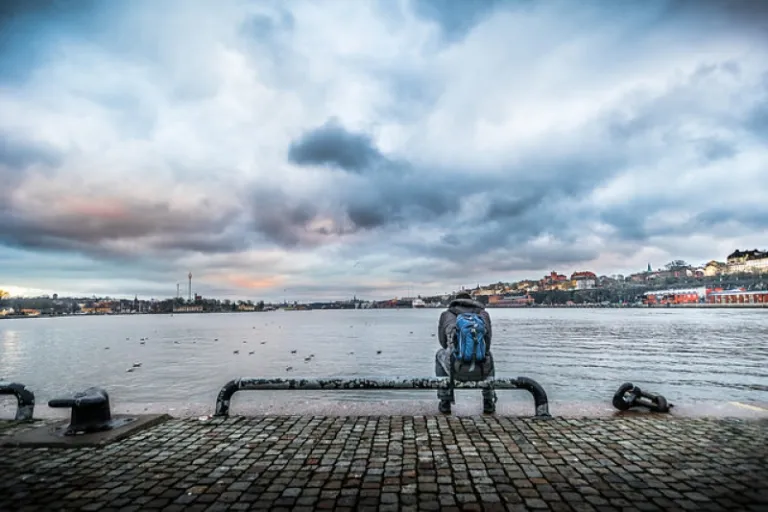
Travel to your dream destinations alone | Image credit: Giuseppe Milo
Be honest about your priorities before the trip. Everyone should name the experiences they genuinely do not want to miss.
It is also perfectly acceptable to separate for part of the day. One person can visit a museum while another goes hiking, and everyone can meet again for dinner.
Travelling together does not require remaining physically attached from breakfast until bedtime.
BUT….
After listing all these reasons, I should probably admit something: some of my best holidays have been with the same group of friends.
Yes, we have irritated one another. We have disagreed over money, complained about itineraries and discovered habits we would rather not have known about.
We have also laughed until we could barely breathe, helped one another when plans went wrong and created memories that would never have existed had we travelled separately.
The success of a group trip depends less on finding friends with identical personalities and more on communication, patience and realistic expectations.
Talk about budgets before booking. Be honest about your travel styles. Divide responsibilities and give one another enough personal space.
A shared holiday may reveal sides of your friends that you have never seen before. Some of those discoveries may drive you crazy, but others could make the friendship even stronger.
So, should you travel with your friends?
Perhaps the real answer is not “never”.
It is simply: choose your travel companions carefully.

About Author

Adventurer and athlete, Yi Zhen has a penchant for planning travel itineraries that are off the beaten path. She also daydreams about travelling to Liverpool for the 2019 Netball World Cup.