Dex Quek
Sustainable travel matters more than ever, especially for Singaporeans who often fly to see the region and beyond. Contrary to popular belief, you do not need to give up comfort or fun to tread more lightly. Instead, with a few smart choices, you can cut your impact, support local livelihoods and come home with stories that feel more real.

Below are practical, doable ways to build sustainable travel into your next holiday.
Also read: Volunteer Tourism Experiences in Southeast Asia and Beyond
Stay with local communities

Image credit: Mumemories via Canva Pro
Where you sleep shapes where your money goes. Homestays are a strong option because they typically direct spending straight to a household, while also giving you a window into everyday life. Moreover, hosts often share local tips you will not find on a map app, such as the best kopi stall or a family-run beach spot.
You can also make use of Airbnb in a more mindful way. In many places, short-term rentals can add pressure to housing supply, so it pays to be selective. For instance, look for genuine home-shares, owner-occupied listings or rooms in family homes, rather than multiple-unit operators. Additionally, check local rules and choose hosts who are transparent about permits where these apply. That way, your stay is more likely to benefit residents without worsening local housing challenges.
Volunteer through Worldpackers and WWOOF
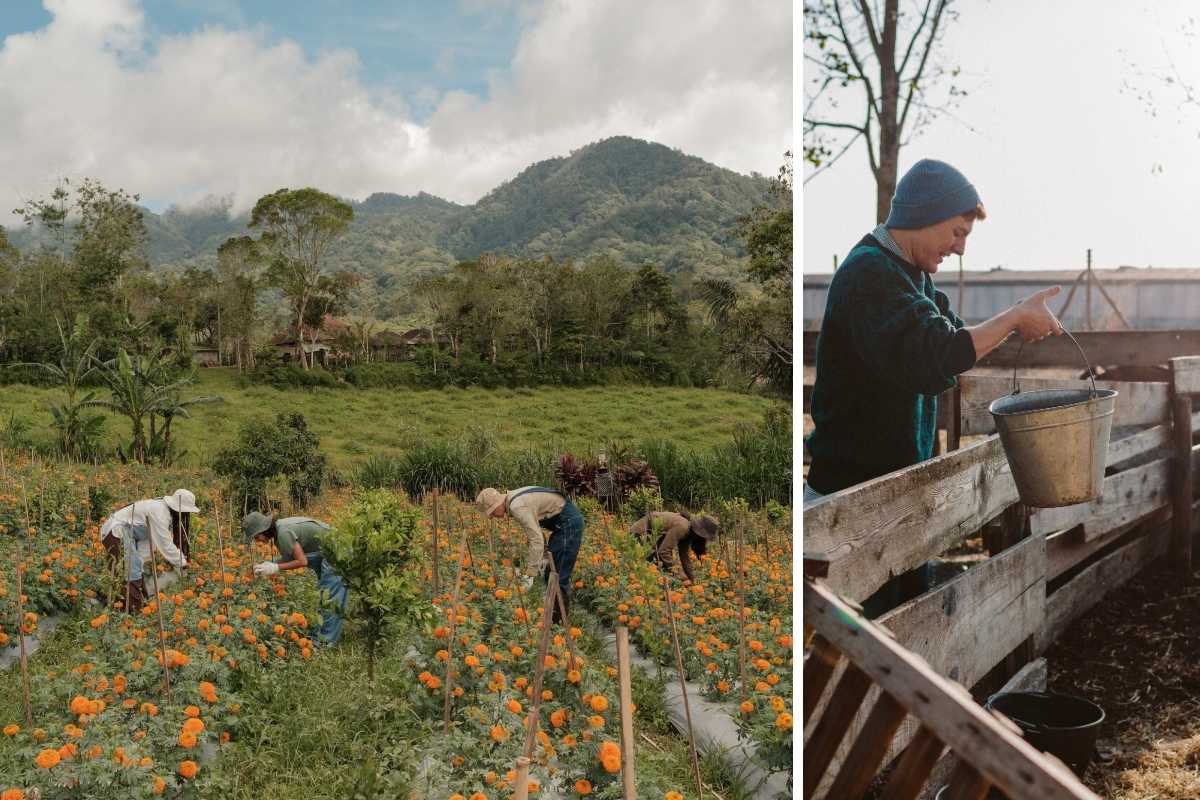
Image credit: Alena Shekhovtsova/vgajic via Canva Pro
Volunteering can be a meaningful way to travel sustainably, but it works best when you treat it like a skills exchange.
Worldpackers links travellers with hosts who offer accommodation in exchange for agreed volunteer hours. In some placements, meals or other perks may be included. However, you should expect to cover membership fees, transport and day-to-day costs. Even so, it can be a budget-friendly way to slow down and contribute, whether you are helping with community projects, guesthouse operations or language practice.
WWOOF (World Wide Opportunities on Organic Farms) is another route, focusing on organic farms and sustainable living. Hosts generally provide meals and accommodation in exchange for help, and WWOOF is often framed as a cultural and educational exchange.
Even so, volunteering is not automatically sustainable. Therefore, do your due diligence: choose projects led by locals, avoid roles that replace paid work, and be cautious about placements involving children or vulnerable people. In other words, support communities on their terms.
Use public transport for the views

Image credit: CABA via Canva Pro
Transport is one of the biggest levers for sustainable travel. Within destinations, public transport usually has a lower footprint per passenger than travelling alone by car, particularly when services are well used. As a bonus, it can show you more of daily life: you notice daily rhythms, neighbourhoods and small details that you’d glide past in a taxi.
So, build your days around trains, buses and ferries where practical. Furthermore, consider walking for short hops, and grouping nearby sights into one area rather than zig-zagging across town. This reduces time in traffic and helps you experience places at street level.
Choose family restaurants over chains

Image credit: AN Nhol
Food is an easy place to make your trip more sustainable, and also more delicious. Instead of international restaurant chains, prioritise family-run eateries, hawker stalls and small neighbourhood cafés. These businesses tend to keep more of your spending in the local economy and often reflect regional recipes and seasonal ingredients.
Additionally, you can reduce waste by carrying a reusable bottle and saying no to unnecessary cutlery or straws, especially for takeaway drinks and snacks.
Say yes to short detours

Image credit: Co Hai
Some of the best travel moments happen between itinerary stops. A spontaneous detour to a wet market, a quiet temple or a coastal village can spread visitor spending beyond the busiest streets and give you a deeper understanding of the place.
However, detours do not automatically lower your footprint. In fact, extra kilometres usually increase emissions. The more sustainable approach is to make detours that are walkable, cyclable or along your existing route. For example, if you are heading from one attraction to another, choose a scenic walking path, hop off the bus a stop early, or take a short ferry that replaces a longer road transfer. You’ll get the surprise without the unnecessary mileage.
Pulling it all together

Image credit: Acres of Film
Sustainable travel is less about perfection and more about direction. Start with by tweaking your next trip; Then, when you have more time, consider a Worldpackers or WWOOF placement to slow down and learn from locals.
Done well, sustainable travel is not restrictive at all. Rather, it can be an upgrade that makes your journeys feel richer, calmer and more connected.