
Bollywood’s Sukhwinder Singh Puts the ‘Sing’ in His Singapore Concert
Concert review: Bollywood icon Sukhwinder Singh lit up Singapore with his Oscar-winning voice, electrifying hits and blockbuster performance.

Before the music even began, Sukhwinder Singh’s reputation filled the room. This is the voice behind Jai Ho, the Oscar-winning song from Slumdog Millionaire that carried the sound of Indian cinema onto the world stage. It is also a voice closely associated with Bollywood’s biggest stars, including Shah Rukh Khan, lending power and emotion to many of Bollywood’s most iconic moments.
On 31 January, that unmistakable voice took centre stage at The Star Theatre in Singapore for Chak De Singapore. The concert, brought to Singapore by Wandersoul Escapades and Rocking Rickshaw, promised an unforgettable evening of music, rhythm, and joy. Named after one of his famous songs, Chak De India, the charming concert dazzled audiences. It felt celebratory, inclusive, and refreshingly energetic.
Also read: Your 2026 Singapore Concert Guide to Catch Global Stars in Action
Concert highlights from Sukhwinder Singh’s electrifying performance
A voice recognised across borders
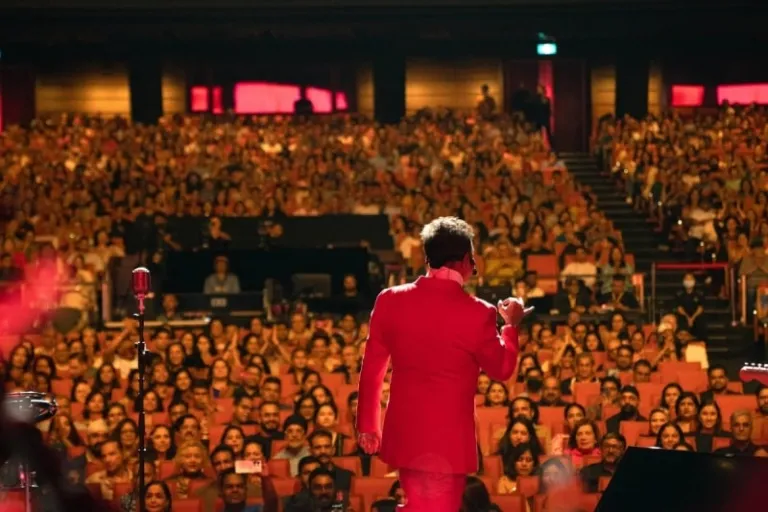
Image credit: Couturelense_by_gargi
In Indian cinema, playback singers play a unique role. Actors perform on screen, but singers provide the vocals that audiences remember long after the credits roll. Sukhwinder Singh has been one of the most recognisable voices in this space for decades. His singing often accompanies high-energy dance sequences, triumphant turning points, and emotionally charged scenes.
From the opening number, his presence was commanding. His vocals were forceful yet controlled, filling the theatre with ease. Songs like Chaiyya Chaiyya and Jai Ho triggered immediate reactions. Some audience members sang along. Others clapped instinctively. Many simply let the rhythm take over. The emotion was resounding in the theatre.
Momentum from start to finish
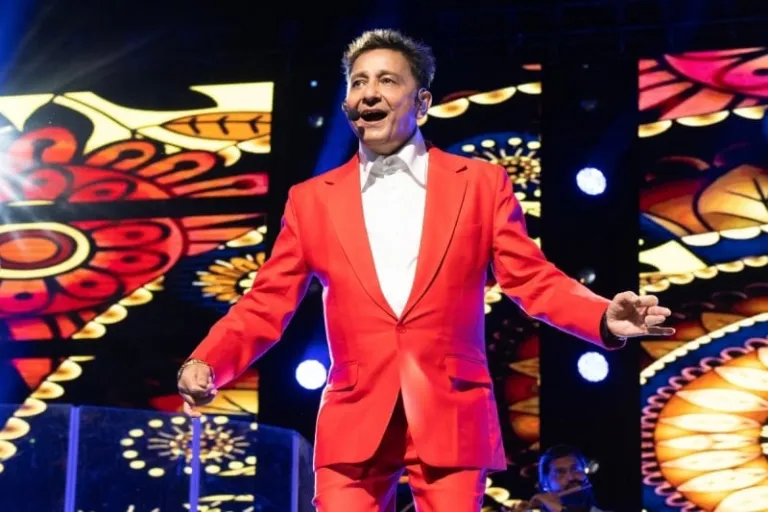
Image credit: Couturelense_by_gargi
The concert maintained a steady pace, keeping energy levels high. Transitions between songs were smooth, with minimal downtime and a clear sense of flow. When the tempo slowed, it felt deliberate rather than incidental. When it surged again, the audience followed without hesitation.
Singh frequently encouraged participation. He invited the crowd to clap in time, echoed their chants, and acknowledged the cheers with genuine delight. These moments helped bridge cultural and linguistic gaps, turning unfamiliar tracks into shared experiences. The result was a sense of collective movement, where performer and audience fed off each other’s enthusiasm.
When he sang iconic dance numbers, audience members were on the edge of their seats, emulating hook steps while some took it a level further. At the corner of the stage, small groups gathered in circles and danced the night away.
Joy at the centre of the performance
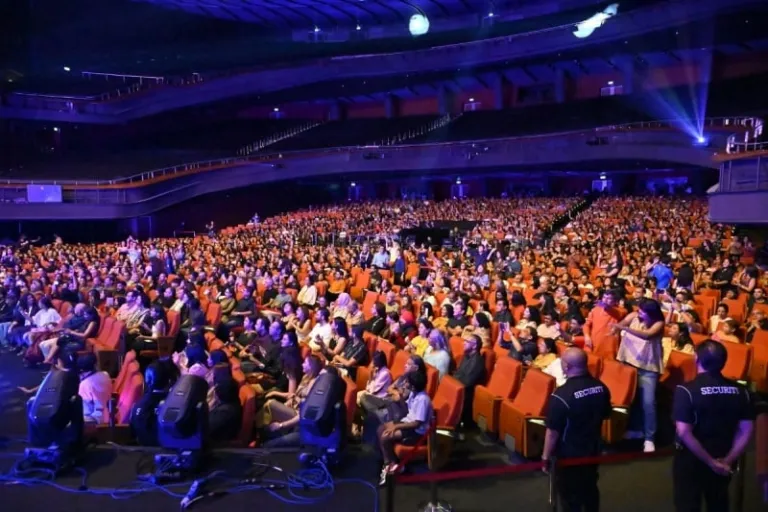
Image credit: Couturelense_by_gargi
There was a warmth to Singh’s stage presence that extended beyond his songs. He did not perform at the audience. He performed with them. His interactions were relaxed and friendly, often punctuated by humour and gratitude. Even when speaking between songs, his intent felt clear: to make everyone in the room feel welcome. He even invited a little girl who was dancing to his tunes to click a picture with him on stage, making the concert memorable for her family.
The staging supported this approach. Lighting and sound were polished but never overpowering. The focus remained firmly on the music and the voice driving it. In the intimate setting of The Star Theatre, this simplicity worked well, allowing moments of connection to feel immediate and personal.
Instruments and supporting vocals

Image credit: Couturelense_by_gargi
The concert was more than just Singh’s voice. A talented ensemble supported him throughout, adding layers and texture that elevated the experience. The rock guitar segments added punch and energy, giving several numbers an unexpected edge. The flute lent a melodic softness in slower songs, creating a gentle contrast that highlighted the emotion in Singh’s singing.
On vocals, Madhvi Shrivastava was a standout. Her beautiful voice complemented Singh perfectly, harmonising in duets and adding depth to choruses. She effortlessly carried softer passages, allowing Singh’s booming vocals to shine while keeping the musical experience rich and dynamic. Together, the instruments and supporting vocals transformed the concert into a fully immersive performance.
Also read: Changi Airport’s Expansion: What It Means for Budget and Regional Travel
A celebration of shared experience
Live music in Singapore often reflects the city’s cultural diversity, and Chak De Singapore was no exception. The concert introduced some audience members to Bollywood music for the first time, while offering others a nostalgic journey through songs they grew up with. By the end of the night, those distinctions mattered very little. The applause was loud. The smiles were wide. The energy lingered even as the lights came up.
Sukhwinder Singh’s concert proved that you do not need to follow Bollywood to appreciate its music. You only need to be open to rhythm, emotion, and joy. For a few hours, Singapore moved together to a soundtrack that crossed borders with ease. That sense of connection was the true highlight of the night.

About Author

Fluent in three languages, Sudhiksha is always on a quest to learn more about the world around her. She enjoys collecting sunsets, street food, and stories from the nooks and crannies of different places. To her, every journey unearths a new way of seeing home.