
How to Save Money in Seoul: 12 Ways to Travel in Seoul on a Tight Budget
You don’t need to break the bank to have a blast in Seoul.

Seoul may tempt you with trendy cafés, late-night shopping, K-beauty products, and seemingly endless places to eat. However, exploring the South Korean capital does not necessarily require an enormous travel budget.
With some advance planning, you can reduce the cost of accommodation, transport, meals, and sightseeing while still enjoying many of the city’s highlights. Here are 12 practical ways to save money on your next Seoul trip.
Also read: All the Dos and Don’ts in South Korea That Locals Wish You Knew!
1. Schedule your trip when it isn’t peak season
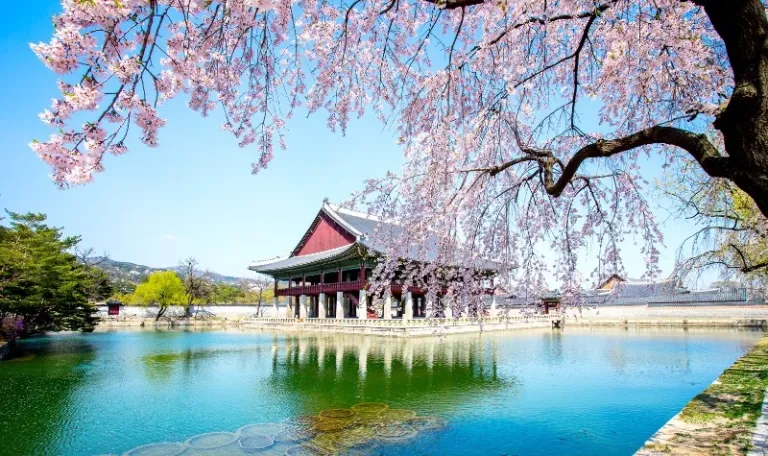
Many tourists usually flock to Seoul from April to May for the cherry blossoms in spring, or September to October for the autumn foliage. But for low-cost flights to South Korea, try to schedule your flight at least three months in advance and watch out for seasonal flight deals or other promotions.
Moreover, it’s best to avoid flying to Seoul during national holidays. This includes Seollal (Lunar New Year’s Day) in January, as well as Chuseok (Korean Thanksgiving Day), a major three-day festival that takes place in September or October. Celebrations in the city during these periods can get overwhelmingly busy!
2. Book cheap accommodations
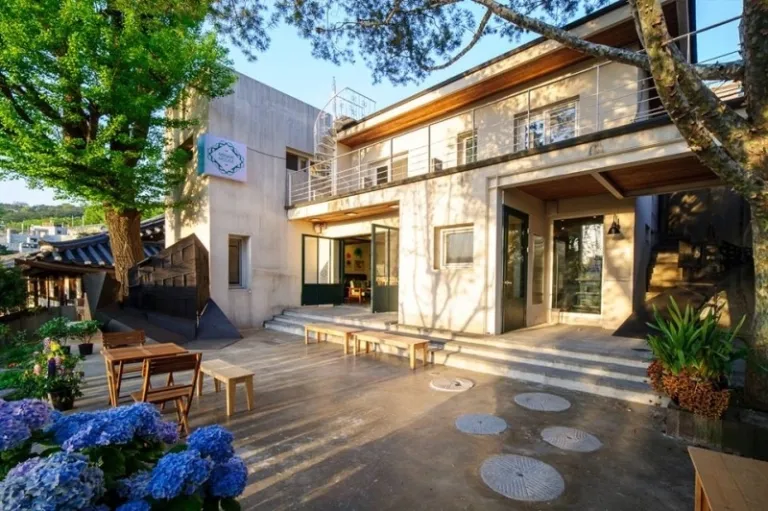
Image credit: Minari House Official Facebook Page
Hostels and guesthouses remain useful options for travellers hoping to keep accommodation costs low. Many offer shared kitchens, laundry facilities, luggage storage, and communal spaces, which can help you save on meals and other travel expenses.
Do not assume that a hostel will always be the cheapest choice, however. Budget hotels and small private rooms can sometimes offer better value, particularly for couples or groups sharing the cost.
Compare the final amount after taxes and fees, and check whether breakfast, towels, lockers, or luggage storage are included. Staying slightly farther from areas such as Myeongdong and Hongdae may also reduce the nightly rate, provided your accommodation remains close to a subway station.
For private holiday rentals, confirm that the property is legally registered for short-term tourist accommodation before booking.
3. Exchange your currency at the right place
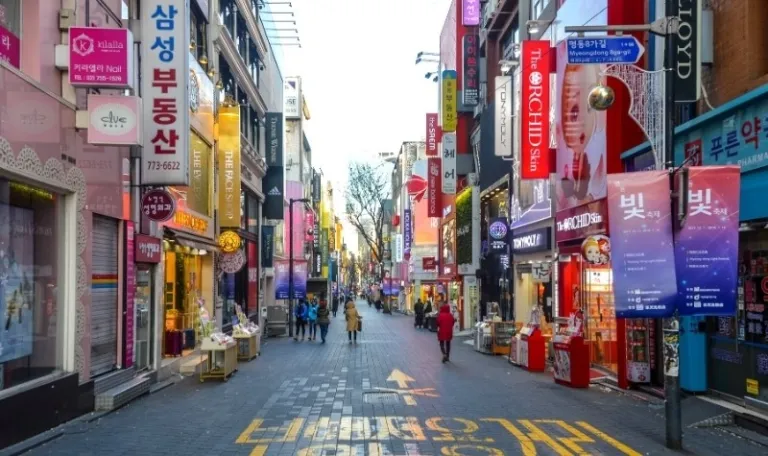
Avoid exchanging your entire travel budget at the airport without first comparing the rates and service fees. Airport exchange counters are convenient, but money changers or banks in central Seoul may offer more competitive rates.
Myeongdong remains one of the best-known areas for independent currency exchangers. Compare the displayed rate at several counters rather than assuming that every shop offers the same deal.
Cards are widely accepted in Seoul, but foreign transaction fees can vary substantially. Before travelling, check what your bank charges for overseas purchases and ATM withdrawals. Carry some Korean won for traditional markets, transport-card top-ups, and smaller businesses that may not accept foreign cards.
4. Choose between Tmoney and the Climate Card
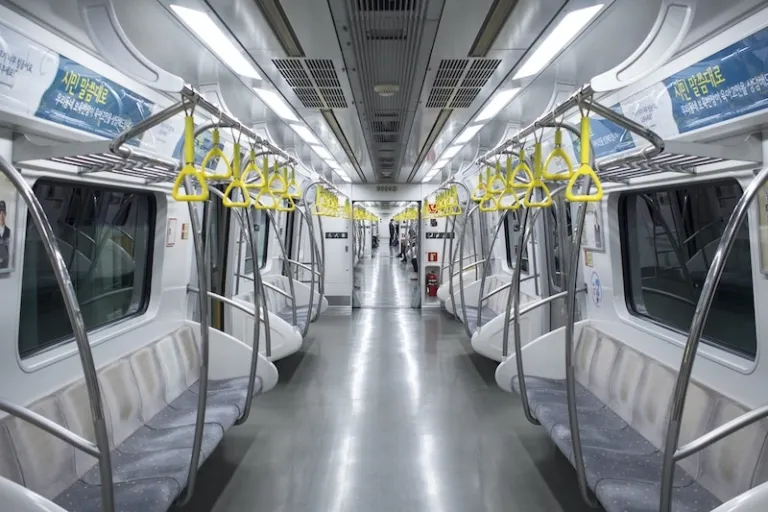
Image credit: Adam Chang
A reloadable transport card such as Tmoney is convenient for paying for subway and bus journeys. It also allows eligible transfer discounts when moving between public-transport services within the permitted period.
Travellers who expect to use public transport frequently should compare Tmoney with Seoul’s Climate Card short-term passes. These provide unlimited travel on covered subway and bus services for one, two, three, five, or seven days.
The short-term Climate Card passes currently cost ₩5,000 for one day, ₩8,000 for two days, ₩10,000 for three days, ₩15,000 for five days, and ₩20,000 for seven days. A physical card must be purchased separately, and the validity period begins on the day the pass is activated rather than lasting for a fixed number of 24-hour periods.
The Climate Card does not cover every railway line, airport bus, or journey beyond Seoul. Check your intended routes before deciding whether unlimited travel will actually cost less than using Tmoney.
5. Explore less expensive areas like Hongdae
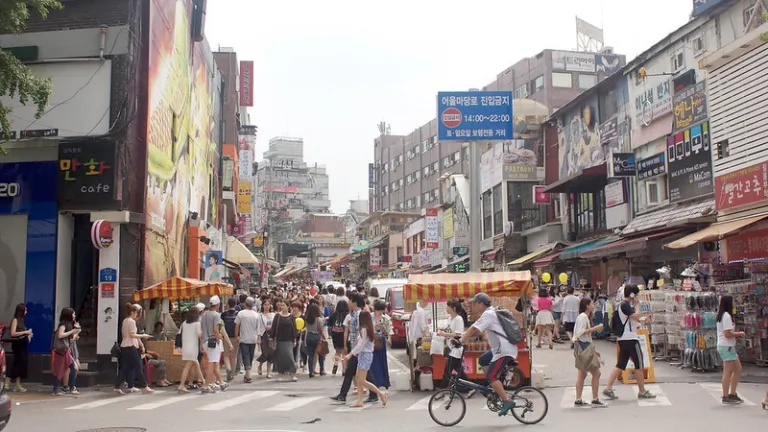
Image credit: Seokjin Jin
Neighbourhoods around universities tend to offer more student-oriented restaurants, cafés, fashion stores, and entertainment options.
Hongdae remains lively and popular, although its busiest streets are no longer uniformly cheap. Explore the smaller streets around Hongik University, Sinchon, and the Ewha Womans University area, and compare prices before buying.
University neighbourhoods are particularly useful for casual meals, accessories, clothing, photo booths, and inexpensive entertainment. Prices and quality still vary considerably between businesses, so avoid treating every shop as an automatic bargain.
6. Join a free walking tour with Korean students
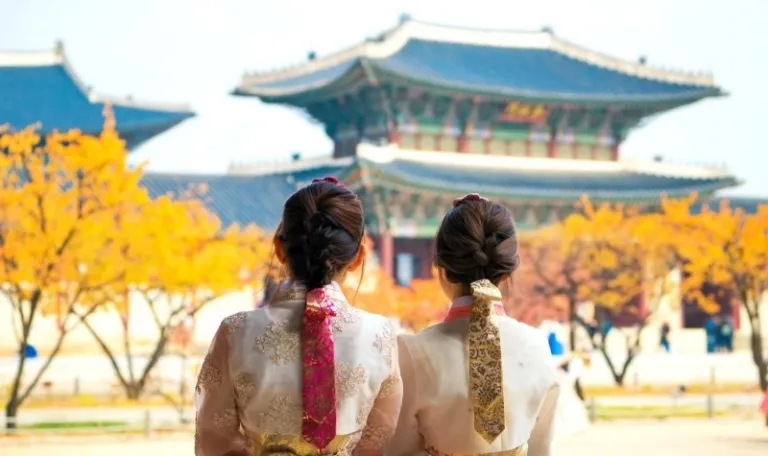
Another way to make your Seoul trip happen on a tight budget? You can sign up for a guided walking tour of Seoul, led by Korean students! These walking tours offer customised itineraries based on your preferred activities and places to visit. As such, they provide a fun and closer look at day-to-day Korean life in Seoul. You get to explore the city of Seoul from a local’s perspective, completely free of charge!
Check out the most popular student-led walking tours at SeoulMate and Meteor Youth. Just be sure to make an online reservation at least three days ahead of your tour date!
7. Eat at Korean restaurants if you’re travelling with a group
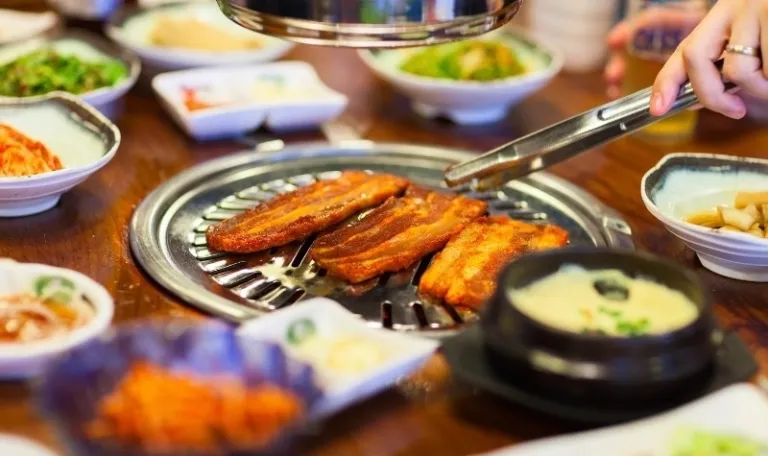
If you’re travelling with buddies and you’re deciding where to eat, choose to dine at Korean restaurants in Seoul. The advantage of eating at Korean restaurants is that they’re practically made for big groups. Plus, it’s a pretty fun bonding activity to cook your dinner with your friends! Not only can you indulge in mouth-watering grilled meats, but you can also rest assured that the banchan (side dishes) on the table will keep everyone in your group well-fed.
Even better, the price points aren’t steep at all. For less than ₩12,900 (~S$15), you can already enjoy a full course at these affordable barbecue buffets in Seoul. Now that’s a steal if we ever saw one!
8. Korean street food is your friend
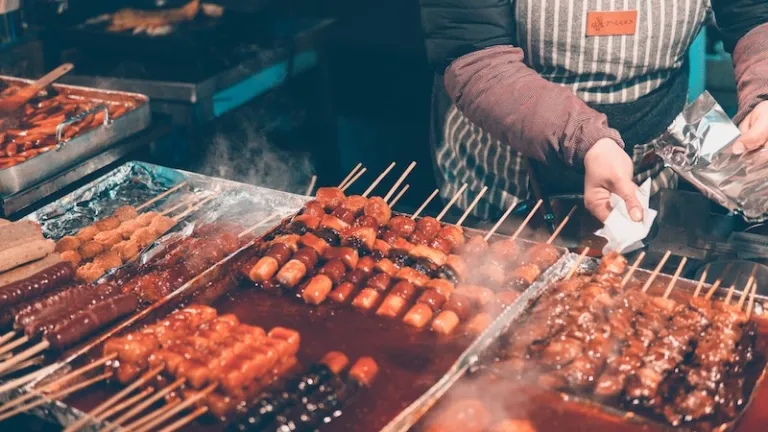
Image credit: Ian Valerio
Seoul’s markets and shopping districts offer plenty of street food, including tteokbokki, hotteok, fish cakes, gimbap, dumplings, and skewers.
Street food can be an affordable way to sample several Korean flavours, but prices have risen since the original article was published. Tourist-heavy areas may also charge noticeably more than neighbourhood markets.
Check prices before ordering and remember that several snacks can quickly cost as much as a complete restaurant meal. For better value, combine one or two street-food items with a filling dish from a market stall or casual eatery instead of building your entire dinner from small snacks.
Also read: 10 Cheap Eats in Seoul for 5,000 Won or Less!
9. Get your snack haul from Korean convenience stores
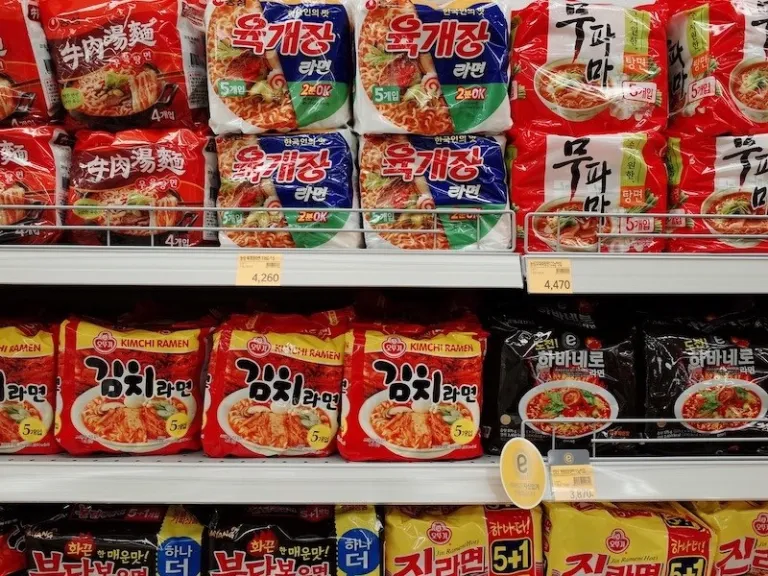
Anyone who loves K-dramas is going to go bananas at the recognisable snacks and flavoured drinks you can find at convenience stores like 7-Eleven. Choose your treat from the shelves that are regularly stocked with rice meals, spicy instant noodles, banana milk, steamed bun cakes, cold brews (sometimes with a K-pop idol’s face on the bottle label), honey butter almond chips, and of course, soju.
10. Buy affordable souvenirs from traditional Korean markets
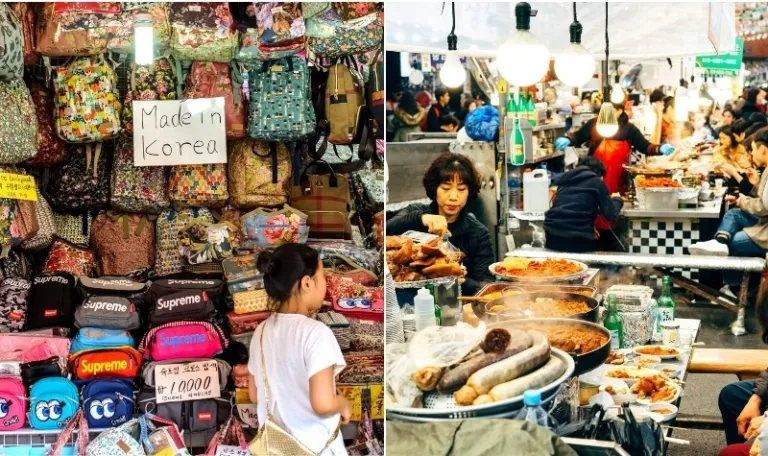
Image credit: Adli Wahid (left); Markus Winkler (right)
For unique keepsakes that you and your friends back home will love, hit up the traditional markets of Seoul. While they’re known for a dizzying array of food stalls, the vendors at Gwangjang Market and Namdaemun Market also sell bags, artisan handicrafts, textiles, silk goods, ceramics, local artworks, jewellery, and all kinds of souvenirs you can only find in Seoul!
Also read: 25 Cute & Cheap Souvenir Items to Buy from Korea [Updated 2019]
11. Score great bargains at the underground shopping malls
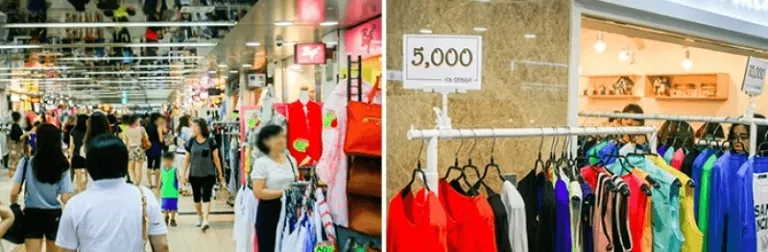
Image credit: Korea Tourism Organisation
Did you know that you can also discover rare finds below the city? Many of Seoul’s best shopping arcades are underground in stations, such as the Yeongdeungpo Underground Mall in Seoul Subway Line 1 (Yeongdeungpo Station) and the Myeongdong Underground Shopping Center in Myeongdong Station Line 4. You can shop for trendy clothes, accessories, cosmetics, food, K-pop merch, and various products at cheaper prices, especially compared to high-end department stores in Seoul.
Speaking of shopping, we know that figuring out your size and fitting clothes in another country can get confusing sometimes. Download this Korean clothing size chart as a shopping reference, so your money doesn’t go to waste!
12. Enjoy all the free activities that Seoul has to offer
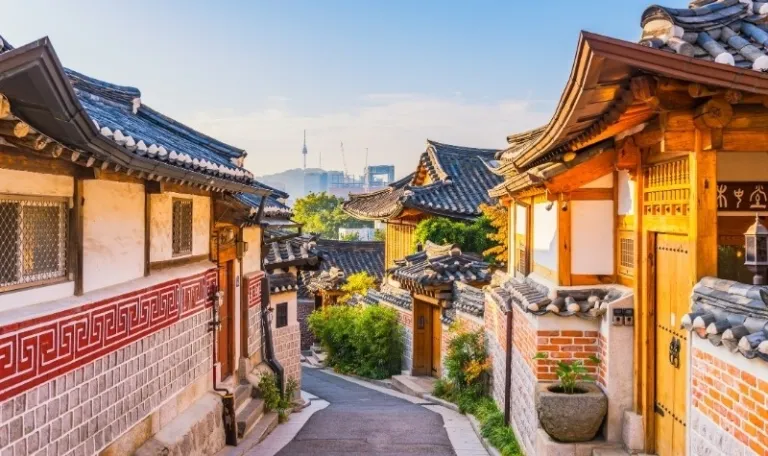
Many of Seoul’s best experiences cost nothing. You can walk beside Cheonggyecheon Stream, explore sections of the Seoul City Wall, relax in Hangang Park, admire the exterior of Dongdaemun Design Plaza, or hike in Bukhansan National Park.
Several museums also offer free admission to their permanent collections, including the National Museum of Korea, the War Memorial of Korea, and the Seoul Museum of History. Charges may still apply for certain temporary exhibitions or special programmes.
Bukchon Hanok Village remains free to enter, but it is also a residential neighbourhood. Keep noise to a minimum, follow any restricted visiting hours, and avoid photographing residents or private homes without permission.
You can also save on admission to Seoul’s royal palaces by checking combination tickets and free-entry conditions. Visitors wearing qualifying hanbok are generally granted complimentary admission to the major royal palaces, although renting an outfit may cost more than simply purchasing a standard ticket.
Enjoying Seoul without overspending
Travelling on a budget in Seoul is less about chasing the absolute cheapest option and more about deciding where your money matters most.
Choose accommodation near public transport, compare transport passes according to your itinerary, mix restaurants with convenience-store meals, and fill your days with parks, markets, museums, and walking routes. With a little preparation, you can experience plenty of Seoul without allowing shopping and dining costs to take over your travel budget.
Featured image credit: Cait Ellis | Instagram

About Author

Tiffany wrote articles on travel, food, and pop culture for TripZilla. As she plans her next adventure, she enjoys writing about the coolest places to stay around the world and where to find them.
Recommended Reads
6 Epic Train Journeys Starting from Singapore: To Bangkok, Korea & Even Europe
Cruises & Land Journeys