
Curated Itineraries to Explore the Philippines Beyond the Usual Locations
This is not your typical Boracay trip!

The Philippines is no stranger to bucket list fame. Places like Boracay and El Nido have earned global recognition for their beaches and dramatic limestone landscapes. Yet across its thousands of islands lies another side of the country that feels quieter, less polished, and far more personal.
For travellers who crave the thrill of discovering somewhere before it becomes the next headline destination, the Philippines offers countless options that still feel raw and refreshingly underrated. These curated itineraries spotlight lesser-known regions through distinct themes, allowing you to explore beyond the mainstream without sacrificing accessibility.
Each route is designed for travellers who want depth rather than density, story rather than spectacle.
Also read: Authentic Experiences in the Philippines Travellers Won’t Ever Forget
The hidden natural wonders loop
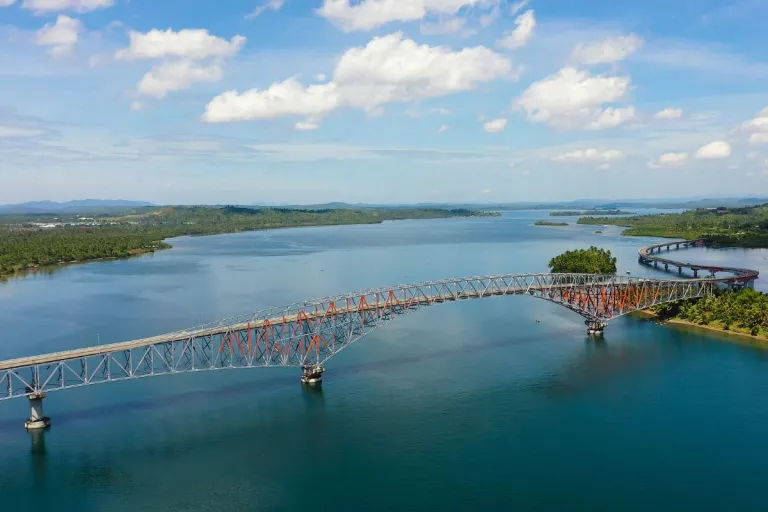 Image credit: Image credit: Alexpunker via Canva Pro | San Juanico Bridge
The central Visayas region is home to some of the Philippines’ most diverse landscapes, yet many travellers confine themselves to a single island. This route connects Anda in Bohol, Camiguin Island, and Siquijor into one fluid journey that blends caves, volcanoes, waterfalls, and coastal roads without the heavy tourism footprint of more famous beach hubs.
If your idea of travel leans toward landscapes that feel untamed but still accessible, this one’s just your cup of tea.
Anda, Bohol: The side of Bohol most travellers never see
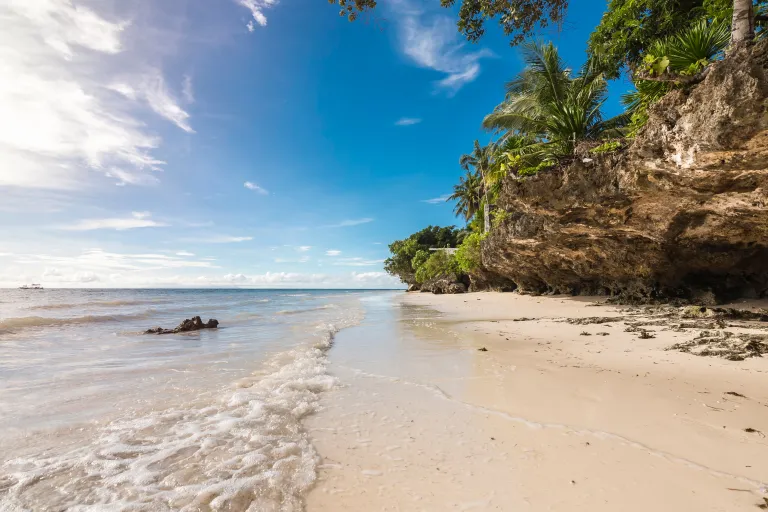 Quinale Beach
Most travellers land in Bohol and head straight to Panglao. But if you head east, about two and a half hours toward Anda, you will feel the vibe shift as rice paddies and roadside sari-sari stores begin to line the road.
Quinale Beach stretches wide and pale, often with only a handful of people scattered across its length. With no bars or loud music lining the shore, the experience becomes about the small details. Imagine the soft thud of oars as fishermen return, the tide smoothing the sand by mid-morning, and the horizon unfolding without interruption.
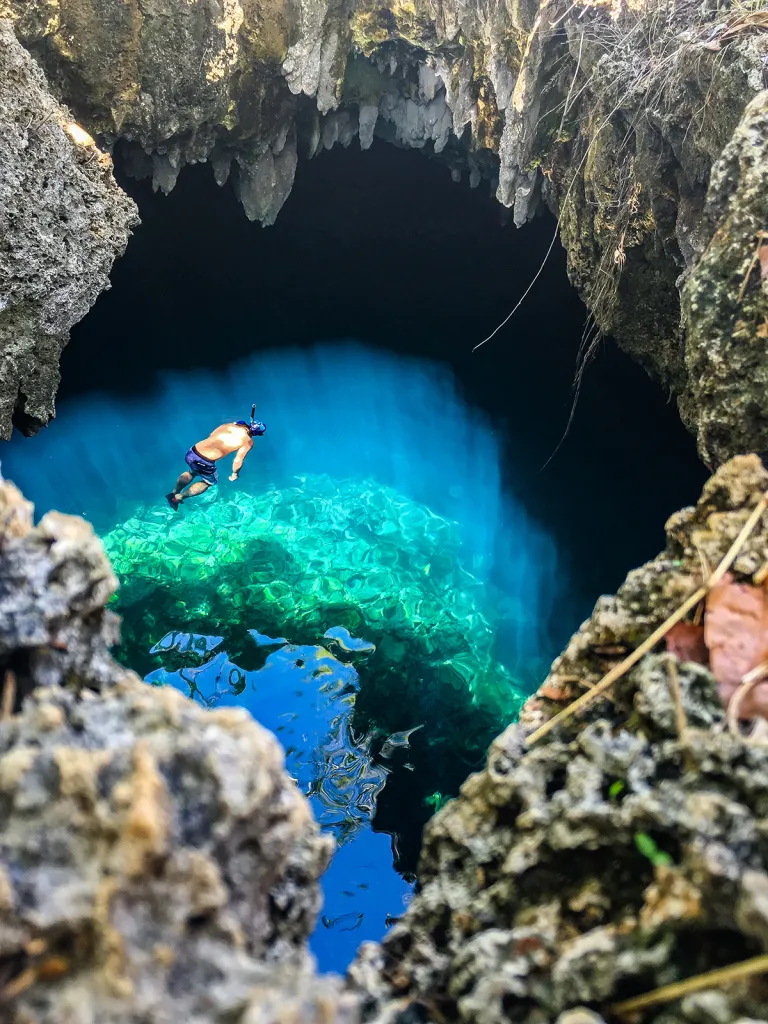 Cabagnow Cave Pool
Just inland, Cabagnow Cave Pool offers a surprising shift in scenery. After climbing down into the limestone sinkhole, you find yourself in a cavern where sunlight pours through natural openings overhead. The contrast between the open coastline and the enclosed cave swim adds variety to Anda’s landscape without disrupting its naturally relaxed vibe. From here, ferries via Jagna connect onward to Camiguin, and the journey begins to tilt from calm to dramatic.
Camiguin: An island shaped by fire, not foot traffic
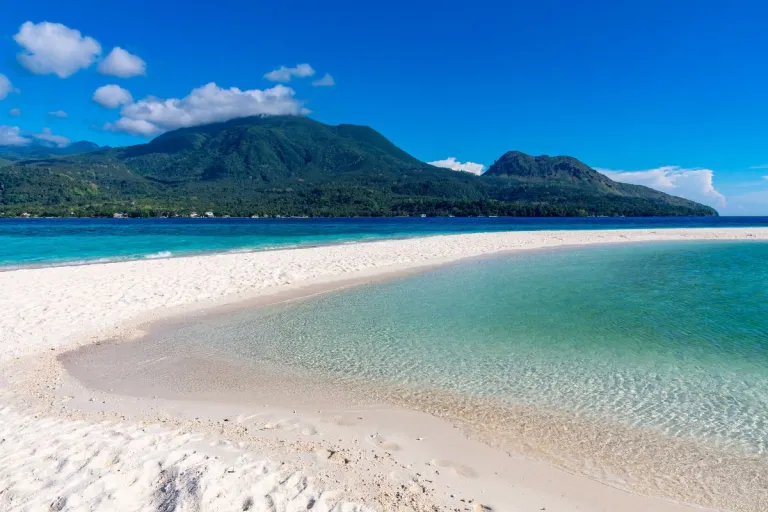 Image credit: TravelPics via Canva Pro | White Island in Camiguin
As you arrive in Camiguin, the skyline changes instantly. Volcanic peaks rise from a compact island ringed by coastal roads. Renting a scooter becomes less about convenience and more about freedom, with the entire island easy to circle at a relaxed, unhurried pace.
Mount Hibok-Hibok draws early risers willing to climb before sunrise, with a trail that cuts through forest and volcanic rock before opening to views that stretch across the Bohol Sea. If you decide to skip the summit, the mountain remains a constant presence, reshaping the island’s silhouette wherever you stand.
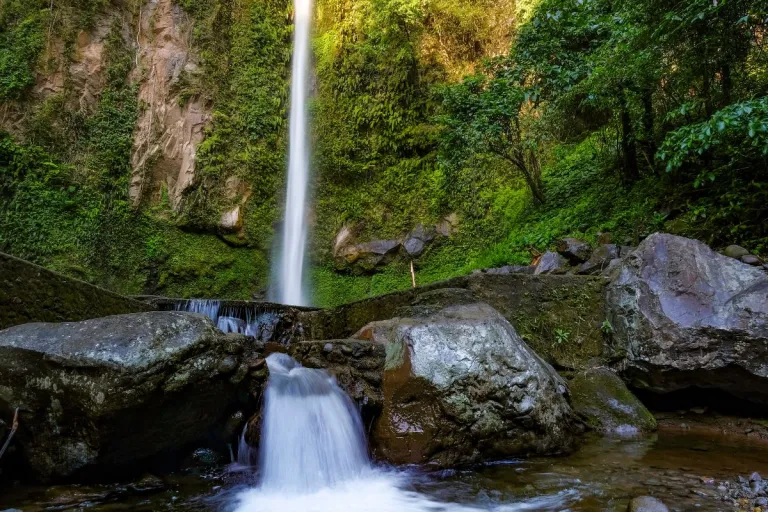 Image credit: Tourism Promotions Board Philippines | Katibawasan Falls
Later on the journey, at Katibawasan Falls, the environment cools again. Water plunges down a steep drop into a basin edged with thick foliage, offering relief from the island heat. Then, offshore, White Island appears as a bright ribbon of sand with no trees and no structures. As you step off the boat and into the clear water, you see volcanic peaks framing the view.
As evening approaches, Ardent Hot Springs provides yet another shift. Steam rises from forested pools as the air cools, and the island settles into a quieter pace.
Siquijor: The island that feels like a secret you’re let in on
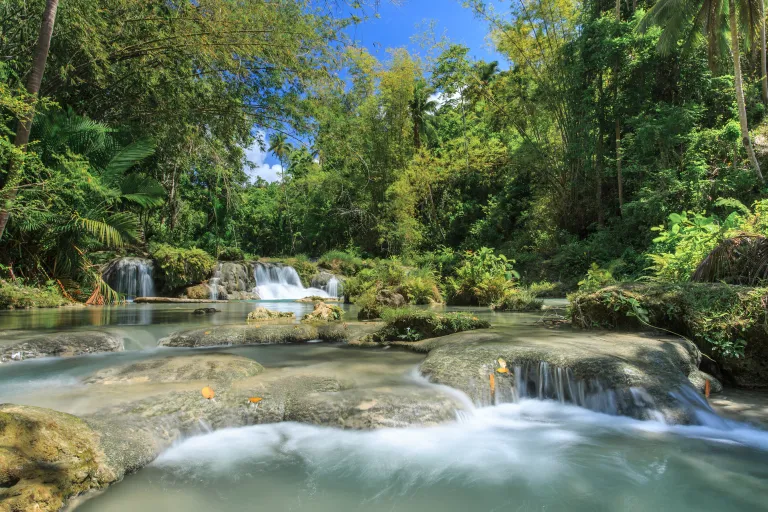 Image credit: Tourism Promotions Board Philippines | Cambugahay Falls
If Camiguin feels elemental, Siquijor feels measured. Compact enough to explore by scooter, the island allows you to trace its coastline in a day, yet encourages you to stop often.
Cambugahay Falls remains one of its most photogenic stops, but arriving earlier in the day transforms it from a snapshot into a real experience. Moving between its layered pools, the water shifts in colour with the changing light and depth. Rope swings add energy, but there is no pressure to join, just plenty of space to enjoy the falls at your own pace.
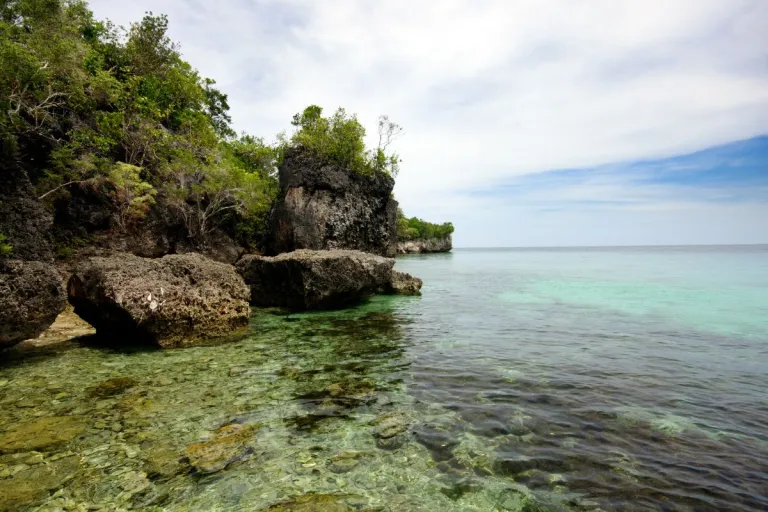 Image credit: Drewzshots via Canva Pro | Salagdoong
As you continue along the coastal highway, the scenery opens into cliff edges and narrow strips of the beach. At Salagdoong, rock formations form natural platforms for cliff jumps into clear water below. The atmosphere is lively but not overwhelming, shared comfortably between locals and visitors.
At this part of the journey, everything falls into an easy rhythm. Beach mornings give way to waterfall swims, which ease into quiet coastal drives. The islands never compete with one another, but simply unfold in sequence.
The Palawan Coast
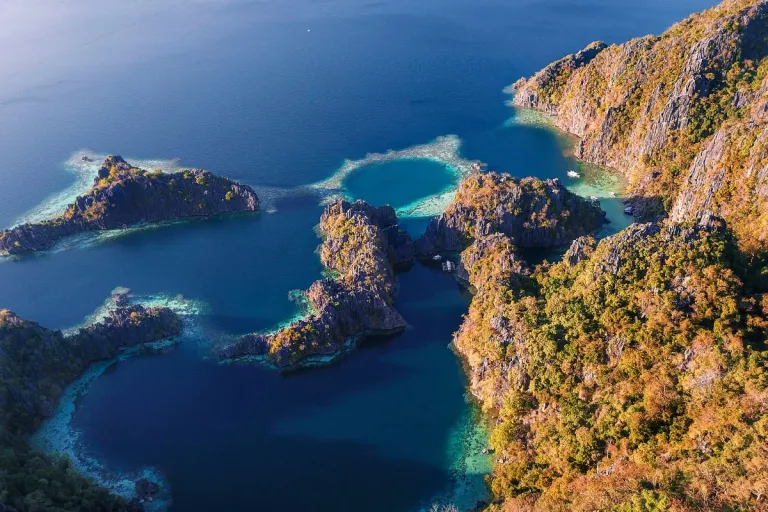 Image credit: LukeWaitPhotography via Canva Pro | El Nido
Many people picture El Nido’s towering limestone cliffs when they think of Palawan. Yet exploring farther along the coast uncovers quieter communities that offer the same beauty without the crowds.
San Vicente: Fourteen kilometres of beach
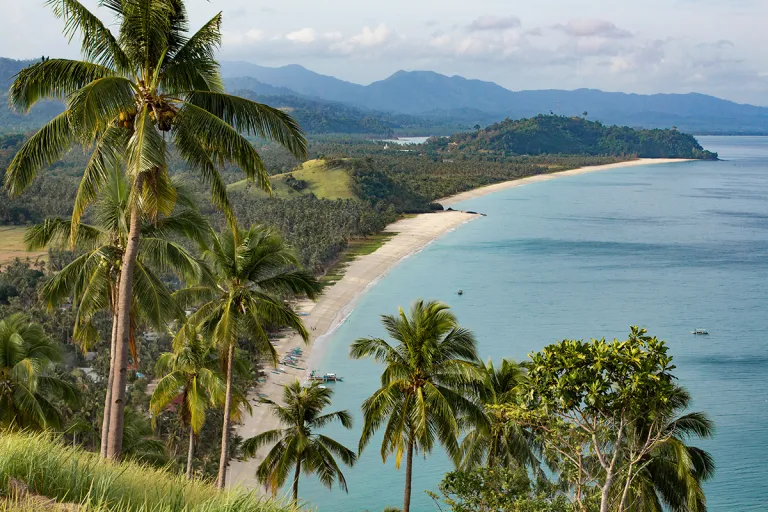 San Vicente
Reaching San Vicente requires a few hours’ transfer from Puerto Princesa, but the effort becomes clear the moment you step onto Long Beach. Spanning more than fourteen kilometres, it feels expansive rather than curated.
Instead of weaving between loungers, you walk on uninterrupted sand. Fishing boats remain part of the shoreline, and small villages continue their routines within view. The absence of large-scale development changes how the beach functions. It becomes less about activity and more about movement: Walking, kayaking at sunrise, or simply sitting without background noise.
Island hopping from here carries the same tone. Boats are fewer, coves quieter, and snorkelling spots less trafficked.
Port Barton: Palawan at its most unpolished and unhurried
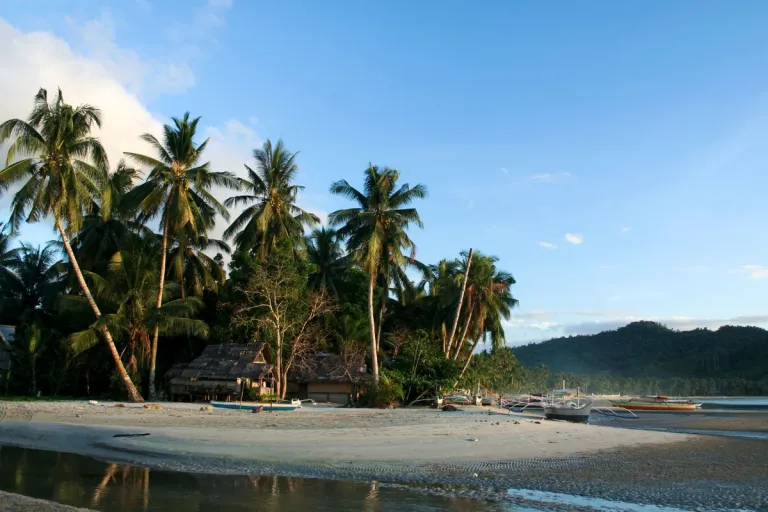 Image credit: ampueroleonardo via Canva Pro | Port Barton
A short drive brings you to Port Barton, which feels smaller still. Roads are simple, guesthouses modest, and evenings revolve around beachfront tables rather than programmed nightlife.
Island hopping focuses on reef life. Sea turtles glide through shallow water, and coral gardens stretch beneath the surface without heavy anchor marks. Back in town, sunset does not escalate into spectacle. It fades naturally into dinner conversations and quiet beachfront walks. Port Barton does not attempt to be the next El Nido. Its charm lies in simply being itself.
Into the highlands where traditions still lead the way
 Image credit: Ghnskie via Canva Pro | Mount Pulag
Northern Luzon offers a complete departure from island imagery. Here, mountains rise in layered ridges, and traditions are preserved not as attractions but as lived realities.
Sagada: Caves, cliffs, and mountain silence
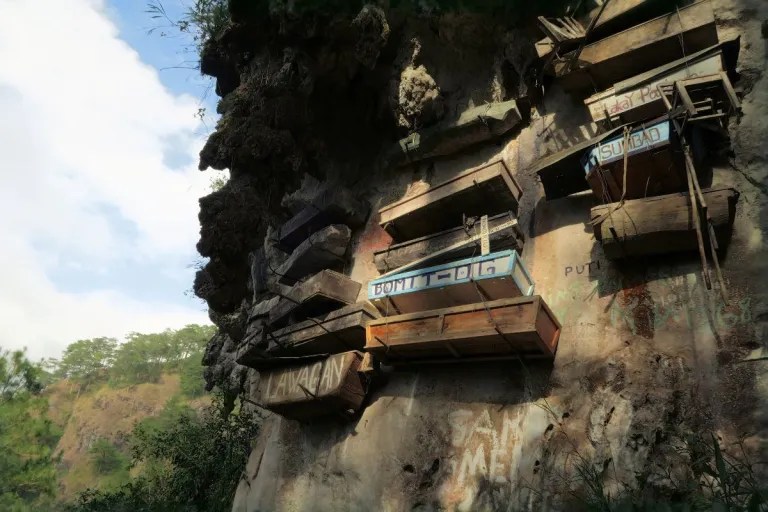 Image credit: flocu via Canva Pro | Sagada
The journey to Sagada winds through mountain roads before settling into a town scented with pine. The hanging coffins, embedded into limestone cliffs, reflect the unique burial traditions of the members of the Igorot tribe that remain meaningful to local communities. Visiting with a guide introduces context that shifts the experience from curiosity to cultural understanding.
For those seeking physical immersion, Sumaguing Cave requires balance and patience. Descending through slick limestone and shallow pools demands attention, but also creates a sense of shared experience among small groups.
At Kiltepan Peak, sunrise spreads gradually across layers of mountain ridges. Watching fog dissolve into light does not feel like ticking off a viewpoint. It feels like waiting for a landscape to reveal itself.
Banaue and Batad: rice terraces that still feed a community
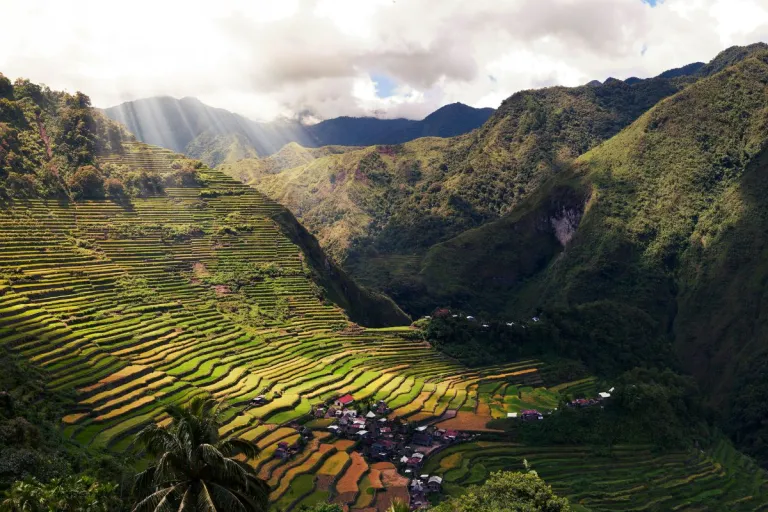 Image credit: De-Wit via Canva Pro | Banaue Rice Terraces
Continuing onward, Banaue’s rice terraces rise in carved layers along steep slopes. Travelling to Batad requires a trek inward, and as the path narrows, the terraces begin to form a natural amphitheatre around the village.
Walking along terrace edges reveals irrigation systems that continue to function as they did centuries ago. Farmers tend plots, and water glides between levels in quiet precision. You’ll realise that the terraces aren’t just static monuments, they are active landscapes shaped by repetition and patience.
Remaining overnight in Batad allows you to watch the colour shift with changing light, from bright green to deep gold, depending on the season.
Buscalan: where tattoos are tapped by hand and earned by journey
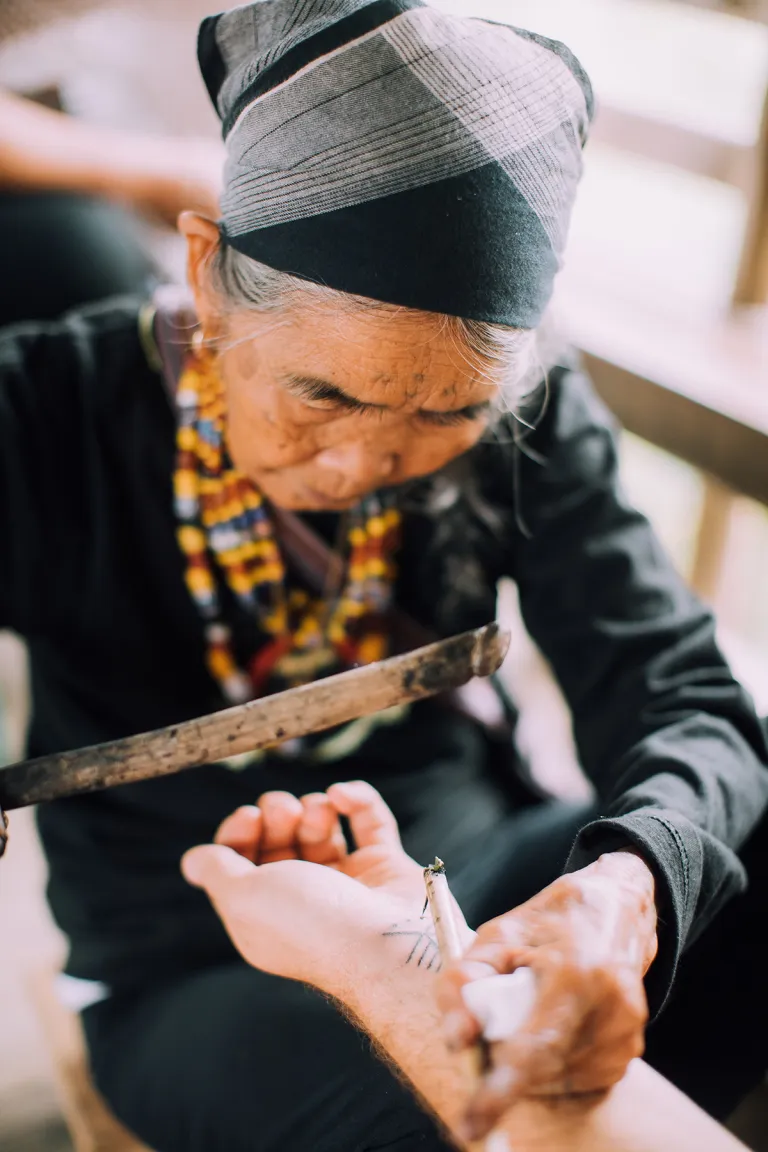 Image credit: Image credit: Tourism Promotions Board Philippines | Kalinga tattooing by Apo Whang-Od
Reaching Buscalan involves a final uphill stretch into a small mountain village. Here, traditional Kalinga tattooing continues through hand-tapped techniques that require time and focus.
The rhythm of bamboo tapping against skin led by Apo Whang-Od, who became famous for being one of the last mambabatok, feels deliberate rather than hurried. Conversation flows between artist and visitor, and the experience unfolds slowly.
Even without participating in the tattoo ritual, staying overnight places you inside a community that moves according to terrain and tradition rather than tourism flow.
Follow the flavours through Western Visayas
Western Visayas remains underrepresented in international itineraries, yet its culinary identity rivals any region in the country.
Iloilo: Where batchoy bowls come with heritage on the side
 Image credit: Various servings of batchoy
Iloilo City pairs preserved Spanish-era architecture with a long-standing love for batchoy, a pork-based noodle soup that locals treat less like a novelty and more like a daily ritual. Served steaming in long-running eateries such as La Paz Market, batchoy arrives layered with sliced pork, liver, noodles, crushed chicharon, and a deeply savoury broth that reflects decades of refinement rather than reinvention.
From La Paz, the city unfolds through districts such as Jaro and Molo, where ancestral houses and historic churches reflect Iloilo’s colonial past. The Molo Mansion, once home to a prominent family, now stands restored and accessible, offering a glimpse into how trade and migration shaped the region. Nearby, the Jaro Cathedral anchors one of the city’s oldest districts, surrounded by small bakeries and traditional markets where everyday life continues uninterrupted.
Bacolod: Smoke, sugarcane, and the best chicken inasal in the country
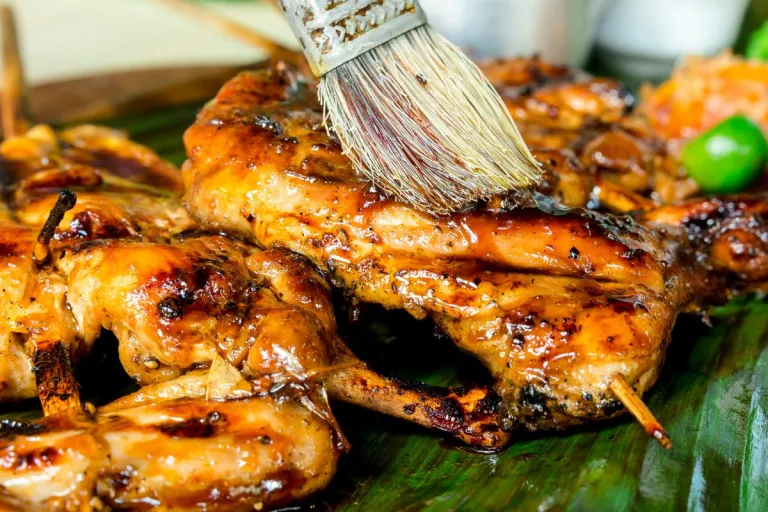 Image credit: MDV Edwards via Canva Pro | Chicken inasal
A ferry ride from Iloilo brings you to Bacolod, a city whose culinary identity is built around charcoal smoke and marinade. Chicken inasal, marinated in vinegar, calamansi, garlic, and annatto before being grilled over open flame, dominates menus across the city. Served with rice, dipping sauces, and often a brush of extra annatto oil, it strikes a balance between tangy, smoky, and slightly sweet. Eating it straight off the grill, with juices still sizzling, is less a recommendation and more a necessity.
Beyond its grills, Bacolod’s landscape is shaped by sugarcane, which once powered the region’s economy. The Ruins, a skeletal mansion framed by open sky, stands as a remnant of that era. Its arched windows and crumbling façade tell the story of a prosperous sugar dynasty interrupted by war, and visiting at sunset deepens the mood even further, casting long shadows across its courtyard.
Dumaguete: A laid-back coastal town with a wild marine backyard
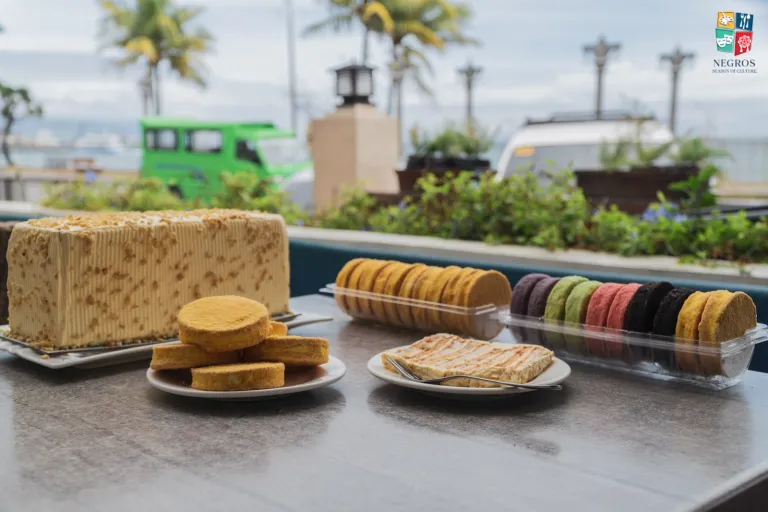 Image credit: Negros Season of Culture | Assorted silvanas
If Iloilo is known for batchoy and Bacolod for chicken inasal, Dumaguete carries a softer culinary identity shaped by its long-running bakeries and relaxed café culture. The city is famous for silvanas, frozen buttercream sandwich cookies coated in cashew crumbs, best enjoyed fresh from established pastry shops near the city centre.
Evenings gather along Rizal Boulevard, where locals walk by the waterfront and small food stalls set up simple grills. The atmosphere is unhurried, with conversation drifting across the promenade as the light fades. From Dumaguete, short boat rides connect to Apo Island, where snorkelling reveals coral gardens and sea turtles in clear, open water. Inland, Valencia’s waterfalls provide a quick change in terrain without requiring a full detour.
Experience the Philippines in a different way
Modern travellers increasingly seek places that feel discovered rather than delivered. The destinations within these itineraries offer beauty and culture without the overwhelming infrastructure that often dilutes the experience.
Even if reaching them requires an extra ferry ride or a longer trip on the road, the journey itself adds to the experience. Along the way, travellers discover shifting landscapes and unexpected moments that reveal the beauty of the Philippines beyond its main routes.
In the Philippines, sometimes the most rewarding discoveries lie just beyond the places everyone else is talking about.
Brought to you by Tourism Promotions Board Philippines

About Author

Darren enjoys travelling, photography and good food. He loves cultural experiences and exciting adventures and is no stranger to travelling alone. When he's not putting his travel experiences into words, he's probably sitting behind his laptop, planning his upcoming adventure.
Recommended Reads
10 Best Cafés in Cebu for Your Next Coffee Crawl
Philippines
Important Things To Keep In Mind When Travelling to The Philippines
Sustainable Travel