
Explore Yeouido: 8 Things to Do in Seoul’s Business District
Seoul’s business district, Yeouido, can come alive as a tourist hangout spot – if you explore these activities when you’re there!

With its glass skyscrapers, government buildings, and busy office crowds, Yeouido may not immediately come to mind when planning a Seoul itinerary. However, this island on the Han River offers far more than corporate headquarters and financial institutions.
Between its sprawling parks, riverside activities, modern malls, broadcasting landmarks, and seasonal events, Yeouido can easily fill an entire day. It is also particularly beautiful in spring, when cherry blossoms transform the streets surrounding the National Assembly.
Here are eight of the best things to do in Yeouido, Seoul’s principal financial and political district.1. Visit Yeouido Park
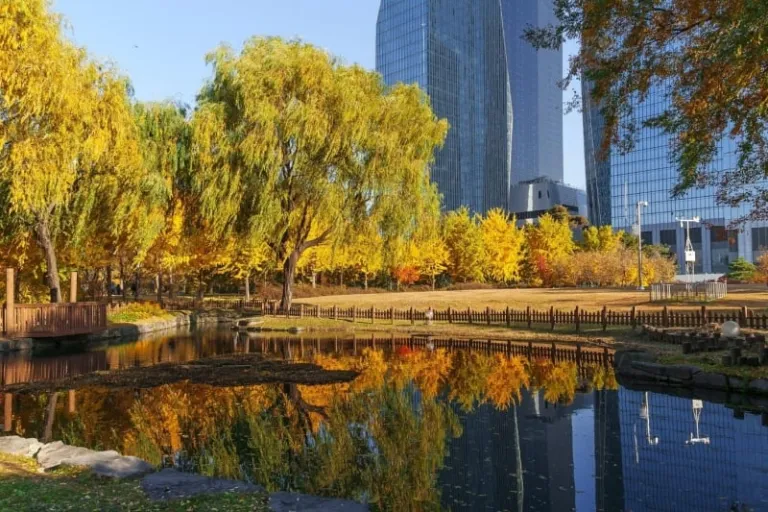
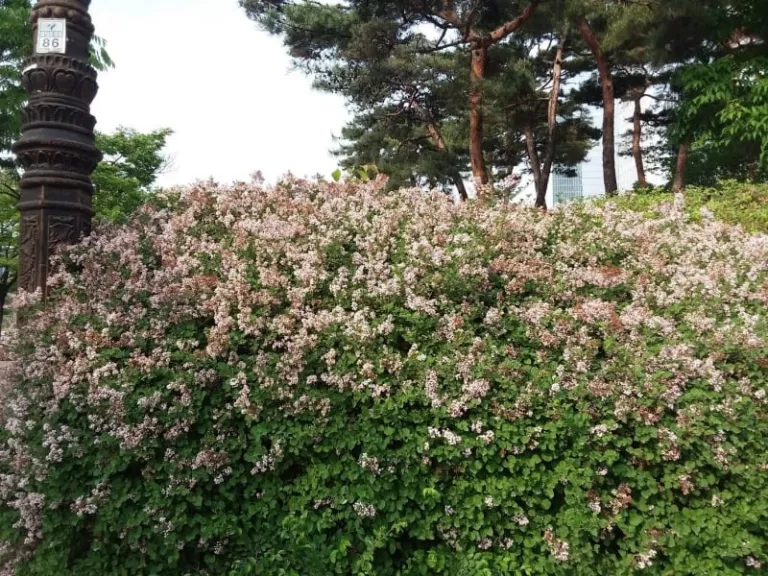
Yeouido Park provides a refreshing stretch of greenery amid the district’s offices and skyscrapers. Opened in its present form in 1999, the park includes walking paths, lawns, recreational spaces, and themed sections such as the Traditional Korean Forest and Cultural Square.
The Traditional Korean Forest features a pond, pavilion, and landscaped paths inspired by traditional Korean gardens. Elsewhere, visitors can cycle, relax beneath the trees, or enjoy the contrast between the park’s greenery and Yeouido’s modern skyline.
The park becomes especially attractive during spring and autumn. Although the neighbourhood’s most famous cherry blossoms are concentrated around Yunjung-ro near the National Assembly, Yeouido Park also offers seasonal colour with slightly more space to wander.
2. Visit the National Assembly Building
Yeouido is not only Seoul’s financial district but also an important centre of South Korean politics. The National Assembly Building is one of the island’s most prominent landmarks, instantly recognisable by its large blue-green dome and columned façade.
Visitors can learn more about South Korea’s legislative system through tours and exhibitions within the National Assembly complex. Available programmes may include visits to the Plenary Chamber and other educational facilities.
Advance reservations are required for public visits, and access may be affected by parliamentary proceedings, official events, or heightened security. Check the latest visitor information before travelling there.
The surrounding streets are also famous for the Yeouido Spring Flower Festival, when rows of cherry trees bloom beside the National Assembly grounds.
3. Shop and dine at IFC Mall
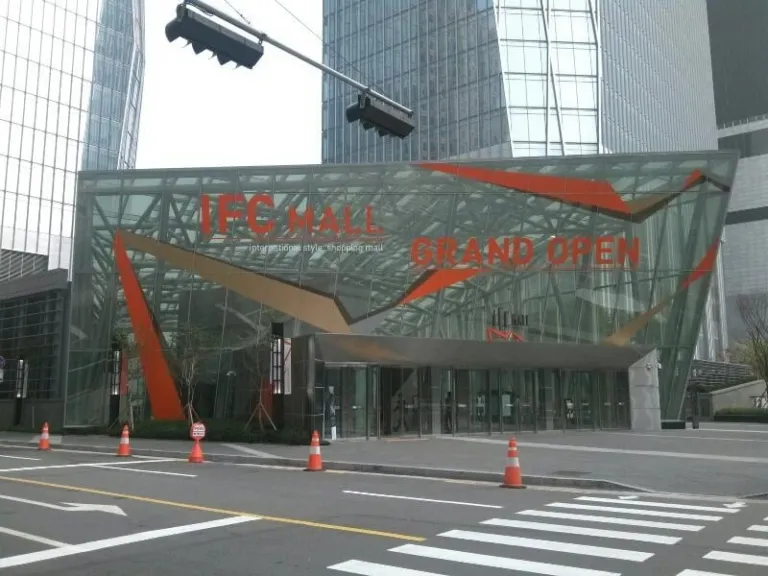
Image credit: TFurban
IFC Mall remains one of Yeouido’s most convenient shopping and dining destinations. Located beneath the International Finance Centre complex, it is connected to Yeouido Station, Conrad Seoul, and nearby office towers through underground passages.
The mall contains fashion retailers, beauty stores, cafés, restaurants, a cinema, and lifestyle shops spread across several underground levels. Its enclosed layout also makes it a useful place to visit during rain, extreme heat, or cold weather.
4. Cool off at the Yeouido Hangang Park swimming pool
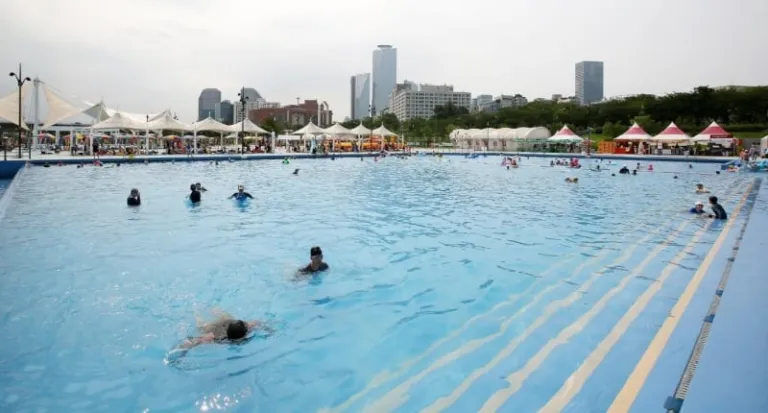
Image credit: Republic of Korea
During Seoul’s hot and humid summers, the outdoor swimming pool at Yeouido Hangang Park provides an affordable way to cool down beside the river.
The seasonal facility includes separate pools designed for adults, younger swimmers, and small children. Seoul’s 2026 summer programme lists three pools at Yeouido, alongside recreational water features and family-friendly facilities.
The pool only operates during the official summer season, and its dates, hours, admission prices, and rules are announced annually. Swim caps or particular types of swimwear may be required, so check the latest guidance before visiting.
Outside the summer season, Yeouido Hangang Park is still worth exploring for picnics, cycling, river views, food deliveries, and evening walks.
5. Discover The Hyundai Seoul
Opened in 2021, the enormous department store is designed around spacious interiors, abundant natural light, indoor greenery, and changing cultural installations. Rather than resembling a conventional enclosed department store, it incorporates open atriums and landscaped spaces intended to feel less crowded and commercial.
Visitors will find luxury labels, Korean fashion and lifestyle brands, cafés, pop-up stores, exhibition areas, and an extensive food hall. Temporary events and branded installations regularly draw large crowds, particularly on weekends.
The Hyundai Seoul is connected to the wider IFC complex through underground walkways, making it easy to combine both malls without stepping outside. Regular retail hours vary between weekdays and weekends, while restaurants may remain open later.
6. Enjoy a riverside picnic at Yeouido Hangang Park
Yeouido Hangang Park is one of Seoul’s most popular places to relax beside the river.
On pleasant afternoons, locals spread picnic mats across the grass, rent bicycles, order fried chicken, and watch boats move along the Han River. Convenience stores and food outlets around the park make it easy to assemble a casual meal, while rental services may offer picnic mats, tables, or other equipment.
The park also hosts festivals, performances, fireworks, and seasonal cultural programmes. In 2026, it served as one of the main venues for the Seoul Spring Festival, demonstrating how frequently the riverside area is used for major city events.
Check Seoul’s official event listings before your trip, as concerts and festivals can bring large crowds or temporary access restrictions.
7. Explore Yeouido’s architecture and broadcasting history
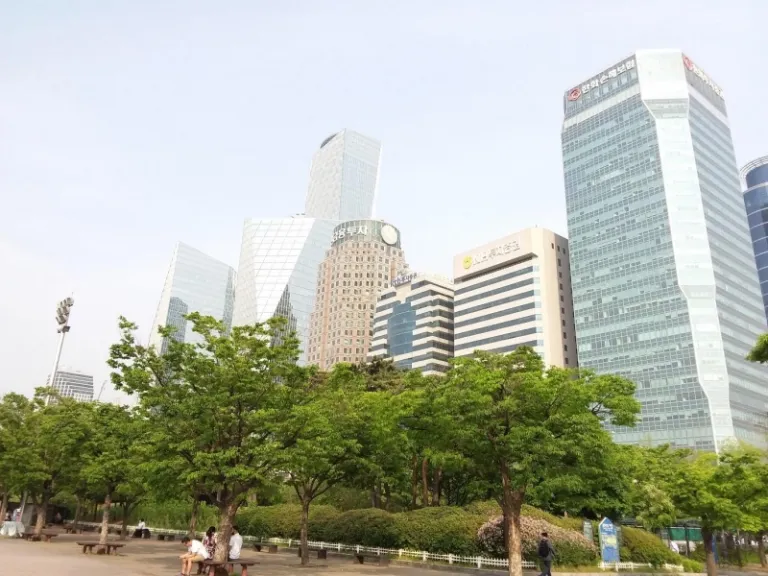
Yeouido’s skyline reflects Seoul’s rapid economic development, with landmarks including the 63 Building, the International Finance Centre, Parc.1, and the Federation of Korean Industries tower.
The gold-coloured 63 Building remains one of the district’s most recognisable structures, although it is no longer Yeouido’s tallest skyscraper. The former 63 Art observatory and Aqua Planet 63 ceased operations, so outdated references to its aquarium and art gallery should be removed from the article.
Fans of Korean broadcasting can instead visit KBS, South Korea’s public broadcaster, which continues to operate from Yeouido. KBS On offers exhibitions and interactive displays introducing the development of Korean television and radio, though operating schedules should be confirmed before visiting.
8. Cross the river to Noryangjin Fisheries Wholesale Market
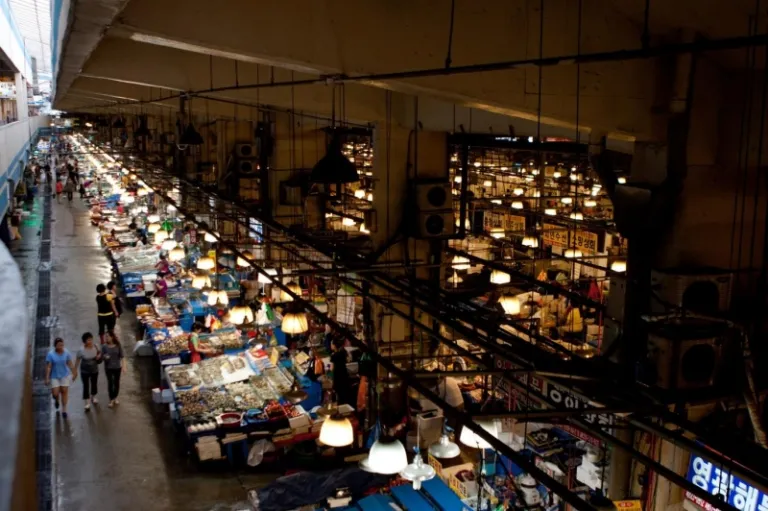
Image credit: Jirka Matousek
Although Noryangjin Fisheries Wholesale Market is not located on Yeouido itself, it is only a short subway journey away and remains a convenient addition to a day in the district.
One of Seoul’s largest seafood markets, Noryangjin is filled with stalls selling live fish, shellfish, crabs, octopus, and other seafood. Visitors can select what they want from the market floor before taking it to one of the restaurants in the building to be sliced, grilled, steamed, or prepared as part of a complete meal.
Confirm the seafood price, preparation fee, table charge, and any additional costs before agreeing to a purchase. Calling every option “reasonably priced” can be misleading, especially when ordering premium seafood or when charges are calculated separately.
A different side of Seoul
Yeouido may still function primarily as a business and government district, but its appeal extends well beyond office hours. You can browse contemporary malls, walk through landscaped parks, learn about Korean politics and broadcasting, swim beside the Han River, or simply spend an evening watching the city lights from the waterfront.
Visit on a weekday for the full energy of Seoul’s business district, or come during the weekend when its parks and riverside spaces take centre stage.

About Author
Eunice revels in opportunities for traversing new worlds. She enjoys experimenting with her nascent interest — photography — or delving into a pool or novel. Felines and their more affectionate frenemies (dogs) are also heart-stealers for her.