
Why a Japanese Phone Number Makes Travel in Japan Easier
Don’t miss this underrated travel hack!

Visiting Japan provides an encounter that stays with you well after you’ve settled in. Many travellers come with a list of known sights. Temples, urban scenes, sushi and trains are renowned for their perfect timeliness. However, the true allure of Japan is found in the things. The everyday unnoticed instances slowly build up: determining the correct station exit to reach your destination, placing an order for food after a tiring day of exploring, signing up for local apps or attempting to secure tickets for a popular exhibition.
In the midst of the rush, numerous travellers discover a subtle fact: owning a Japan eSIM with a phone number often makes everything flow much more effortlessly, almost like magic. Initially, it appears redundant. You’ve got Wi-Fi, a data eSIM and Google Maps. What else could be essential? By the second or third day, the truth softly nudges you differently. Suddenly, an app won’t verify your phone number. A restaurant asks for SMS verification. A ticket site requires your number to “start with 0.” A courier tries to phone you. Can’t get through. Your international phone number simply doesn’t match the system’s criteria.
This is typically the moment when many individuals realise, “Ah… so this explains why numerous travellers suggest obtaining a Japan eSIM with a phone number.” It’s a point often missed prior to arrival, but its significance soon becomes evident when you attempt to engage with daily systems.
Practical realities of travel in Japan
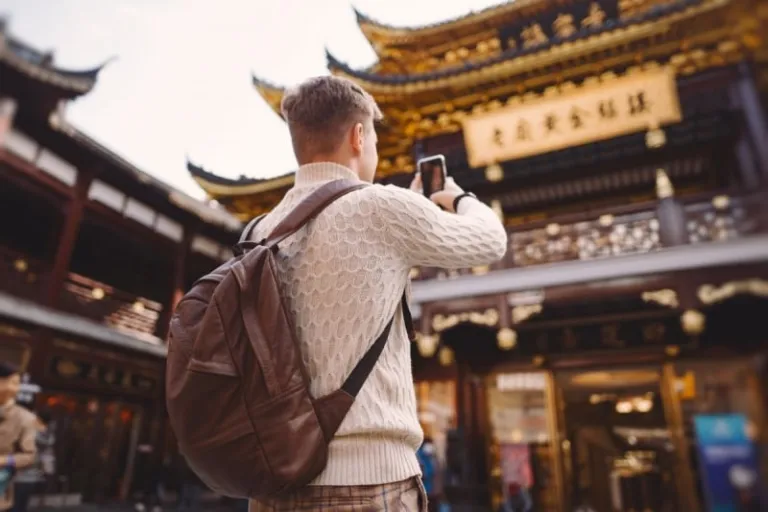
Japan embodies modernity in an intentional manner. Streamlined, effective and carefully structured its frameworks function based on premises. A key premise is that you are already “connected,” which here typically implies possessing a phone number.
It is never clearly mentioned. Will you encounter signs, in large print, outlining it? However, the more you attempt to use services-buying train tickets, booking restaurant tables, signing up for apps-the more apparent that unspoken expectation grows. Many systems are not built to accept foreign phone numbers. They don’t explicitly block you with an error alert. Rather, they simply fail without notice. Buttons don’t respond, forms silently refuse your number and confirmation codes never come through.
During the 24 hours, it may not appear to be an issue. You’re able to stroll, take pictures, eat and even utilise certain travel apps for directions. However, when you attempt to engage with services the way locals do-buying train tickets, verifying bookings requesting deliveries-that unseen barrier emerges. It’s faint yet hindering. It’s precisely why having a Japanese phone number can turn into a travel essential.
Everyday situations where a Japanese phone number matters
You may believe it’s unnecessary. Numerous travellers find it useful. However, most end up facing at least one scenario where having a Japanese phone number becomes unexpectedly important.
1. App verification codes
If Japan featured a national pastime apart from baseball and sumo, it might well be SMS verification. Numerous services depend heavily on it. Lacking a phone number, the verification message won’t be delivered, and without that code, logging in, reserving tickets or accessing specific apps becomes impossible.
Examples of applications you may come across:
- LINE – ubiquitous across Japan, used by everyone.
- PayPay. Usable at the tiniest convenience stores and noodle shops.
- Tabelog – essential for checking restaurant reviews and making reservations.
- Lawson Tickets and Ticketpia – key platforms for buying tickets to concerts, exhibitions, and sporting events.
If you don’t have a phone number, you’ll face a barrier. No sign-in, no reservations, no bookings, no access. It’s a point that can derail your whole day’s schedule.
2. Event ticketing
Japan offers brief events: anime pop-ups, Ghibli showcases, sumo competitions, concerts and seasonal illumination festivals. Many tickets sell out; most ticketing platforms, such as Lawson Tickets, require a Japanese phone number to register.
This is mandatory. It isn’t a recommendation. Without a phone number, you absolutely cannot register an account. Numerous travellers miss out on events not due to tickets being unavailable, because their phone number isn’t identified.
3. Food delivery & couriers
Ordering food delivery in Japan is extremely easy. It relies on having a working phone number. Applications such as Uber Eats Japan or Demae-can require a number so the delivery person can reach you if they have difficulty finding your building or apartment.
If you don’t provide a number, your submission might be declined, or the driver might not be able to contact you. This issue also occurs with luggage forwarding services. Travel conveniences in Japan frequently rely on the assumption that you’re reachable directly. Having a phone number is more than a convenience-it’s integral to the process.
4. Restaurant reservations
Bookings at well-liked dining spots frequently depend on confirmation, through text message or a phone call. If the establishment fails to reach you your booking might be voided. This is not an issue; it’s just routine procedure.
Possessing a phone number guarantees seamless operations. Lacking one, you may forfeit secure bookings despite making them days ahead.
5. Emergencies or unexpected situations
Although Japan is remarkably secure and well-organised, having a local phone number comes in handy for emergencies or routine circumstances:
- Calling your hotel.
- Inquire at a store regarding a product you overlooked.
- Coordinating with a delivery driver to find your entryway.
- Contacting the train station’s lost-and-found.
These basic tasks are simple with a Japanese phone number and unnecessarily difficult without one.
Why the majority of global eSIMs do not address the issue
Numerous travellers assume they’re ready once they purchase an eSIM, thinking internet connectivity suffices. However, the majority of eSIMs offer data services functioning basically as mobile Wi-Fi hotspots. This supports browsing and navigation. Does not cover the more advanced features that necessitate a Japanese phone number.
The majority of eSIMs exclude:
- A Japanese phone number.
- SMS capability.
- Reception of verification codes.
- Local call support.
- Authorisations for applications needing confirmation inside Japan.
Consequently, applications, delivery services, ticketing platforms and other essential systems just stop functioning. Numerous travellers become aware of this during inconvenient times: standing outside a venue they cannot book, attempting to register for PayPay at a convenience store or trapped in their Airbnb, unable to order food since Uber Eats doesn’t acknowledge their number.
The solution: An eSIM with a Japanese number
This explains why seasoned travellers, regular visitors and digital nomads are opting more and more for an eSIM that includes a number. Having one makes Japan immediately reachable in ways you might not have expected.
Utilising a Japanese-number eSIM enables you to:
- Receive SMS from Japanese services.
- Register for applications that do not support phone numbers.
- Buy tickets instantly.
- Confirm restaurant reservations.
- Order deliveries without complications.
- Make local calls when needed.
All of a sudden, numerous hidden obstacles disappear. What previously demanded tricks and makeshift solutions now functions flawlessly.
How one Japanese digit transforms your travel adventure
Japan thrives on seamless integration. Everything is designed to work together. When your phone number matches the required format, this smoothness works in your favour.
As a result:
- Applications log in effortlessly.
- Ticketing platforms welcome you without refusal.
- Delivery personnel can easily reach out to you.
- Your reservations remain secure.
- Services treat you as a valued customer, not a stranger.
Lacking a number, small hassles pile up. Having one makes everything run smoothly. You get to enjoy Japan precisely as it should be: efficient, fluid and pleasant.
A Japanese phone number might appear insignificant prior to your visit. Upon arriving, it turns into one of the most crucial resources you possess. It links you directly to the pulse of the country: its applications, its networks and its amenities. Whether booking a last-minute exhibition spot, finding your way through Tokyo’s subway or finishing your day with a meal brought right to your doorstep, a Japanese phone number eliminates complications throughout your journey.
For many travellers, it’s an “I wish I had known this earlier” moment, small in appearance but huge in impact. Experiencing Japan with a proper local number helps you understand why locals and repeat visitors never travel without one.

About Author

Recommended Reads
8 Must-Visit Temples in Kyoto
Culture & Heritage
Geisha Hunting in Kyoto: How to Spot a Real One
Culture & Heritage