
For the Train Lovers: 10 Incredible Rail Journeys to Take in Asia
Take on the best train journeys in Asia, from the Trans-Siberian Railway and beyond. It’s time to sit back and watch the world go by.

Train travel offers something that flying rarely can: the chance to watch a destination unfold gradually outside your window.
Across Asia, railways cross mountain ranges, tea plantations, tropical coastlines, deserts and enormous bridges. Some journeys are short enough to complete in an afternoon, while others involve overnight sleepers, border crossings or several days on the rails.
Whether you are travelling for the scenery, the experience or simply a slower way to reach your next destination, these memorable train journeys prove that the route can be just as rewarding as the arrival.
1. Bangkok to Chiang Mai, Thailand
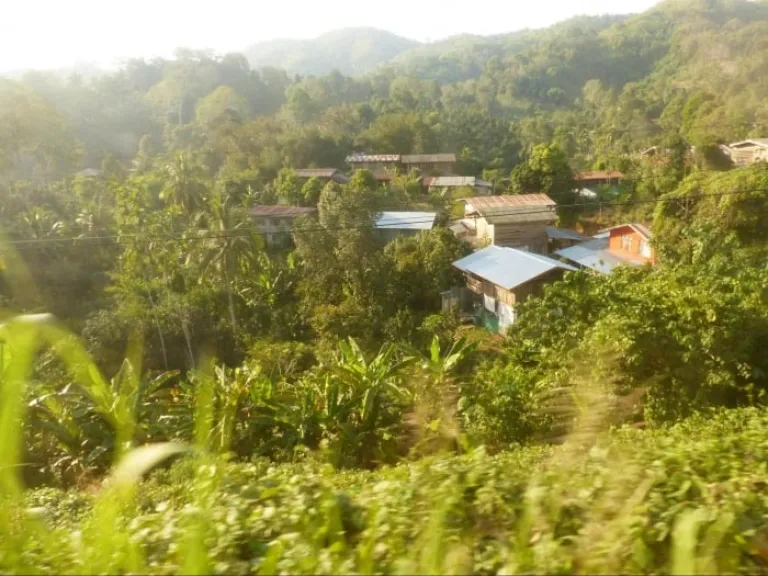
Image credit: geoff dude
Thailand’s overnight train between Bangkok and Chiang Mai remains one of Southeast Asia’s classic rail journeys.
The trip generally takes around 12 to 14 hours, depending on the service. Travellers can choose between reclining seats and air-conditioned sleeper carriages, with selected trains offering private first-class compartments.
Much of the journey takes place after dark, but early risers can watch the scenery change as the train enters the greener and more mountainous landscapes of northern Thailand.
The overnight schedule also allows travellers to save on a night of accommodation while arriving close to central Chiang Mai the following morning.
Tickets can sell out during weekends, public holidays and Thailand’s peak travel periods, so reserve sleeper berths in advance.
2. Seto-Ōhashi Line, Japan
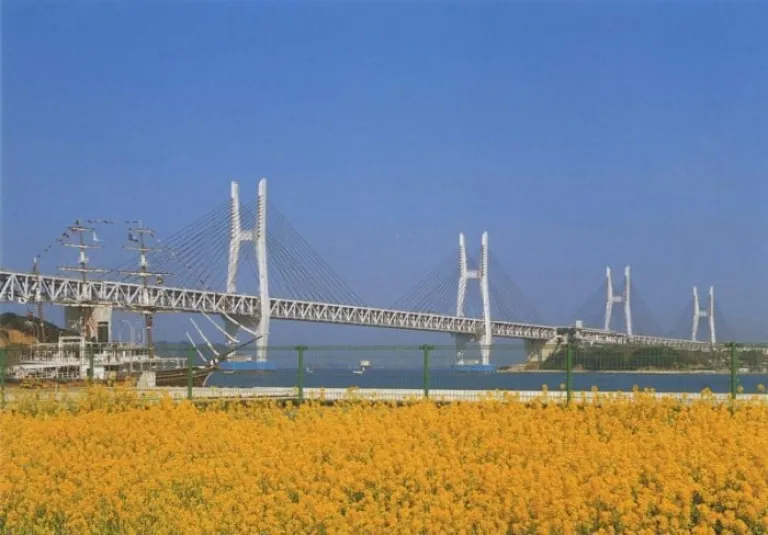
Image credit: Sora
The train journey between Okayama on Honshu and Takamatsu on Shikoku crosses one of Japan’s most impressive engineering landmarks.
Rapid Marine Liner services travel across the Seto Ohashi Bridge, a series of bridges spanning the Seto Inland Sea. Road vehicles use the upper deck, while trains run along the lower level.
The crossing provides views of small islands, fishing boats and the surrounding water before the train reaches Shikoku.
The entire journey takes under an hour on faster services, making it an easy addition to a wider trip through western Japan.
For the clearest views, travel during daylight and consider a reserved seat in the train’s double-decker Green Car. Exact carriage layouts depend on the service.
3. Kandy to Ella, Sri Lanka
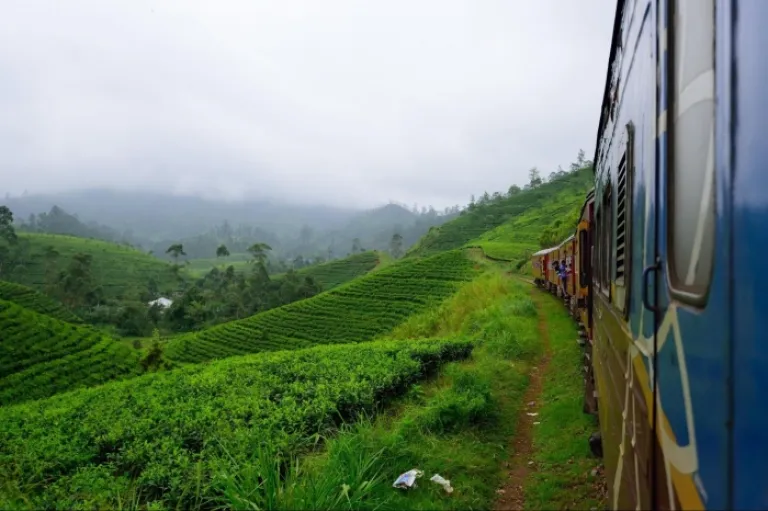
Image credit: Cedric Z
Sri Lanka’s hill-country railway between Kandy and Ella has become one of Asia’s most photographed train journeys.
The route passes tea plantations, forested hills, misty valleys, waterfalls and small mountain towns. Depending on the train and operating conditions, the journey may take around six to eight hours.
Reserved first-, second- and selected third-class seats are available on certain services, while unreserved carriages provide a more spontaneous but potentially crowded experience.
Tickets for reserved seats can sell out quickly, particularly during popular travel periods. Book in advance through Sri Lanka Railways when possible rather than relying on availability at the station.
Keep your body inside the carriage while the train is moving. Leaning from open doors for photographs is dangerous, even when images online make it appear commonplace.
Also read: A Quick Solo Travel Itinerary to Sri Lanka
4. Alishan Forest Railway, Taiwan
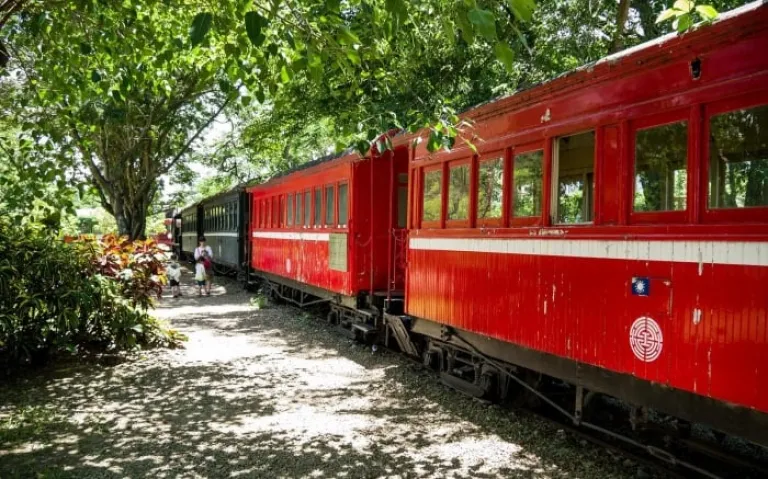
Image credit: billy1125
Originally constructed to transport timber, the Alishan Forest Railway now carries travellers through the mountains of central Taiwan.
The historic narrow-gauge line climbs from Chiayi towards the Alishan National Scenic Area, passing tropical vegetation, forested slopes and mountain settlements along the way.
After years of repair work, through services on the main line returned in 2024. However, weather, landslides and maintenance can still affect individual sections, so check the latest schedule before planning the trip.
Within the Alishan area, shorter branch lines connect attractions such as Zhushan, Zhaoping and Shenmu.
The Zhushan Line is especially popular before dawn, when visitors travel towards the sunrise-viewing area. Tickets are limited and should be purchased as early as possible.
Cherry blossoms generally add colour to the area during spring, although exact blooming dates vary each year.
5. The Trans-Mongolian Railway
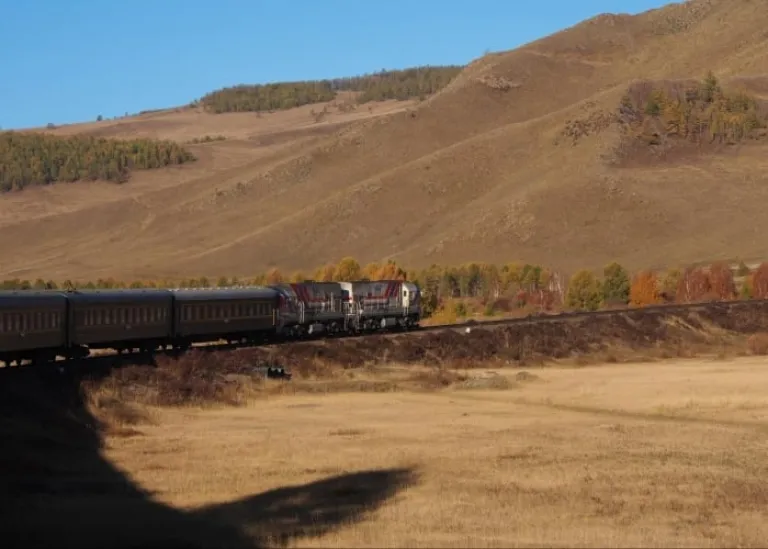
Image credit: Clay Gilliland
The international train between Beijing and Ulaanbaatar resumed in 2025 following a suspension of several years.
This journey connects the Chinese capital with Mongolia across more than 1,500 kilometres. Along the way, passengers travel through northern China and towards the vast landscapes of the Gobi Desert.
One of the most unusual parts of the trip occurs at the border, where the train’s bogies must be changed because China and Mongolia use different railway gauges. Passengers generally remain aboard or wait nearby while the carriages are lifted and adjusted.
The complete journey takes more than a day, with schedules and departure frequency subject to change.
International tickets may be harder to purchase than ordinary domestic train tickets and can require booking through designated counters or specialist agencies. Travellers must also meet the visa and entry requirements for both countries.
6. The China–Laos Railway
The China–Laos Railway has transformed overland travel between southwestern China and Laos.
International passenger trains connect Kunming with Vientiane, passing through cities and towns such as Xishuangbanna, Mohan, Boten, Luang Prabang and Vang Vieng.
The route crosses mountainous terrain using an extensive network of bridges and tunnels, reducing journeys that once required long road transfers.
Travellers can complete the international trip in a single day or divide it into several stops. Luang Prabang and Vang Vieng are particularly popular additions to a Laos itinerary.
Border formalities take place during the journey, so keep your passport, arrival documents and luggage readily accessible.
Tickets may be available through the official railway platforms used in China and Laos, although booking procedures can be less straightforward for international visitors. Reserve early during Chinese and Lao public holidays.
7. Hefei to Fuzhou, China
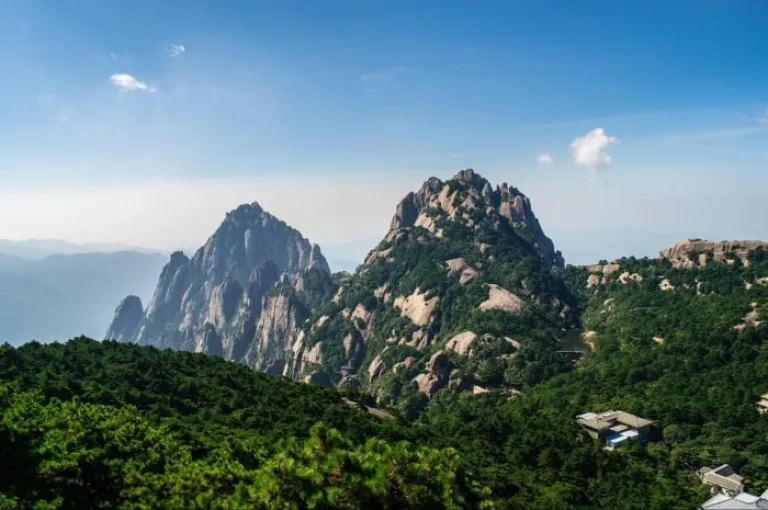
Image credit: David Almeida
China’s high-speed railway between Hefei and Fuzhou combines rapid travel with impressive mountain scenery.
The route passes through inland landscapes in Anhui, Jiangxi and Fujian, with views of farmland, villages, rivers and forested mountains between the tunnels.
One of its most useful stops for travellers is Huangshan North Station, which provides access to Huangshan, also known as the Yellow Mountains.
Rather than completing the entire journey in one stretch, visitors can break the route with a few nights around Huangshan before continuing towards destinations such as Wuyuan or Fuzhou.
China’s high-speed trains are modern and efficient, but stations can be enormous. Arrive early enough to complete security checks and find the correct departure gate.
Foreign travellers should ensure that the passport details used for booking match their travel document exactly.
8. Hue to Da Nang, Vietnam
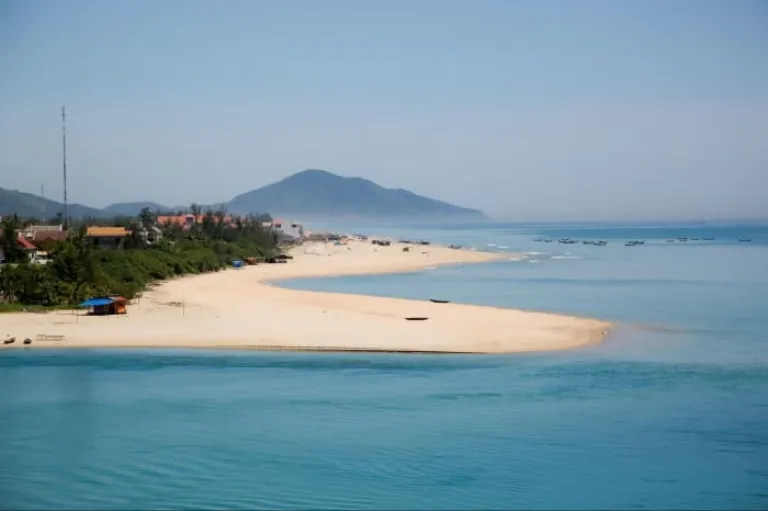
Image credit: Y Nakanishi
The railway between Hue and Da Nang follows one of the most scenic sections of Vietnam’s North–South line.
Trains travel around the Hai Van Pass, where forested hills descend towards the sea. From the carriage, passengers may see beaches, lagoons, fishing villages and stretches of coastline that are difficult to appreciate from the main road.
The journey usually takes around two and a half to three and a half hours, depending on the service.
Regular North–South trains operate along the route, while selected tourist-oriented services may provide upgraded seating, entertainment or locally inspired refreshments.
Book a daytime departure so that the coastal scenery is visible. Seats on the left or right may offer different views depending on the direction of travel, although the train’s bends allow passengers to see both the mountains and sea at different points.
Hue and Da Nang are also useful stops on a longer journey along Vietnam’s North–South Railway, often informally called the Reunification Express.
9. Goa to Londa, India
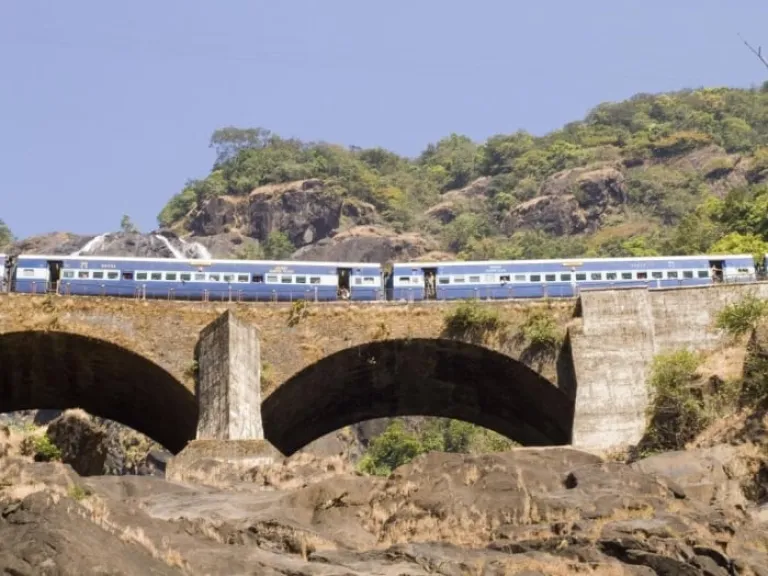
Image credit: Victoria Imeson
The railway from Goa towards Londa crosses the forested Western Ghats and passes near Dudhsagar Falls.
Leaving the coastal area behind, the train climbs through tunnels, valleys and thick greenery towards the border between Goa and Karnataka.
Dudhsagar is most dramatic during and shortly after the monsoon, when water cascades down the cliffs beside the railway bridge. Visibility depends on the train, weather and seating position, and the train does not necessarily stop at the waterfall.
Passengers should not attempt to leave a moving train, walk along active railway tracks or disembark at an unauthorised location to reach the falls.
Access rules around Dudhsagar can change during the monsoon and other periods, so travellers wishing to visit the waterfall itself should use an authorised local tour or follow current forest-department guidance.
Train schedules and stopping patterns vary, making advance planning essential.
10. Singapore to Kuala Lumpur or Penang
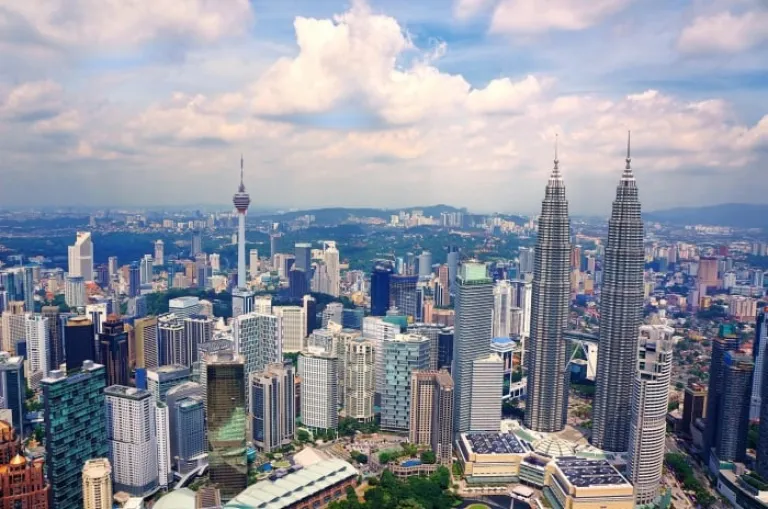
Rail travel from Singapore into Malaysia has become more convenient following the extension of Malaysia’s Electric Train Service to JB Sentral.
Begin with the short Shuttle Tebrau journey from Woodlands Train Checkpoint to JB Sentral. Immigration formalities are completed as part of the cross-border process, and passengers must arrive before the specified check-in deadline.
From JB Sentral, selected ETS services travel north towards Kuala Lumpur, Butterworth and other destinations along Malaysia’s west coast.
Travellers heading to Penang can alight at Butterworth and continue to George Town by ferry or road transport.
The entire Singapore-to-Penang journey is long, so some travellers may prefer to stop overnight in Kuala Lumpur or another city along the route.
Cross-border and long-distance tickets should be booked separately and well in advance. Leave enough time between the Shuttle Tebrau and the onward ETS service in case immigration or boarding takes longer than expected.
Tips for planning an Asian train journey
Train schedules, ticketing systems and carriage standards vary enormously across Asia.
High-speed trains may require passport-linked bookings and security checks, while rural or historic railways can be affected by weather, track conditions and maintenance.
Reserve popular sleeper berths and scenic services early, particularly during national holidays. Bring water, snacks, a portable charger and warmer clothing for strongly air-conditioned carriages.
For international journeys, check visa rules for every country on the route and confirm where border procedures take place.
Most importantly, allow some flexibility. Delays and timetable changes can happen, but slowing down is part of what makes rail travel so memorable.
From Sri Lanka’s tea-covered hills to the Gobi Desert and the coastline of central Vietnam, these journeys offer a view of Asia that cannot be experienced from an airport terminal.
Choose a window seat, settle in and let the scenery become part of the adventure.

About Author

Becca is a fan of impromptu travel, world cultures, ocean views and chocolate anything. When she's not travelling, you can find her either roaming the muddy paths of the English countryside or wandering around her favourite neighbourhoods in Singapore. After taking an AncestryDNA test, she now dreams about visiting all the places that make up her ethnicity.