
The Most Beautiful Places to Visit in Japan During the Rainy Season
Explore Japan's most beautiful places during the rainy season, including Kyoto, Kamakura, Kamikōchi, and Yakushima.

Japan’s rainy season, known as tsuyu, is often overlooked by travellers who associate holidays with clear blue skies and sunshine. Lasting from roughly Jun to early Jul across much of the country, this period brings frequent rain, cloudy days, and higher humidity. Yet for those willing to embrace the weather, it reveals a different side of Japan — one that is quieter, greener, and often more beautiful than at any other time of year.
Rain nourishes Japan’s lush landscapes, transforming forests into vivid shades of emerald and bringing gardens, temples, and mountain valleys to life. Hydrangeas bloom in abundance, moss-covered grounds become even more vibrant, and mist drifts through ancient woodlands and alpine scenery, creating atmospheres that feel almost otherworldly. The softer light and thinner crowds also offer a more peaceful travel experience, allowing visitors to appreciate these destinations at a slower pace.
From historic temples surrounded by colourful flowers to remote forests wrapped in fog, some places seem made for rainy days. Rather than seeing the season as an inconvenience, many travellers discover that it offers some of Japan’s most memorable and photogenic landscapes. Here are some of the most beautiful places to experience Japan during the rainy season.
Also read: 10 Must-See Temples and Shrines in Japan
1. Meigetsu-in, Kamakura: Japan's Most Famous Hydrangea Temple
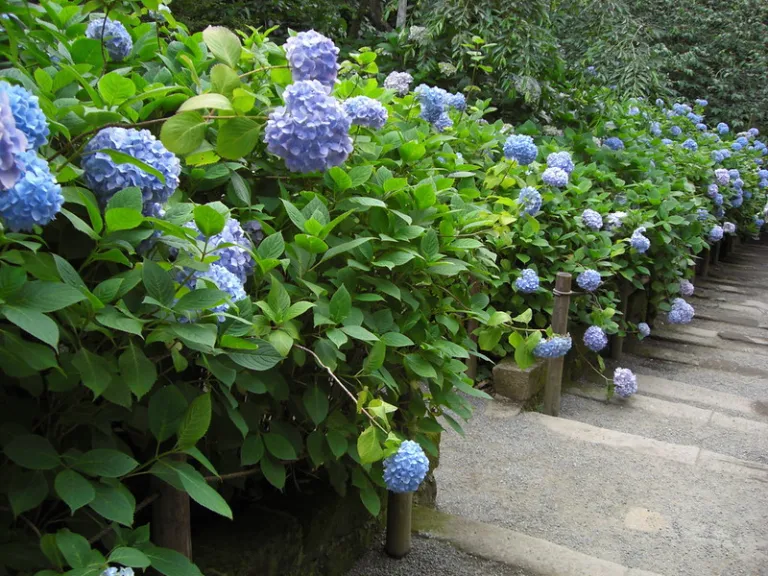 Image credit: yumtan | Flickr
When it comes to experiencing the beauty of Japan's rainy season, few places are as iconic as Meigetsu-in in Kamakura. Often referred to as the "Hydrangea Temple," this peaceful Zen temple becomes one of the country's most spectacular sights each Jun, when thousands of vibrant blue hydrangeas bloom throughout its grounds.
Founded in the 12th century, Meigetsu-in is known for its tranquil atmosphere and beautiful gardens. During the rainy season, the temple's pathways are lined with hydrangeas, creating a sea of blue that seems to glow against the surrounding greenery. The flowers thrive in the wet weather, making the temple a perfect example of how Japan's rainy season can enhance the beauty of nature rather than diminish it.
Beyond the hydrangeas, visitors can admire the temple's elegant architecture and its famous circular window, known as the "Window of Enlightenment," which frames the lush garden beyond like a living painting. The gentle sound of falling rain and the misty surroundings add to the temple's serene atmosphere.
Located less than an hour from Tokyo, Meigetsu-in is an easy day trip and one of the best places in Japan to appreciate the unique charm of the rainy season. For photographers, nature lovers, and anyone seeking a peaceful escape, it is an unforgettable destination.
2. Hasedera, Kamakura: A Hillside of Hydrangeas Overlooking the Sea
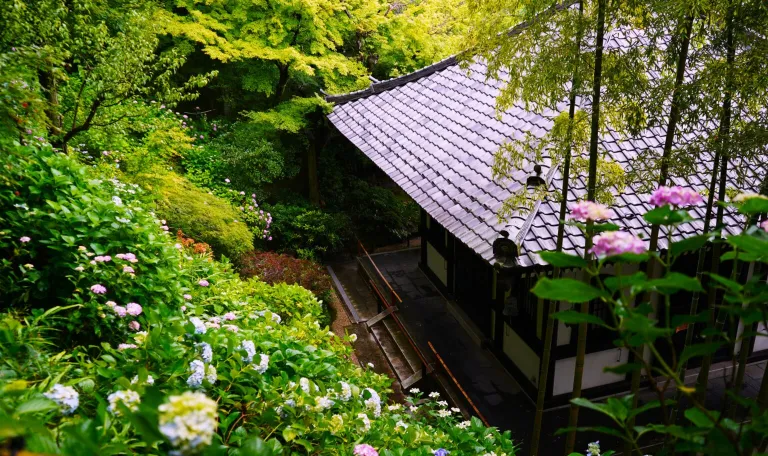 Image credit: Kamakura Hasedera Official Website
Another of Kamakura's most beautiful rainy-season destinations is Hasedera, a historic Buddhist temple famous for its stunning hydrangea gardens and panoramic views of the coast. While Kamakura attracts visitors throughout the year, the temple is particularly spectacular in Jun, when more than 2,500 hydrangea bushes burst into bloom across its hillside grounds.
One of Hasedera's highlights is the Hydrangea Path, a scenic walking trail that winds up the slope behind the temple. As visitors make their way through the colourful blooms, they are rewarded with breathtaking views of Sagami Bay and the city below. On misty or rainy days, the landscape takes on an almost dreamlike quality, making it easy to understand why this is considered one of Japan's finest rainy-season experiences.
The temple itself dates back more than 1,300 years and is home to an impressive wooden statue of Kannon, the Buddhist goddess of mercy. Visitors can also explore peaceful gardens, traditional buildings, and small ponds scattered throughout the grounds.
Unlike many destinations that are best enjoyed in sunshine, Hasedera truly comes alive during the rainy season. The combination of blooming hydrangeas, historic architecture, and soft coastal views creates a uniquely Japanese atmosphere. For travellers visiting Kamakura in Jun, Hasedera is an essential stop and one of the country's most photogenic rainy-season attractions.
3. Saiho-ji (Kokedera), Kyoto: A Moss Garden at Its Most Beautiful
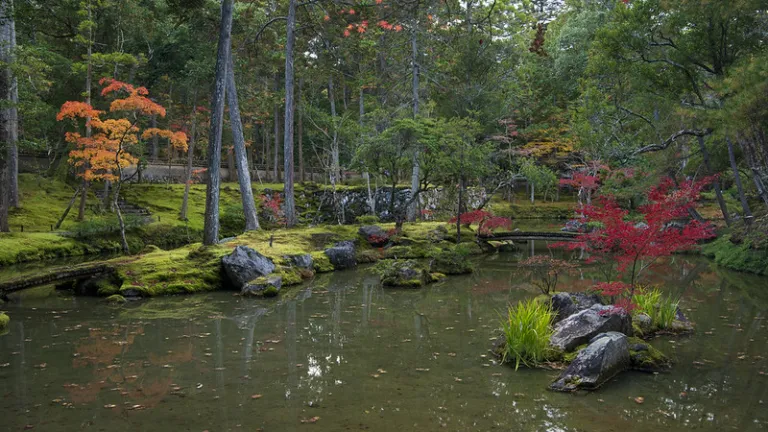 Image credit: Patrick Vierthaler | Flickr
Few places capture the quiet beauty of Japan's rainy season as perfectly as Saiho-ji, better known as Kokedera, or the Moss Temple. Located on the western outskirts of Kyoto, this UNESCO World Heritage Site is famous for its extraordinary garden, where more than 120 varieties of moss carpet the ground in vibrant shades of green.
Although the temple is beautiful throughout the year, the rainy season is widely considered the best time to visit. Frequent rainfall nourishes the moss, transforming the garden into a lush, emerald landscape that seems almost otherworldly. Small ponds, stone pathways, and carefully placed trees blend seamlessly with the moss-covered ground, creating a scene of remarkable tranquillity.
Originally established in the 8th century and later redesigned by the renowned Zen monk Muso Soseki, Saiho-ji was created as a place for contemplation and spiritual reflection. Visitors are required to make reservations in advance, helping preserve the peaceful atmosphere that has made the temple famous.
The gentle sound of rain falling through the trees only enhances the experience, making it easy to understand why the garden has inspired artists, writers, and photographers for generations. For travellers seeking a deeper appreciation of Japan's natural beauty, Saiho-ji offers one of the most memorable rainy-season experiences in the country. Its moss-covered landscape is a reminder that some of Japan's most beautiful scenery is found not despite the rain, but because of it.
4. Arashiyama Bamboo Grove, Kyoto: A Misty Forest of Green
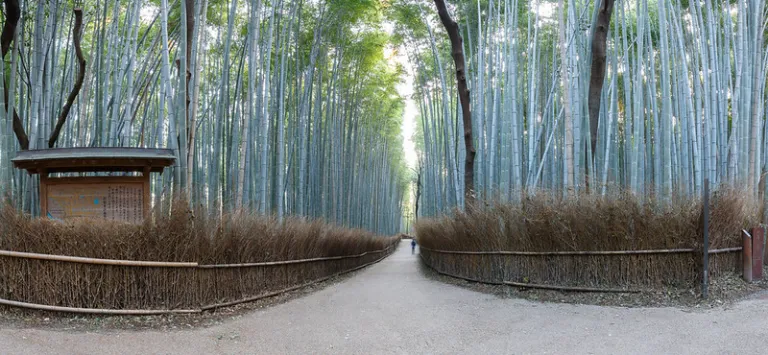 Image credit: Rodney Topor | Flickr
Few places are as instantly recognisable as the Arashiyama Bamboo Grove, one of Kyoto's most famous attractions. While the bamboo forest is beautiful throughout the year, it takes on a particularly magical atmosphere during Japan's rainy season. As light rain falls and mist drifts between the towering stalks, the grove feels almost like a scene from a fantasy film.
Walking along the winding pathways, visitors are surrounded by thousands of bamboo stalks swaying gently in the breeze. The sound of rustling bamboo, combined with the soft patter of rain, creates a calming and immersive experience that feels far removed from the bustle of central Kyoto. The moisture in the air also deepens the rich green colours of the bamboo, making the landscape even more striking.
Also read: 10 Hidden Gems in Kyoto, Japan You Can’t Afford to Miss
One advantage of visiting during the rainy season is that the area is often quieter than during the peak spring and autumn travel periods. This allows visitors to enjoy the grove's peaceful atmosphere and take photographs without the large crowds that frequently gather on sunny days.
Located near several of Arashiyama's other attractions, including temples, gardens, and the scenic Togetsukyo Bridge, the bamboo grove can easily be combined with a full day of sightseeing. For travellers seeking a uniquely Japanese landscape, few places are more enchanting than Arashiyama on a rainy day.
5. Kamikōchi: A Misty Alpine Paradise in Japan’s Rainy Season
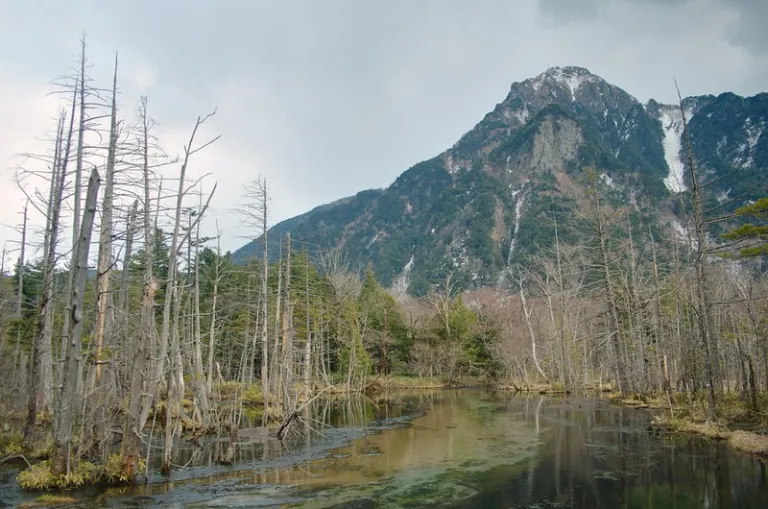 Image credit: David Haberthür | Flickr
Kamikōchi is one of Japan’s most breathtaking alpine valleys, and during the rainy season it transforms into something almost otherworldly. Located in the Northern Japan Alps within Chūbu-Sangaku National Park, Kamikōchi is famous for its crystal-clear Azusa River, dramatic mountain peaks, and untouched natural landscapes.
In the rainy season, usually from Jun to early Jul, light mist drifts through the valley, softening the outlines of the mountains and forests. The usual crowds thin out, leaving behind a quiet, reflective atmosphere that feels far removed from urban Japan. Wooden bridges like the iconic Kappa Bridge emerge from the fog, offering postcard-perfect views of the surrounding peaks.
What makes Kamikōchi especially beautiful during this time is the contrast between lush greenery and moody skies. Moss-covered trees, wildflowers, and rushing river water become more vivid under the rain, creating a cinematic landscape ideal for photography and slow travel.
For travellers seeking Japan’s natural beauty at its most atmospheric, Kamikōchi in the rainy season offers a rare sense of stillness and awe. It is not just a destination, but an experience shaped by weather, light, and silence.
6. Yakushima: Ancient Forests Wrapped in Rain and Mist
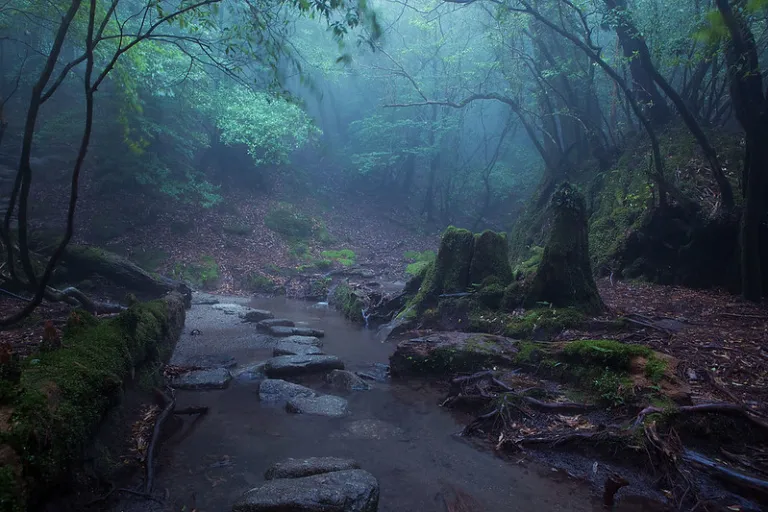 Image credit: Casey Yee | Flickr
Yakushima is one of Japan’s most atmospheric destinations, and during the rainy season, it becomes even more magical. Located off the southern coast of Kyushu, this UNESCO World Heritage island is known for its ancient cedar forests, where some trees have stood for over a thousand years.
From Jun to early Jul, Yakushima experiences frequent rainfall, but instead of diminishing its appeal, the rain deepens it. Moss spreads across roots, rocks, and fallen logs, transforming the forest floor into a vivid carpet of green. Mist often drifts between the towering yakusugi trees, softening the landscape and creating a dreamlike hiking environment.
Famous trails such as Shiratani Unsuikyo and the route to Jōmon Sugi become even more atmospheric in the rain, with wooden paths glistening and waterfalls swelling with fresh rainfall.
Also read: Trekking in Yakushima, the Mystical Forest Gem of Japan
The constant sound of rain, flowing rivers, and wind through the trees creates a calming rhythm across the island. For travellers seeking Japan’s rainy season beauty, Yakushima offers a deeply immersive experience where nature, silence, and time feel gently suspended.

About Author

Tomohiro is passionate about movies and enjoys spending his time watching baseball games and connecting with new people through conversation. He has a sociable personality and loves learning about different perspectives and cultures. On his days off, he often travels across various parts of the UK, exploring new towns, landscapes, and local experiences while planning his next journey.