
10D New Zealand Road Trip Itinerary For All First-Timers
Here’s everything you need to know about road trippin’ in New Zealand!

New Zealand is one of the best places to experience your first proper road trip.
Its compact cities, dramatic coastlines, geothermal landscapes and snow-capped mountains create an ever-changing backdrop, while well-maintained highways connect many of the country’s major attractions.
This 10-day route begins in Auckland and finishes in Queenstown, crossing both the North and South Islands along the way. It moves quickly, so travellers who prefer a slower holiday should add extra nights in Rotorua, Wellington or the Mackenzie region.
Driving times are approximate and do not account for meal breaks, traffic, roadworks or photography stops. Check weather and road conditions before setting off each day.
Day 1: Auckland
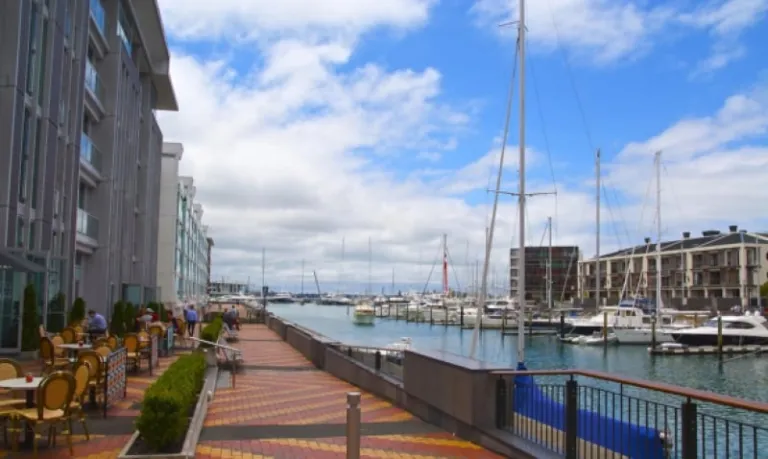
Image credit: Bevis Chin
Begin the journey in Auckland, New Zealand’s largest city.
Spend the afternoon around the Viaduct Harbour and Wynyard Quarter, where restaurants and walking paths overlook the marina. From the waterfront, you can see the Sky Tower rising above the city centre.
For a broader view, head to Mount Eden, also known as Maungawhau. The dormant volcanic cone provides panoramic views across Auckland and its surrounding harbours.
Auckland also has a thriving café scene, so leave time for a leisurely breakfast or coffee before collecting your rental car.
Travellers arriving after a long international flight should avoid beginning a major drive immediately. Spend the first night in the city and start the road trip after a proper rest.
Day 2: Auckland > Hamilton > Rotorua

Image credit: New Zealand Tourism
Leave Auckland and travel south towards Hamilton.
Instead of relying on the original alpaca-farm recommendation, spend some time at Hamilton Gardens. Its themed garden collections draw inspiration from different civilisations and periods of garden design, making it more than a conventional botanical garden.
Continue towards Rotorua, a city known for geothermal activity and Māori culture.
Mount Tarawera lies southeast of Rotorua and is associated with the devastating 1886 eruption that destroyed the famous Pink and White Terraces. Access to the crater is controlled and available only through authorised guided experiences, so reserve a tour rather than attempting to drive there independently.
Travellers without enough time for Mount Tarawera can visit one of Rotorua’s established geothermal attractions instead. Options include Te Puia, Wai-O-Tapu Thermal Wonderland and Waimangu Volcanic Valley.
Finish the day with a soak at one of Rotorua’s hot-pool facilities or attend a cultural experience that introduces Māori traditions, performance and food.
Day 3: Rotorua > Taupo > Napier
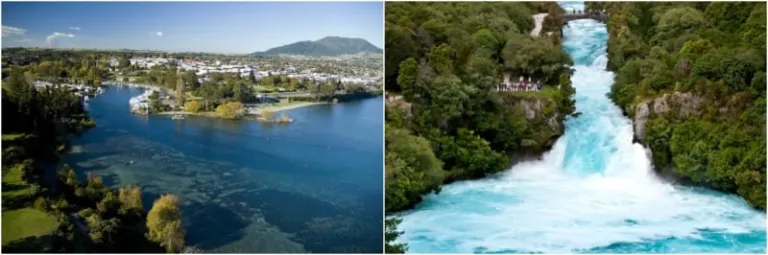
Image credit: (left), (right) Great Lake Taupo
Drive south from Rotorua towards Taupō.
Stop at Huka Falls, where the Waikato River is forced through a narrow rock channel before surging over the falls. Several viewing platforms are located close to the car park, making this an easy stop during the journey.
Continue to the Taupō lakefront for lunch and views across New Zealand’s largest lake by surface area.
The original article suggests adding a hike in Tongariro National Park, but this is not practical on the same day as the drive to Napier. The Tongariro Alpine Crossing is a substantial full-day hike requiring appropriate preparation, transport and suitable weather.
Instead, continue east along State Highway 5 towards Napier.
Napier is known for its concentration of Art Deco architecture, much of which was constructed following the 1931 Hawke’s Bay earthquake. Spend the late afternoon walking around the city centre or along Marine Parade.
Cape Kidnappers lies outside Napier and is home to an important mainland gannet colony. Access conditions are complicated by tides, coastal erosion and unstable cliffs, so visit through an authorised overland tour rather than attempting the beach walk independently.
Day 4: Napier > Wellington
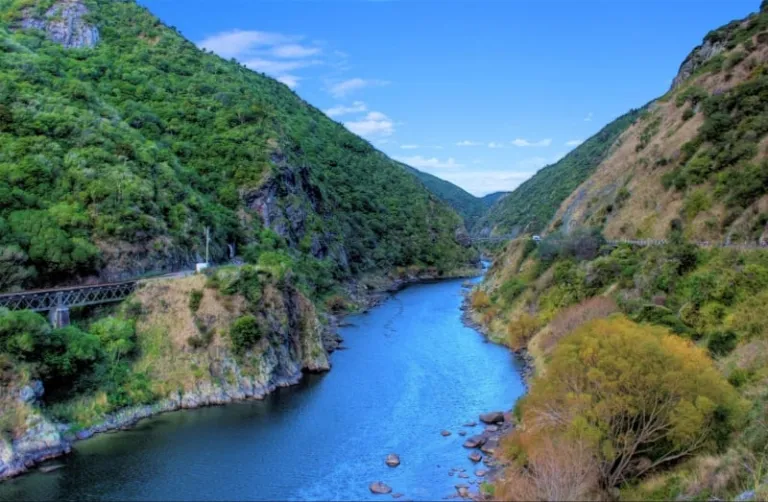
Image credit: Kane
The drive from Napier to Wellington takes most of the day once stops are included.
Travel south through Hawke’s Bay and the Wairarapa. The former road through Manawatū Gorge is permanently closed to vehicles, so follow the current route recommended by your navigation system and NZTA rather than relying on the old directions in the original article.
Travellers wanting a nature break can stop at Fensham Reserve near Carterton. The reserve protects native forest and has a short walking circuit suitable for stretching your legs before continuing south.
Another option is to pause in Greytown, a small heritage town known for its Victorian architecture, cafés and independent shops.
Arrive in Wellington by the evening and settle in for the night.
Day 5: Wellington > Picton

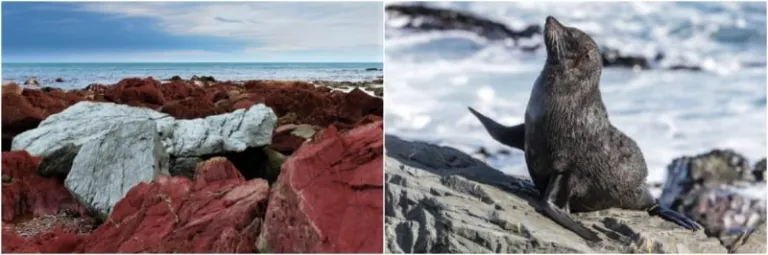
Image credit: (top left, top right) WREDA, (bottom left) New Zealand Tourism, (bottom right) Stuff
Spend the morning exploring New Zealand’s capital.
Visit the Museum of New Zealand Te Papa Tongarewa, walk along the waterfront or ride the Wellington Cable Car towards the Botanic Garden.
Coffee lovers will find plenty of independent cafés around the central city, while Cuba Street is lined with restaurants, shops and colourful street life.
Red Rocks Coastal Walk is another option when the weather is suitable. New Zealand fur seals are commonly seen around the coast during the winter months, but sightings vary and visitors should keep a respectful distance.
Later, board the vehicle ferry across the Cook Strait to Picton.
The journey takes several hours and passes through the Marlborough Sounds before arriving on the South Island. Vehicle spaces can sell out during busy periods, so reserve the crossing well in advance and arrive before the required check-in deadline.
Sailings can be delayed or cancelled during severe weather. Avoid planning a tight onward connection immediately after the expected arrival time.
Day 6: Picton > Christchurch

Image credit: Wave Cafe & Courtyard
The original route detours through Nelson Lakes National Park before continuing to Christchurch. Although the park is beautiful, including it on this particular day creates an unnecessarily long and tiring drive.
A more practical route follows State Highway 1 down the east coast through Kaikōura.
Kaikōura sits between the Seaward Kaikōura Range and the Pacific Ocean. Stop for lunch, walk part of the Kaikōura Peninsula Walkway or join a marine-wildlife experience if your schedule permits.
The region is known for whales, dolphins, seals and seabirds, although sightings are never guaranteed.
From Kaikōura, continue south towards Christchurch. Allow extra time for coastal roadworks, traffic and scenic stops.
Arrive in Christchurch in the evening.
Day 7: Christchurch
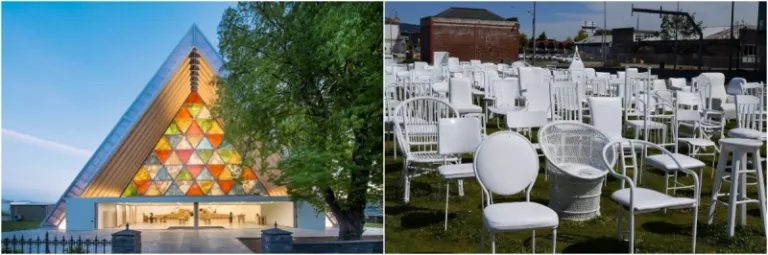
Image credit: (left) Forgemind ArchiMedia
Spend a full day exploring Christchurch.
The city has changed substantially since the 2010 and 2011 earthquakes. New public spaces, architecture and businesses now stand alongside buildings and memorials connected to the disaster.
Visit the transitional Cardboard Cathedral, walk beside the Avon River and explore the Christchurch Botanic Gardens. The central city also contains street art, restaurants and the Riverside Market.
The original 185 Empty Chairs installation is no longer open and should be removed from the itinerary.
Travellers interested in wine can make a trip to the Waipara Valley, around an hour north of Christchurch. Several wineries offer tastings and meals, but opening days and reservation requirements vary.
Do not drive after drinking. Join a guided wine tour or assign a designated driver.
Day 8: Christchurch > Twizel
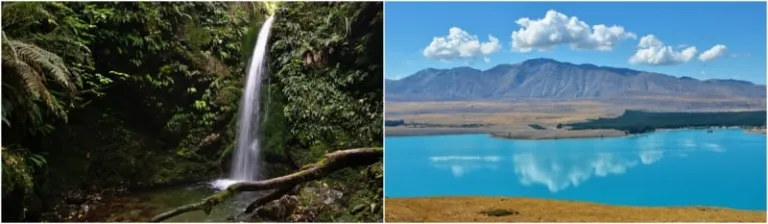
Image credit: (left) Tomas Sobek
Leave Christchurch and head southwest through Canterbury.
The original itinerary includes a detour to Peel Forest and Emily Falls, but this adds time to an already scenic journey. Travellers determined to visit should check the trail status and calculate the additional driving before setting out.
For a more comfortable day, drive through Geraldine and continue towards Lake Tekapo.
The lake’s distinctive turquoise colour comes from fine particles of rock carried by glacial water. Stop beside the Church of the Good Shepherd and walk along the shoreline, but respect signs and avoid entering protected or private areas.
On clear nights, the Mackenzie Basin is known for its exceptionally dark skies. Stargazing tours operate around Lake Tekapo and nearby Mount John, although weather conditions determine visibility.
Continue along State Highway 8 towards Twizel for the night.
Day 9: Twizel > Omarama > Queenstown
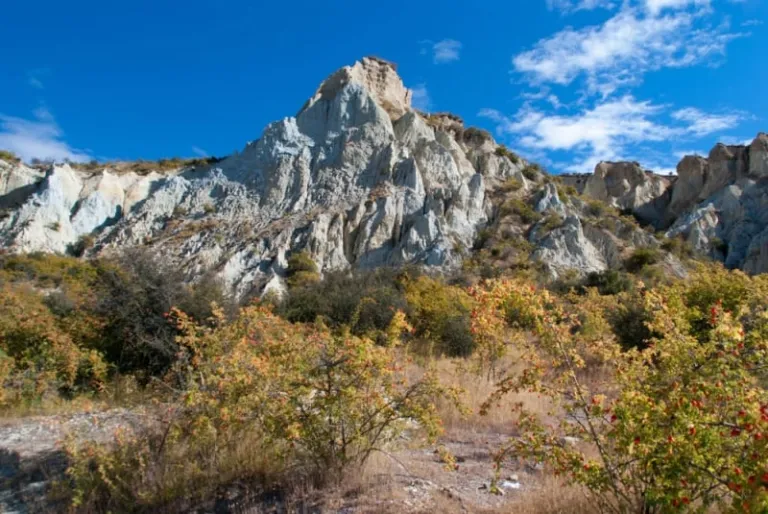
Image credit: Jocelyn Kinghorn
Depart Twizel and drive south towards Omarama.
The Clay Cliffs are located on private land outside the town. A small access fee may apply, and the final approach uses an unsealed road. Drive carefully and avoid the route when conditions are unsuitable for your vehicle.
The cliffs contain sharp pinnacles and narrow ravines formed from layers of gravel and silt. Follow the established paths and stay away from unstable edges.
Continue through Lindis Pass towards Wānaka.
Stop along the lakefront and see the willow popularly known as That Wānaka Tree. The tree has suffered damage over the years, so remain on shore, do not climb it and avoid trampling the surrounding lakebed.
From Wānaka, choose between two routes to Queenstown.
The Crown Range Road is shorter and highly scenic but includes steep, winding sections. Snow chains may be required during winter. The longer route through Cromwell is generally easier in poor conditions.
Check the forecast and road status before deciding.
Day 10: Queenstown
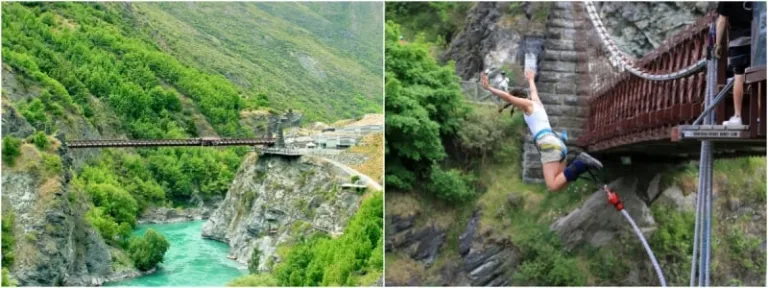
Image credit: (left) TravellingOtter
Finish the journey in Queenstown, New Zealand’s adventure capital.
Adrenaline seekers can bungy jump from the Kawarau Bridge, ride a jet boat, paraglide or try one of the area’s zipline experiences. Advance reservations are recommended for major activities.
Travellers looking for something gentler can ride the Skyline Gondola, cruise across Lake Wakatipu or walk through Queenstown Gardens.
The surrounding region also contains filming locations featured in The Lord of the Rings and The Hobbit. Guided tours depart from Queenstown for areas such as Glenorchy, Paradise and the Kawarau Gorge.
However, the actual Hobbiton Movie Set is near Matamata on the North Island. It is not accessible as a Queenstown day trip and would fit more naturally near the beginning of this itinerary, between Auckland, Hamilton and Rotorua.
Spend the final evening beside the lake, enjoy dinner in town and celebrate reaching the end of the route.
Tips for driving in New Zealand
New Zealand drives on the left-hand side of the road.
Distances that look short on a map may involve winding roads, mountain passes and single-lane bridges. Allow more time than a navigation app’s ideal estimate.
Pull over safely when traffic builds behind you, particularly when driving a large campervan. Use designated slow-vehicle bays where available.
Check the NZTA Journey Planner for road closures, incidents and weather-related restrictions before leaving each morning.
Never stop in the middle of a road for photographs. Use marked viewpoints or safe parking areas.
In winter, carry snow chains when required and make sure you know how to fit them. Do not continue through a closed road or ignore official warnings.
Book the Cook Strait ferry, major attractions and popular accommodation in advance, particularly during summer and public holidays.
Finally, avoid treating the itinerary as a checklist. Ten days is a short amount of time for both islands, and weather can disrupt even the best-made plans.
Leave room to slow down, change course and enjoy the landscapes that make a New Zealand road trip so memorable.

About Author

A linguistics student, Lydia suffers from the occupational hazard of thinking too much about the quirks of language. She yearns to see more of the world and its people, and cannot wait for her next adventure to soak in more beautiful sights and sounds. Before she can do that again, her perfect day would include taking a slow walk, having a warm cup of coffee, and being immersed in a good book.