
Middle East Flight and Travel Update: What You Need to Know
The latest essential information to help you navigate your travel decisions.

Following the escalation of regional tensions in late February 2026, the travel landscape in the Middle East has shifted significantly. For Singaporeans and Southeast Asian travellers with upcoming plans, the situation remains fluid, with safety and transit logistics being the top priorities.
Here is the latest essential information to help you navigate your travel decisions.
Middle East Travel: Things to Know
1. Current Travel Advisories
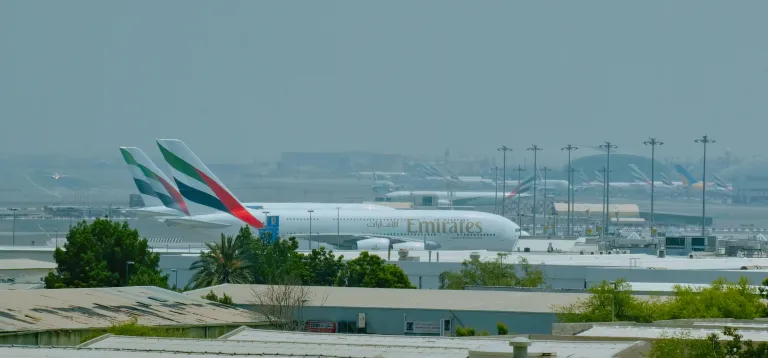
Image credit: Muhammad Ahmad | Unsplash
The Ministry of Foreign Affairs (MFA) Singapore has issued a comprehensive advisory recommending that Singaporeans defer all travel to the Middle East until further notice. This includes 15 key destinations:
High-Risk Areas: Iran, Israel, Iraq, Syria, Lebanon, Yemen, and the Palestinian Territories.
Transit & Tourism Hubs: UAE (Dubai/Abu Dhabi), Qatar (Doha), Saudi Arabia, Egypt, Jordan, Bahrain, Oman, and Kuwait.
The Situation: While many of these countries are not directly involved in the conflict, the "volatility of the security situation" and "significant disruptions to regional airspace" make travel unpredictable.
2. Flight Disruptions & Airspace Closures
If you are flying via major Middle Eastern hubs, your itinerary is likely affected.
Singapore Airlines (SIA): As of today, SIA has confirmed further cancellations for flights to and from Dubai (SQ494/SQ495) through 28 March 2026. Affected passengers are being offered re-accommodation or full refunds.
Gulf Carriers (Emirates, Qatar Airways, Etihad): Operations at Dubai (DXB), Doha (DOH), and Abu Dhabi (AUH) have been sharply curtailed. While some limited schedules are resuming, thousands of flights were cancelled earlier this month. Many airlines are now rerouting flights over Africa or Central Asia, leading to longer flight times (up to 2-3 hours extra) and technical fueling stops.

Image credit: Singapore Ministry of Foreign Affairs | Official Facebook
Repatriation Efforts: The Singapore government recently operated three repatriation flights out of Muscat, Oman, for citizens caught in the initial escalation.
3. Travel Insurance: Are You Covered?

Image credit: Changi Airport | Official Facebook
This is a critical point for Southeast Asian travellers. Most standard travel insurance policies contain a "War and Hostilities" exclusion clause.
Known Events: Any policy purchased after the escalation began (approximately 28 February 2026) will not cover claims related to the conflict, as it is now a "known event."
Cancellations: If you decide to cancel your trip due to fear or the MFA advisory, your insurer may not pay out unless you have a "Cancel for Any Reason" add-on.
Stranded Travellers: Some insurers are offering a "free extension" of existing policies for those unable to return home due to airport closures, but check your specific Product Disclosure Statement (PDS) immediately.
4. What Should You Do Now?
If You Have Upcoming Plans:
Contact Your Airline: Check your flight status daily. If your flight is cancelled, ask for a refund rather than a voucher if you don't plan to travel within the next 90 days.
Defer Non-Essential Travel: Heed the MFA advice. The risk of being stranded or facing sudden airspace closures is high.
Alternative Hubs: If you must travel to Europe, consider carriers that bypass the Middle East entirely (e.g., flying via Tokyo, Seoul, or direct via Qantas/Lufthansa).
For now, the most prudent course of action for Singaporean travellers is to stay informed, adhere to the latest MFA advisories, and maintain close contact with airlines. Prioritising your security and peace of mind is the best travel decision you can make.

About Author

Born in a new village in Selangor, Malaysia, Cecelia loves three things in life: Good food, good views, and good deals. She also enjoys exploring new places and experiencing new things on her travels.