
Discover Korea Beyond the Familiar: 7 Korean Regions to Add to Your Next Autumn or Winter Itinerary
A guide for travellers who already know Seoul and want richer Korean experiences!

Seoul will always be a good idea. It has the palaces, the cafés, the shopping streets, the neighbourhoods, the late-night food, and that fast-moving city energy many travellers come to Korea for.
But for those who have already done Myeongdong, Hongdae, Bukchon, Gyeongbokgung and the usual day trips, Korea has far more to offer. Autumn and winter are especially rewarding seasons to go beyond the capital, when the country shifts into slower, richer travel moods: mountains turn red and gold, coastal cities glow after dark, hanok villages feel more atmospheric, and regional food tastes even better in the cold.
From Busan’s winter lights to Gyeongju’s Silla heritage, Jeju’s volcanic landscapes, Jeonju’s hanok culture and Sejong’s garden-city calm, here are seven Korean regions to consider for your next autumn or winter itinerary.
Also read: My 3-Day Gangwon Winter Itinerary in Korea: Everything You Need to Know
Ready to plan your dream ski trip to South Korea?

Be sure to visit the Korea Tourism Organization (KTO) at Booth 5H10 during NATAS Holidays 2026, happening from 21 to 23 August 2026 at Singapore Expo, Halls 3B, 4 & 5, from 10am to 9.30pm.
It’s the perfect chance to discover South Korea’s best destinations all year round, get expert travel advice, and explore exciting holiday options. Travellers can also enjoy exclusive deals and redeem souvenirs when they book with KTO’s travel partners at the fair, with redemptions applicable to tour packages, flights-only bookings and land-only arrangements, while stocks last!
FIND OUT MORE
1. Busan
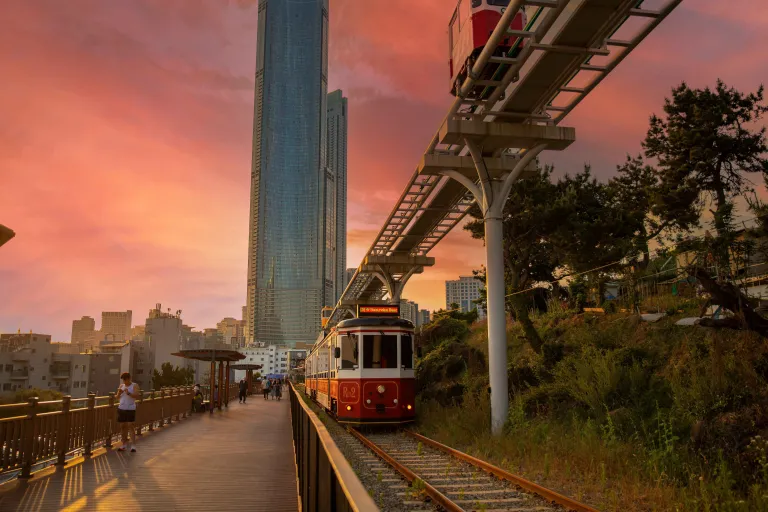
Blue Line Park. Image credit: ⓒKorea Tourism Organization - Design Geulggol
If Seoul is Korea’s fast-paced cultural capital, Busan is its seaside counterpart. It has the scale of a major city, but with the added pull of beaches, hillside villages, coastal temples, seafood markets and ocean-facing cafés.
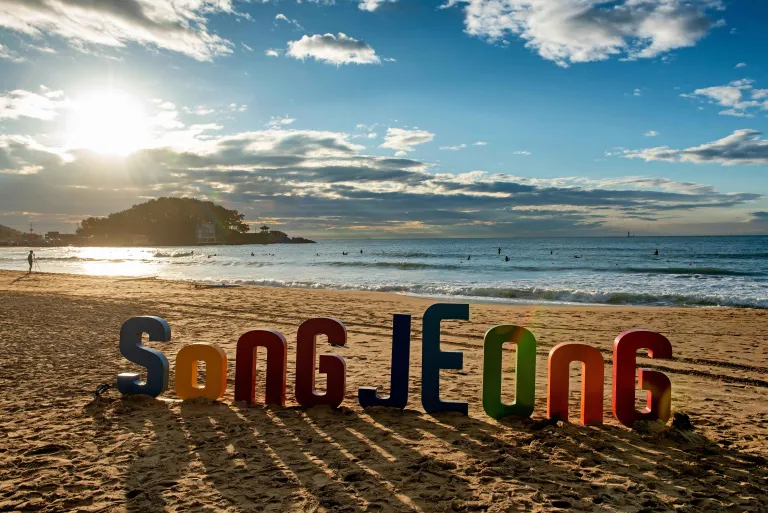
Busan Songjeong Beach. Image credit: ⓒKorea Tourism Organization - Busan Tourism Organization
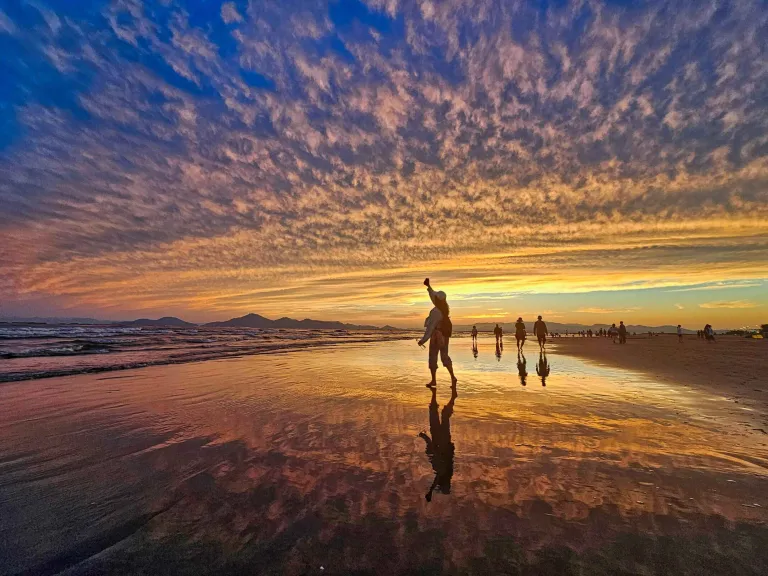
Sunset at Dadaepo Beach. Image credit: ⓒKorea Tourism Organization - Lee Myung-jae
Autumn is a good time to explore Busan at a gentler pace. The weather is cooler, coastal walks feel more comfortable, and areas such as Haeundae, Gwangalli, Yeongdo and Songdo are easier to enjoy without the intensity of peak summer.
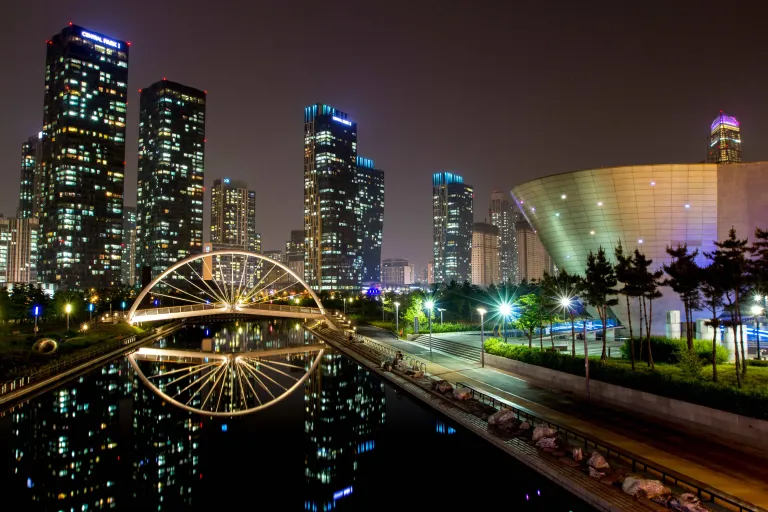
Songdo, City of the Future. Image credit: ⓒKorea Tourism Organization - Jeon Jong-hun
Travellers can start with beachside views, move into the alleys of Gamcheon Culture Village, visit Haedong Yonggungsa Temple by the sea, then end the day with grilled seafood or hot bowls of milmyeon and dwaeji gukbap.
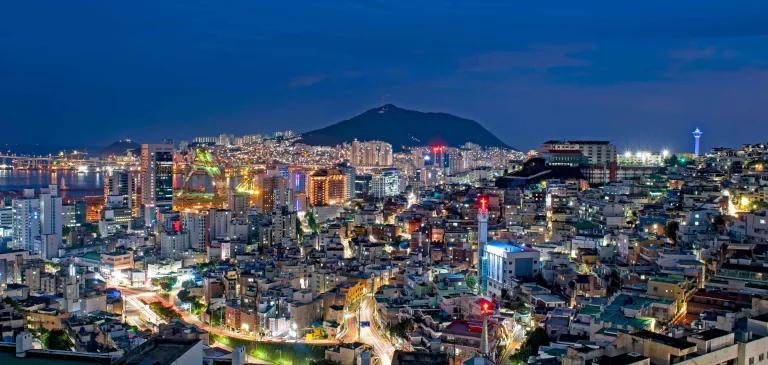
Yeongju Sky Eye Observatory. Image credit: ⓒKorea Tourism Organization - Busan Tourism Organization
In winter, Busan takes on a different kind of charm. Haeundae is known for its seasonal light festival. Travellers planning future trips should check updated dates each year before confirming their itinerary.
Busan works especially well for travellers who want an easy extension after Seoul, or a second-city experience with coastal scenery, seafood and evening atmosphere.
Best for: coastal city breaks, winter lights, food trips, first-time regional Korea travellers
Seasonal tip: Bring layers in winter, especially if you plan to spend time near the sea. The coastal wind can feel sharper than expected.
2. Gyeonggi
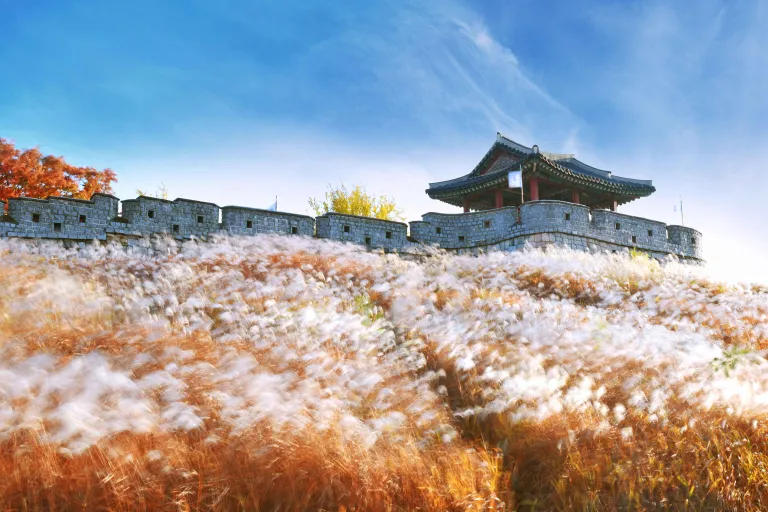
Hwaseong Fortress. Image credit: ⓒKorea Tourism Organization - O Do-yeon
For travellers who want to go beyond Seoul without committing to a long domestic journey, Gyeonggi is one of the most practical regions to explore. It surrounds the capital, making it ideal for day trips, short overnights and family-friendly add-ons.
The region is strong on heritage. Suwon Hwaseong Fortress is one of its most recognisable landmarks, and it’s a Joseon-era fortress that was added to the UNESCO World Heritage List in 1997. It offers the kind of travel experience many visitors want from Korea: old walls, city views, cultural context and enough space to walk without feeling boxed into a single attraction.
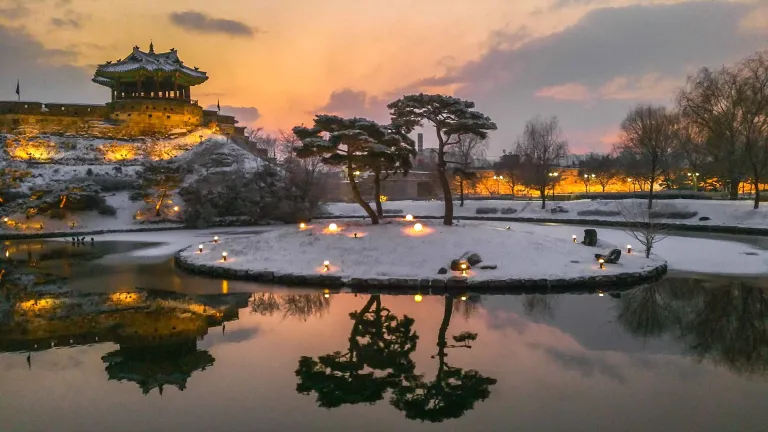
Banghwasuryujeong Pavilion. Image credit: ⓒKorea Tourism Organization - Lee Do-eun
Gyeonggi also works well in autumn and winter because of its parks, gardens and seasonal light experiences. The Garden of Morning Calm in Gapyeong is commonly associated with winter illumination, with its lighting festival covering nearly 330,000 square metres. Families can also consider the Korean Folk Village in Yongin, which gives travellers a more accessible introduction to traditional architecture, folk games and Joseon-era settings.
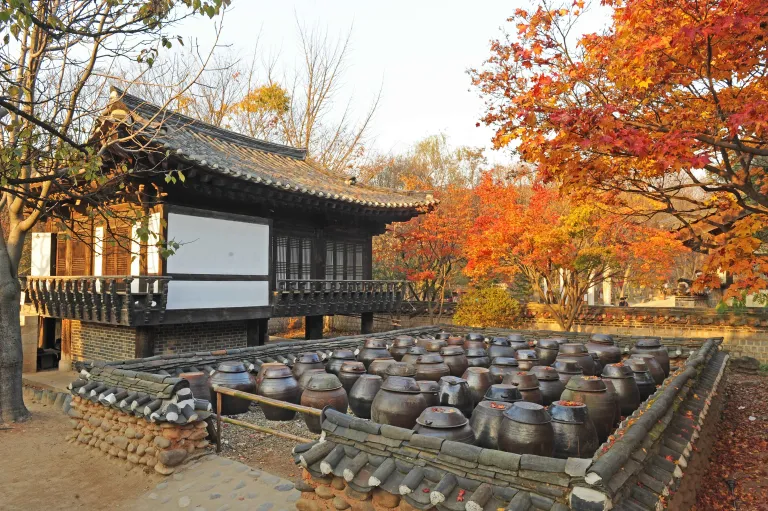
Korean Folk Village. Image credit: ⓒKorea Tourism Organization - Live Studio Kim Hakri
The appeal of Gyeonggi is its convenience. It gives travellers a fuller Korea itinerary without requiring them to leave the Seoul orbit entirely.
Best for: Seoul add-ons, heritage sites, family travel, easy day trips
Seasonal tip: Avoid packing too many Gyeonggi stops into one day. The region looks close on the map, but travel times can vary depending on traffic and train connections.
3. Gyeongsangbuk-do
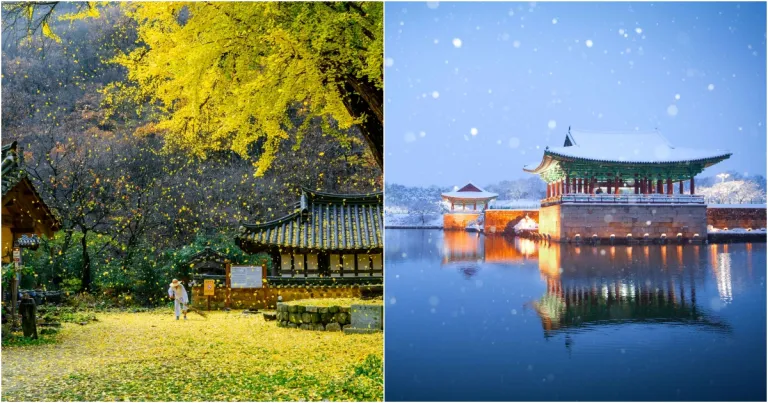
Unmunsa Temple, Donggung Palace & Wolji Pond. Image credit: ⓒKorea Tourism Organization - An Yong-gwan, Jeon U-seok
Gyeongsangbuk-do offers one of Korea’s most meaningful heritage routes for travellers who want a deeper cultural itinerary. Its biggest draw is Gyeongju, the ancient capital of the Silla Kingdom, which served as the kingdom’s capital for nearly 1,000 years. Today, it remains one of the best places to understand Korea beyond modern pop culture, with historic temples, royal tombs and heritage sites that trace the country’s rich past.
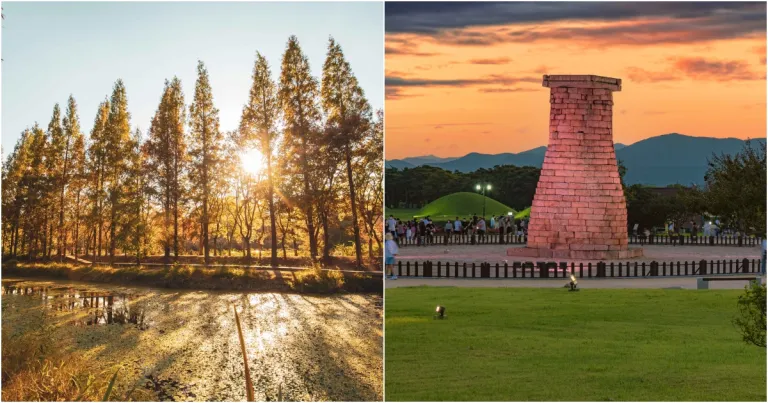
Gyeongbuk Millennium Forest Garden, Cheomseongdae Observatory. Image credit: ⓒKorea Tourism Organization - Park Jangyong, Anjinho Film
Gyeongju is often described as a “museum without walls”. The city’s major stops include Daereungwon Ancient Tomb Complex, Cheomseongdae Observatory, Donggung Palace and Wolji Pond, Bulguksa Temple and Seokguram Grotto. For travellers who enjoy history but do not want a heavy museum-only itinerary, Gyeongju strikes a good balance between outdoor wandering, cultural immersion and scenic beauty.
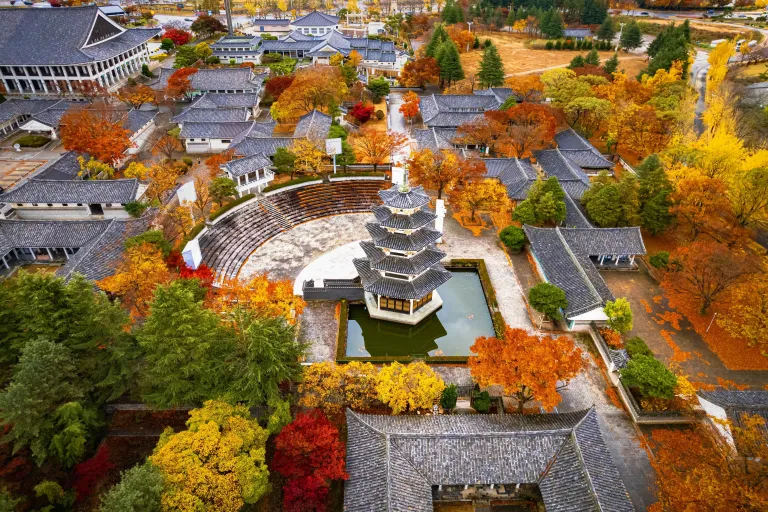
Gyeongju Bomun Tourist Complex. Image credit: ⓒKorea Tourism Organization - Anjinho Film
Autumn gives the region added appeal. The historic sites look especially atmospheric against golden grass, red leaves and soft seasonal light. In winter, the experience becomes quieter and more contemplative, with fewer crowds and a stronger sense of place.
Gyeongsangbuk-do is also worth considering for travellers who have already been to Kyoto or Nara and want a Korean heritage destination with its own distinct rhythm.
Best for: history lovers, culture trips, slow heritage travel, photography
Seasonal tip: Stay overnight in Gyeongju if possible. The city is especially beautiful in the evening, particularly around Donggung Palace and Wolji Pond.
4. Jeju
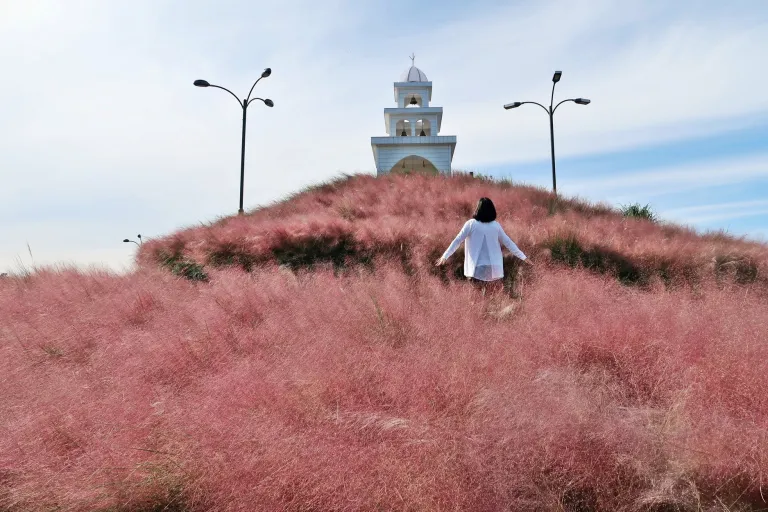
Image credit: Jeju Tourism Organization | Official Facebook
Jeju is familiar to many travellers, but it still deserves its place on a seasonal Korea itinerary. Located southwest of the Korean Peninsula, Korea’s largest island is one of the country’s most popular leisure escapes and one of the few destinations in the world to hold UNESCO’s Triple Crown, recognised as a World Natural Heritage Site, Biosphere Reserve and Global Geopark.
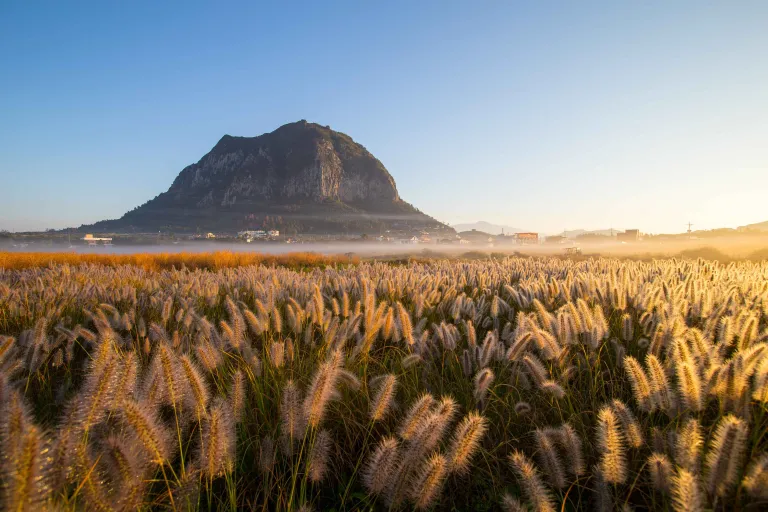
Sanbangsan Mountain. Image credit: ⓒKorea Tourism Organization - Kim Bong-du
In autumn, Jeju is ideal for travellers who want open landscapes and a softer kind of outdoor travel. The weather is cooler, the coast feels less crowded, and the island’s volcanic scenery becomes easier to explore. Depending on the route, travellers can plan for Seongsan Ilchulbong, coastal roads, oreum volcanic cones, forest paths, tangerine farms, local markets and seaside cafés.
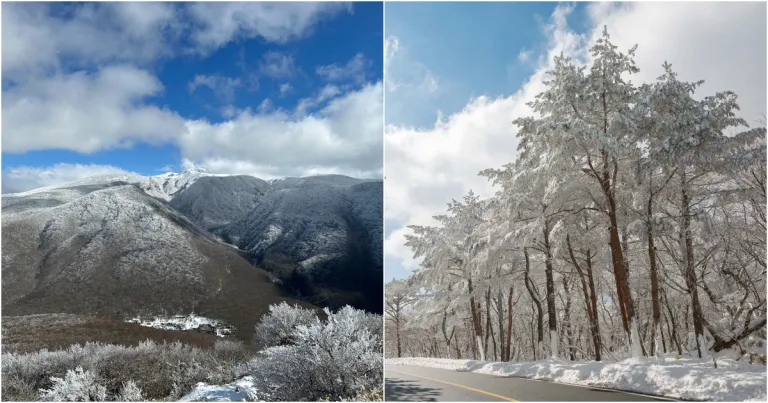
Hallasan Mountain, Walking Route 1100. Image credit: 하준 오 | Pexels; ⓒKorea Tourism Organization - Lim Jong-do
Winter in Jeju is underrated. It may not deliver the heavy snow fantasy that some travellers associate with Korea, but it offers windswept coastlines, quiet villages, seasonal citrus, scenic drives and a more peaceful version of the island. For travellers from Southeast Asia, it is a good option for those who want cool weather without committing to harsher inland winter conditions.
Jeju is best enjoyed slowly. Instead of trying to circle the entire island too quickly, choose a base and build the itinerary around one side of the island at a time.
Best for: nature, island escapes, scenic drives, couples and families
Seasonal tip: Driving is the easiest way to explore Jeju, especially in autumn and winter when some scenic spots are more spread out.
5. Jeonbuk State (Jeollabuk-do)
The Jeonbuk region gives travellers a more nature-led and countryside-focused experience.
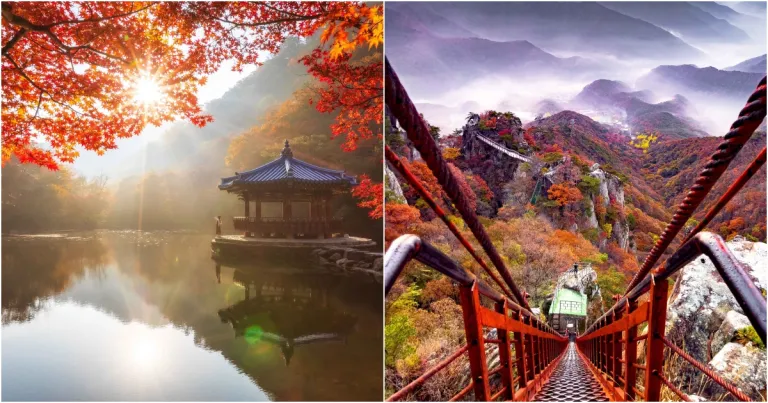
Morning of Uhwajeong Pavilion, Stairway to Heaven. Image credit: ⓒKorea Tourism Organization - Jeong Kyujin, Lee Junmo
For autumn, one of the region’s most powerful draws is Naejangsan National Park. Visit Korea describes Naejangsan Mountain as a famous mountain in Jeonbuk-do and one of Korea’s best places for fall foliage, with the mountain also beautiful in winter when rock cliffs are covered with snow. This makes it an excellent seasonal anchor for travellers who want more than city sightseeing.
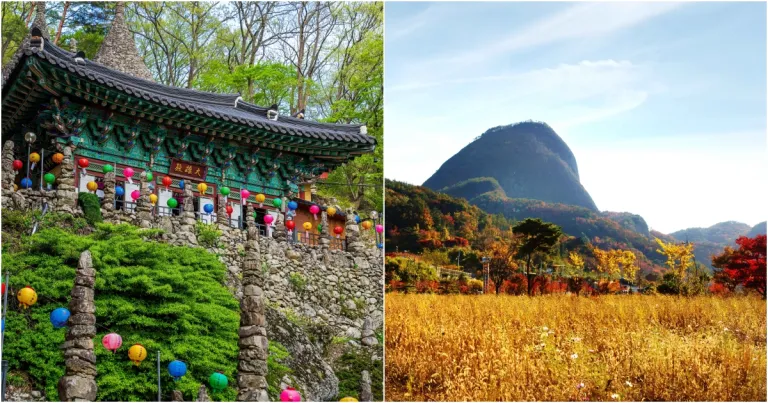
Tapsa Temple, Maisan Mountain. Image credit: ⓒKorea Tourism Organization - Kim Jiho, IR Studio
Beyond its capital, Jeonju, the wider Jeonbuk region rewards travellers with a slower, more peaceful side of Korea. A regional itinerary can include Jinan’s distinctive Maisan Mountain, tranquil temples, scenic forest trails, countryside roads and food-focused stops rooted in local produce and tradition. While Jeonju is best known for its preserved Hanok Village and bibimbap heritage, Jeonbuk as a whole offers a richer blend of nature, culture and rural charm for travellers seeking Korea’s quieter textures.
Best for: autumn foliage, countryside travel, temples, nature photography
Seasonal tip: Foliage timing changes every year, so check the latest autumn foliage forecast before planning a Naejangsan visit.
6. Chungnam
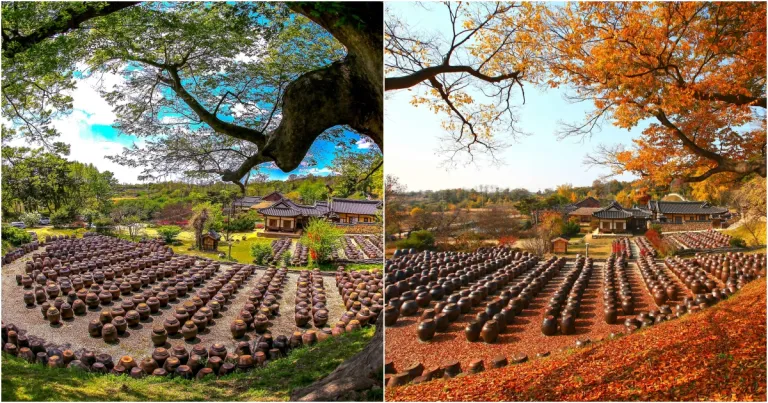
Jangdokdae at the Myeongjae House, House of Yun Jeung. Image credit: ⓒKorea Tourism Organization - Lee Bo-ra, Lee Jae-sun
Chungnam, or Chungcheongnam-do, is ideal for travellers who want a slower Korea itinerary with more texture: heritage towns, countryside landscapes, seasonal produce, and scenic coastal escapes. While Gongju and Buyeo remain important stops for understanding Baekje history, the region also offers more experiential routes through Yesan and Taean, from apple-themed activities and Yedang Reservoir to Taean’s coastal nature spots and the Taean Marine Healing Center.
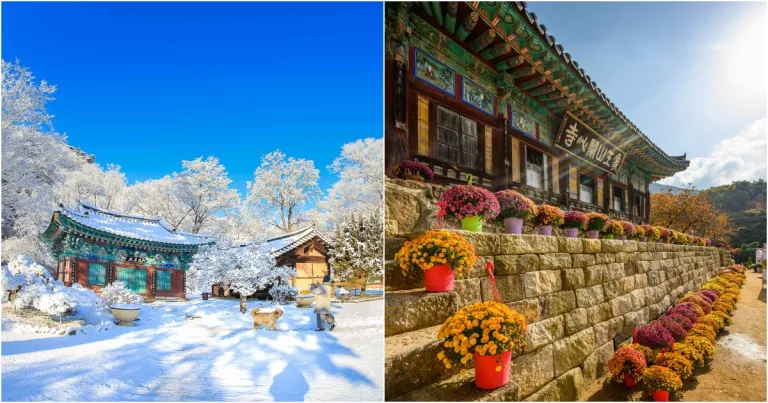
Magoksa Temple, Seosan Gaesimsa Temple. Image credit: ⓒKorea Tourism Organization - Lee Jung-il, Lee Hyojik
In Yesan, autumn brings a charming countryside rhythm. The region is known for its apples, making it a fitting stop for travellers interested in seasonal experiences such as the Yesan Apple Festival, apple picking, apple winery tours, and hands-on apple pie making. It is the kind of itinerary that feels local, relaxed, and easy to enjoy with family or friends. Nearby, Yedang Reservoir adds a scenic nature element, with waterside views that make the region feel even more peaceful.
Gongju and Buyeo can still be included as part of the wider heritage route, especially for travellers interested in Baekje-era sites such as Gongsanseong Fortress, the Tomb of King Muryeong, and Buyeo’s temple sites and river scenery. However, pairing them with Yesan and Taean gives the itinerary a fresher balance of history, food, nature, and coastal healing.
Best for: Baekje history, countryside trips, heritage walks, slower itineraries
Seasonal tip: Consider pairing Gongju and Buyeo in the same trip for a fuller Baekje heritage route.
7. Sejong
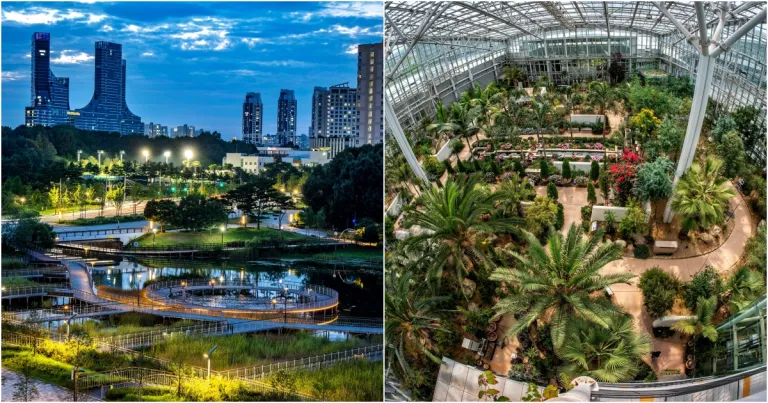
Sejong Lake Park, Sejong National Arboretum. Image credit: ⓒKorea Tourism Organization - Kim Yonghoon
Sejong is one of the more unexpected additions to a Korea itinerary, which is exactly why it works for travellers who have already done the familiar route. Known as Korea’s multifunctional administrative city, it offers a different kind of urban experience: planned, spacious, green and calm.
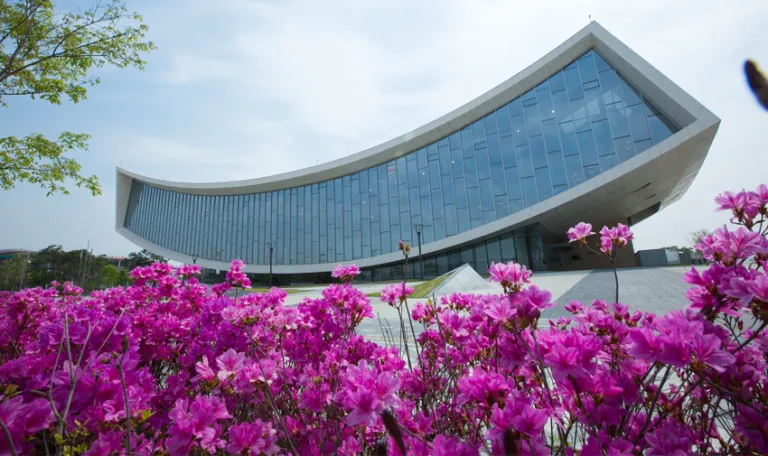
The National Library of Korea. Image credit: Sejong City | Official Website
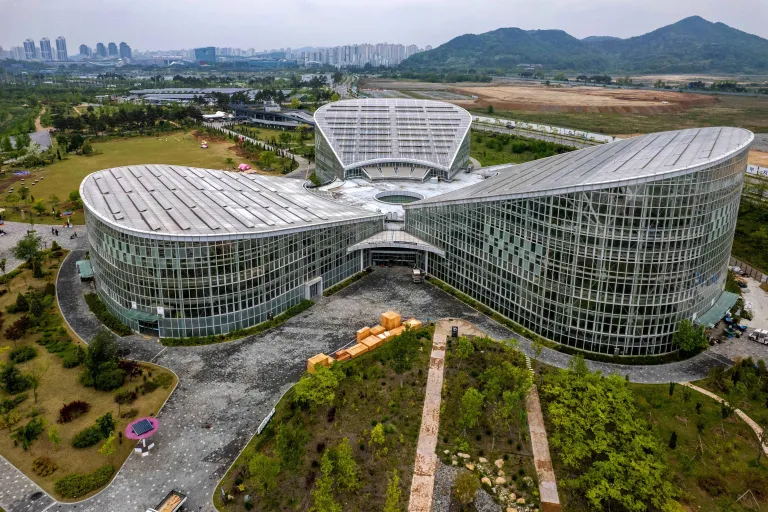
Sejong National Arboretum. Image credit: ⓒKorea Tourism Organization - Kim Yonghoon
For travellers, the appeal lies in its thoughtfully designed parks, lakefront spaces and contemporary urban landscape. The National Library of Korea, Sejong adds a cultural dimension to the city with its striking modern architecture, while the Sejong National Arboretum, Korea's first urban arboretum, showcases the city's harmonious blend of nature and modern urban living.
Sejong Central Park, spanning 1.38 million square metres with expansive green spaces and themed gardens, further enhances the city's reputation as one of Korea's most liveable and pedestrian-friendly destinations.
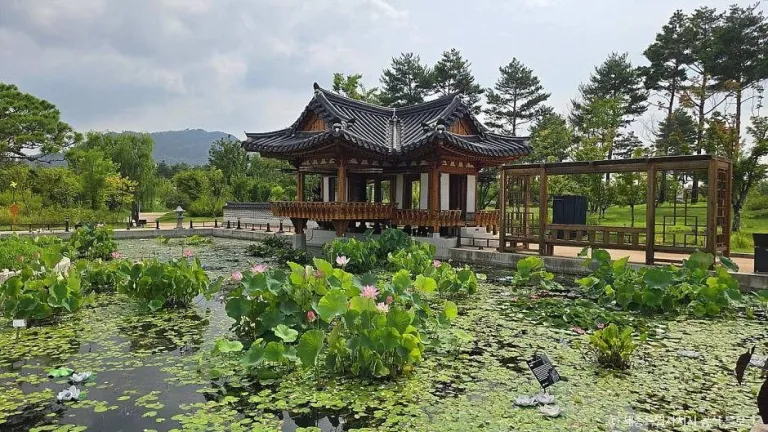
National Sejong Arboretum. Image credit: Korea Tourism Organization | Official Website
In autumn, Sejong’s parks and gardens offer a relaxed way to enjoy the season without the intensity of the better-known foliage spots. In winter, its arboretum and indoor-friendly cultural stops can help balance an itinerary that might otherwise be too weather-dependent.
Sejong is not about spectacle. It is about discovering a newer side of Korea, where public spaces, civic planning, gardens and everyday city life become part of the travel experience.
Best for: garden walks, modern city discovery, relaxed families, repeat Korea travellers
Seasonal tip: Pair Sejong with Chungnam or Daejeon for a more rounded central Korea itinerary.
Dreaming of crisp mountain air, snowy slopes, and a winter escape in South Korea?

Head over to the Korea Tourism Organization (KTO) at Booth 5H10 during NATAS Holidays 2026, taking place from 21 to 23 August 2026 at Singapore Expo, Halls 3B, 4 & 5, from 10am to 9.30pm.
Whether you are planning your first ski holiday or looking for new winter destinations to explore, this is a great opportunity to speak with travel experts, discover South Korea’s top seasonal experiences, and find the right package for your trip. Travellers can also enjoy special deals and redeem souvenirs when making winter travel bookings with KTO’s travel partners at the fair, while stocks last!
How to plan an autumn or winter Korea itinerary beyond Seoul
If this is your second or third trip to Korea, the best approach is not to add every region at once. Instead, choose one clear travel mood.
For coastal energy and winter lights, choose Busan. For easy day trips from Seoul, choose Gyeonggi. For history, choose Gyeongsangbuk-do or Chungnam. For island scenery, choose Jeju. For food and hanok culture, choose Jeonju. For autumn foliage, choose Jeonbuk State. For a quieter modern city experience, choose Sejong.
Autumn is best for travellers who want foliage, walking routes, harvest-season food, outdoor photography and mild weather. Winter is better for lights, hot food, cosy stays, quieter cultural sites and the chance to see a more atmospheric side of Korea.
Korea becomes far more rewarding when travellers look beyond one city. Seoul may be the entry point, but the richer stories often begin once you take the train, drive along the coast, step into a hanok village, follow a mountain trail or spend an unhurried afternoon in a regional market.
For travellers ready to go deeper, these eight regions offer a more textured way to experience Korea across the coast, culture, food, nature and heritage.
Brought to you by Korea Tourism Organization

About Author

Born in a new village in Selangor, Malaysia, Cecelia loves three things in life: Good food, good views, and good deals. She also enjoys exploring new places and experiencing new things on her travels.