
Here’s Why Khao Yai National Park is Worth a Visit
Easily accessible from Bangkok, Khao Yai National Park offers a nature retreat with everything you could ask for: hiking trails, mountains, waterfalls and wildlife.

Bangkok’s temples, markets and nightlife could easily fill an entire holiday. However, travellers willing to venture beyond the capital will find one of Thailand’s most impressive natural escapes only a few hours away.
Khao Yai National Park covers more than 2,000 square kilometres across four provinces. Established in 1962 as Thailand’s first national park, it forms part of the UNESCO-listed Dong Phayayen-Khao Yai Forest Complex.
Its forests, grasslands, waterfalls and mountains provide a habitat for elephants, gibbons, hornbills, deer and many other species. Add scenic viewpoints and walking trails, and it is easy to understand why Khao Yai remains one of Thailand’s most popular national parks.
Here are some of the best reasons to visit.
The Location
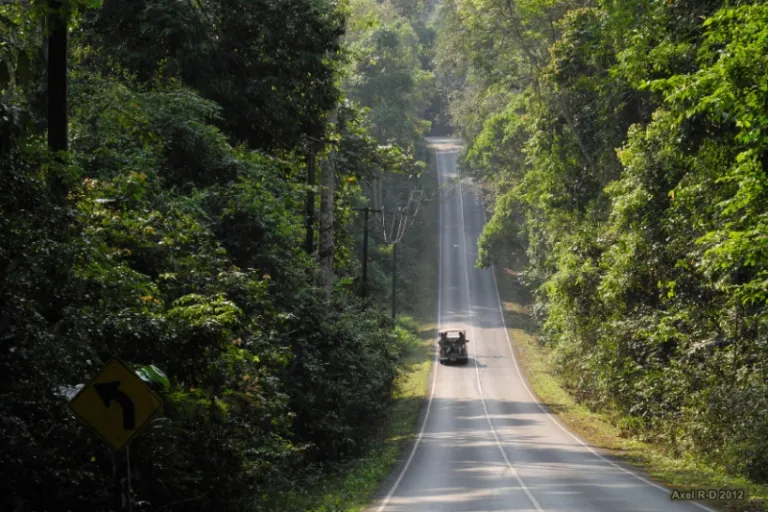
Image credit: Axel Drainville
Khao Yai National Park is located northeast of Bangkok, with the northern entrance near Pak Chong serving as the most common access point.
Travellers can reach Pak Chong from Bangkok by train, coach or minivan. Local transport continues towards the park entrance, but getting between the attractions inside the park is more complicated.
The waterfalls, viewpoints and wildlife-watching areas are spread across a large area, and there is no dependable internal public-transport network. Renting a car, hiring a driver or joining an organised tour is therefore the easiest option for most visitors.
The park is generally open daily from 6am to 6pm. Entrance fees apply to both visitors and vehicles, and current rates should be checked before travelling.
Hiking Trails
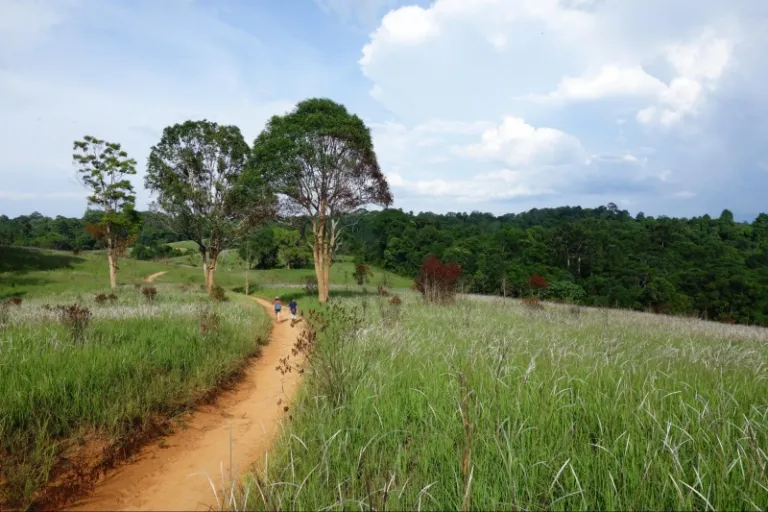
Image credit: Davy Demaline
Stop at the Khao Yai Visitor Centre near the park headquarters before beginning your exploration.
Displays introduce the park’s landscapes, wildlife and conservation work, while staff can provide information about trail conditions, attraction closures and current animal activity.
This is also the best place to ask about guided walks and night safaris. Some forest trails require a park guide, and access may change according to the weather or wildlife conditions.
A river runs beside the visitor centre, and the surrounding area is a pleasant place to begin looking for birds, butterflies and monkeys.
Beautiful Views
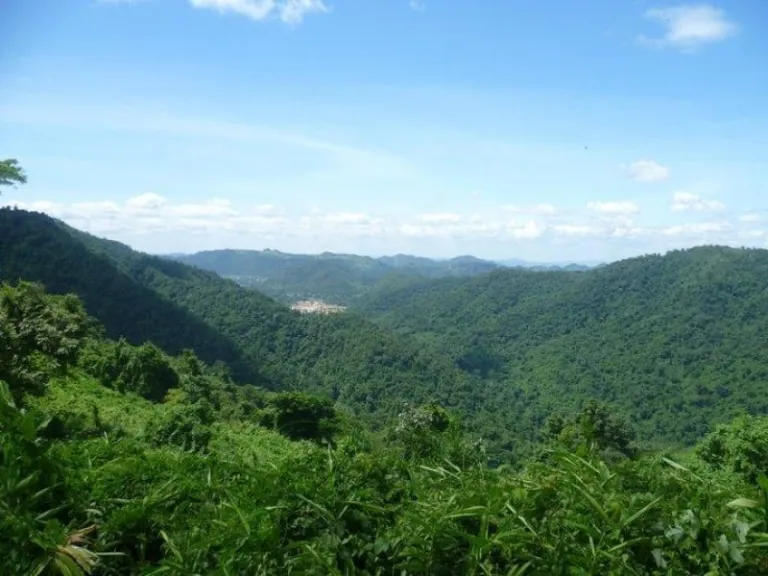
Khao Yai’s mountain roads provide several opportunities to stop and admire the surrounding forest.
The Km 30 Viewpoint is one of the first major viewpoints encountered after entering from Pak Chong. On clear mornings, visitors may see layers of forested hills and mist stretching across the landscape.
Pha Diao Dai is another popular viewpoint, reached along a short raised nature trail through cool montane forest. The trail leads towards a dramatic cliff overlooking the mountains and plains below.
Visitors should remain within designated areas and avoid stepping too close to cliff edges. Viewpoints and access roads may close temporarily because of severe weather or safety concerns.
Stunning Waterfalls
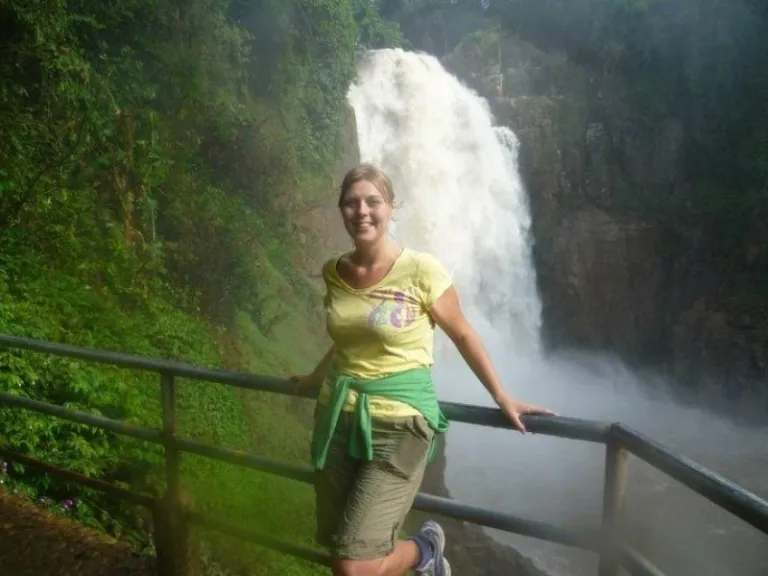
Haew Suwat Waterfall
Haew Suwat is one of Khao Yai’s most recognisable waterfalls.
The approximately 25-metre cascade flows over a broad rock ledge into the pool below. Its appearance changes substantially with the seasons, becoming more powerful during and after periods of heavy rain.
The waterfall gained international recognition after appearing in the film The Beach. However, visitors should not attempt to recreate the movie’s famous jump from the cliff.
Follow current safety signs and park instructions, as swimming or approaching certain areas may be prohibited depending on conditions. Rocks around the waterfall can also become extremely slippery.
Haew Narok Waterfall
Haew Narok is Khao Yai National Park’s largest and tallest waterfall.
Its water descends approximately 150 metres across three levels, although visitors generally view the dramatic upper section from a designated platform.
Reaching the viewpoint requires a walk of around one kilometre from the car park, followed by a steep staircase. The return climb can be tiring, particularly in hot or humid weather.
The waterfall is at its most powerful towards the end of the rainy season. Swimming is prohibited because of the strong currents, steep terrain and dangerous drop.
Wild elephants inhabit the surrounding forest, so visitors must obey any closures or instructions issued by park officials.
Other waterfalls and forest trails
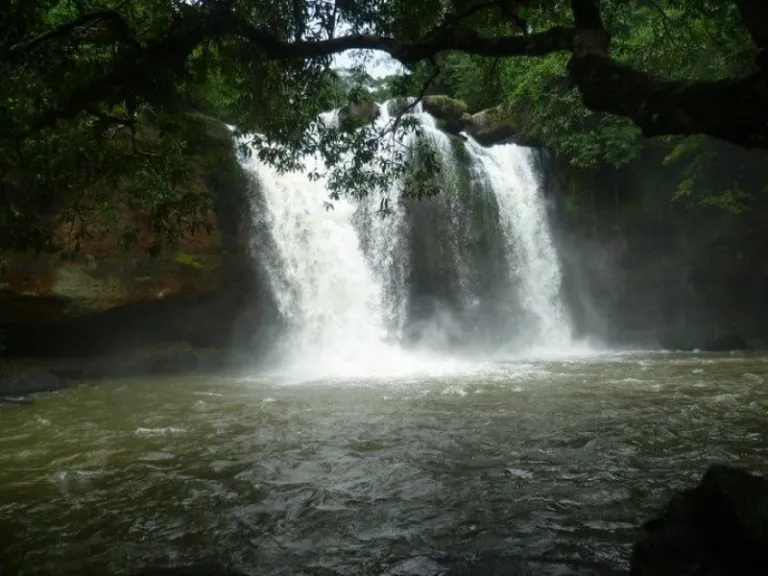
Khao Yai contains several smaller waterfalls and walking routes beyond Haew Suwat and Haew Narok.
Pha Kluai Mai Waterfall can be reached by a forest trail linking the visitor-centre area with the Pha Kluai Mai campground. The route passes through jungle and beside the Lam Ta Khong stream.
Kong Kaeo Waterfall is located close to the visitor centre and is easier to reach, although the flow may be limited outside the rainy season.
Other trails venture deeper into the forest and may require an authorised guide. Never enter an unfamiliar trail without checking its current status, as routes can be affected by rain, fallen trees and wildlife activity.
Abundant Bird Life
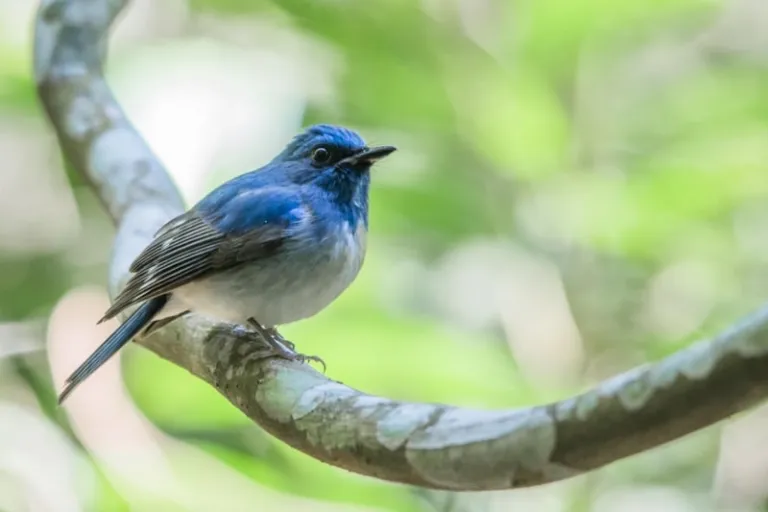
Image credit: Rushen
Khao Yai is one of Thailand’s best-known birdwatching destinations.
The forests are home to hornbills, barbets, broadbills, bee-eaters, woodpeckers and many other species. Great hornbills and wreathed hornbills are among the park’s most sought-after sightings.
Early morning is generally the best time to listen for calls and watch birds moving between the trees. Bring binoculars and remain quiet, particularly around fruiting trees and forest edges.
Even visitors who are not dedicated birdwatchers are likely to hear and see a variety of species during a day in the park.
Plenty of Wildlife
Wild elephants are among Khao Yai’s most famous residents.
They are sometimes seen beside roads, near grasslands or around water sources. Although encountering one can be exciting, elephants are powerful and unpredictable wild animals.
Remain inside your vehicle, keep a generous distance and never block the elephant’s path. Do not sound the horn, flash lights or move closer for a photograph. Follow instructions from rangers immediately.
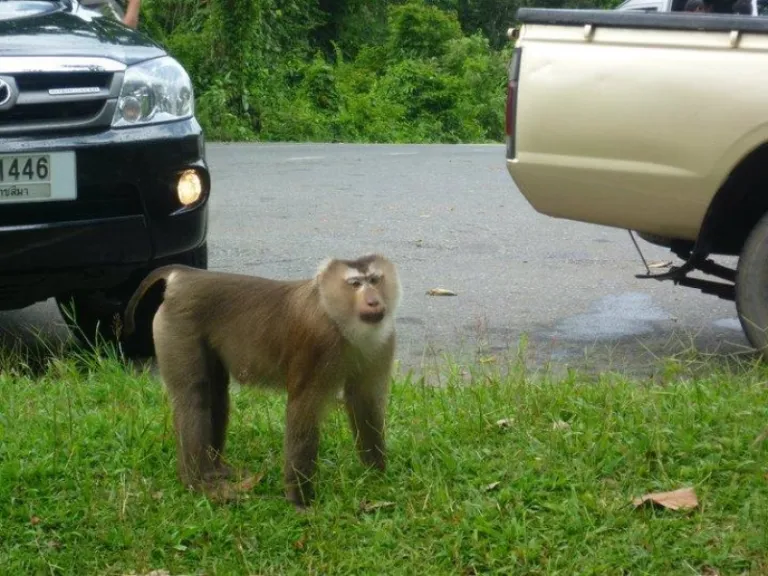
Other animals living in the park include gibbons, macaques, sambar deer, barking deer, wild boar, porcupines, civets and Asian black bears. Predators such as clouded leopards are present but extremely difficult to see.
Khao Yai is also home to reptiles, amphibians, insects and an impressive variety of butterflies.
Never feed wildlife. Feeding encourages animals to approach roads and vehicles, increasing the risk of injury to both animals and people.
Wildlife watching after dark
Some animals become active only after sunset, making an official night safari a worthwhile addition to an overnight visit.
These guided excursions usually take place aboard an open vehicle accompanied by park staff. Spotlights are used to look for animals such as deer, civets, porcupines and owls.
Sightings are not guaranteed, and the experience should not be treated like a zoo tour. The appeal lies in observing the forest after dark and seeing whichever animals happen to emerge.
Night safaris must be arranged through the park and are subject to current operating conditions. Visitors should not drive or hike independently in restricted areas after the park’s standard closing time.
Tips for visiting Khao Yai National Park
Wear comfortable shoes and bring drinking water, sun protection, insect repellent and a light rain jacket.
Temperatures can be cooler in elevated areas, particularly early in the morning and during Thailand’s cool season. Rain can arrive suddenly, especially between May and October.
Leeches may be present on forest trails during wet periods. Long trousers, covered shoes and leech socks can provide additional protection.
Do not leave food visible around monkeys, and keep doors and windows closed when animals approach parked vehicles.
Mobile reception can be unreliable in parts of the park, so download maps and save essential information in advance.
Finally, allow enough time. Although Khao Yai can be visited on a long day trip from Bangkok, spending at least one night nearby provides a better chance to experience the park during the wildlife-rich early morning and evening hours.
With its waterfalls, mountain scenery and remarkable biodiversity, Khao Yai offers much more than a quick break from Bangkok.
Every visit is different. You may see elephants crossing a road, hear gibbons calling from the canopy or simply spend the day surrounded by forest. Whatever appears, the opportunity to experience one of Thailand’s most important protected landscapes makes the journey worthwhile.
