
My 6D5N Jiangxi, China Itinerary: Best Things to Do & Places to Visit
A glimpse of a slower, more unexpected side of China.

When you think of travelling to China, what's the first thing that comes to mind? Well, for me, it definitely wouldn't have been Jiangxi.
As China grows increasingly popular among travellers in recent years, its tier-one cities like Shanghai, Beijing, Chongqing, Guangzhou, and more have also become favourite holiday destinations for many Southeast Asian travellers.
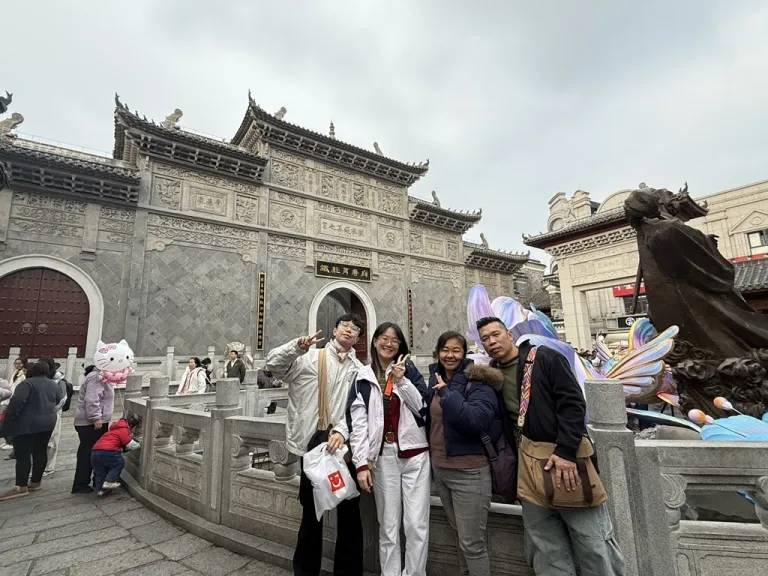
But my family wanted something a little different. So in March, I joined them on a guided trip to Jiangxi, and it turned out to be a surprising hidden gem. In this article, I’ll be sharing my itinerary, travel tips, and favourite moments from the trip. Read on to discover why Jiangxi deserves a spot on your China travel list!
P.S. Since we were on a group tour, I'm skipping the scheduled lunch and dinner stops. Instead, focus more on the attractions and things to do nearby.
Also read: 12 Hours in Macao: Places to Visit to Make the Most of Your Trip!
My Jiangxi, China itinerary
We flew from Kuala Lumpur to Changsha, and then we began our journey to Jiangxi via the tour bus the next day.
Note: There are direct flights from Singapore to Jiangxi's Nanchang Airport.
Day 1
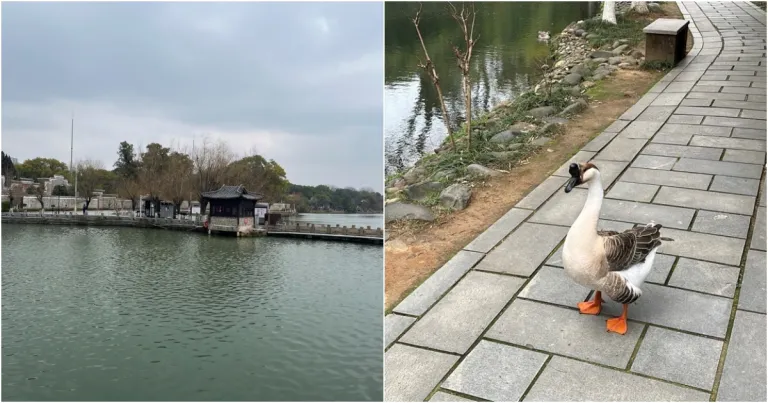
After staying a night at Changsha, we started our journey towards Jiangxi on Day one. The first stop was the Bada Shanren Memorial Hall in Nanchang. Bada Shanren was a Chinese painter, calligrapher, and poet back in the late-Ming Dynasty. Situated in a big park surrounded by serene lakes, this memorial hall features his individualistic artworks, which were seen as bold and wild.
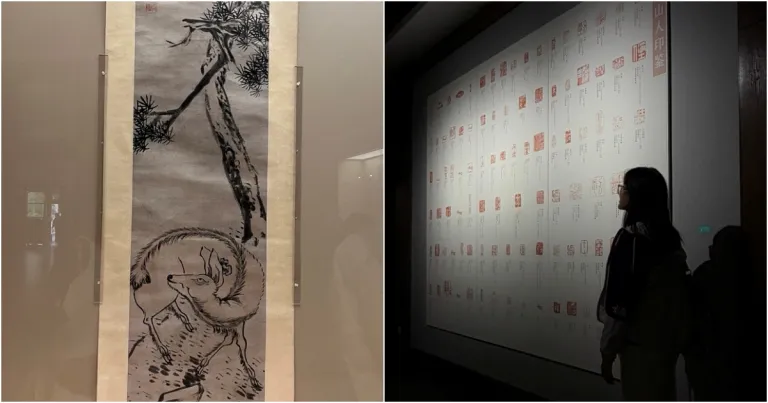
His drawings of animals, such as birds, deer, and chickens, often show the whites of their eyes, reflecting his frustration with the political situation of his day.
The hall also had fun, traditional activities like Cai Deng Mi, aka lantern riddle-guessing, with prizes to win.
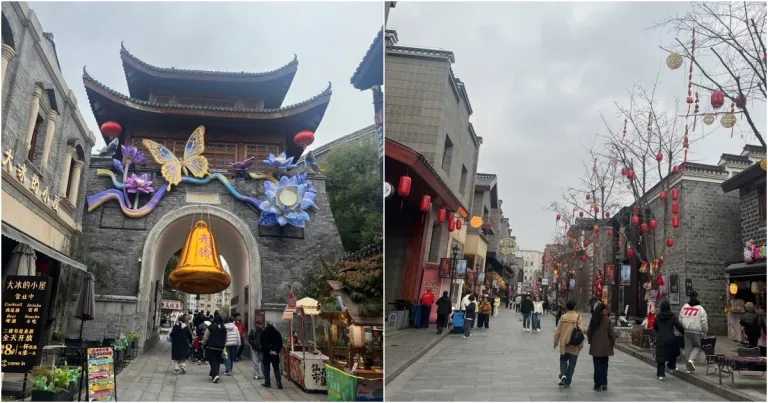
Next, we were brought to Wanshou Palace Pedestrian Street for some free exploration. The area was buzzing with energy, packed with trendy beverage shops, restaurants, and fashion boutiques. Not to mention plenty of souvenir stalls and Instagrammable photo spots.
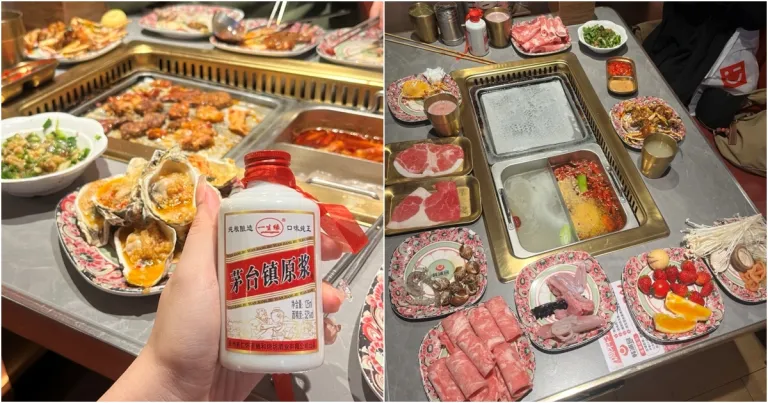
Dinner was an eye-opening experience. We had a buffet at Hanpugong, and you wouldn't believe the spread that we were offered! From unlimited Maotai alcohol and fresh fruits to seafood and fried meats, it felt truly different from the buffets back home. You can even DIY your own milk tea and shaved ice. So cool!
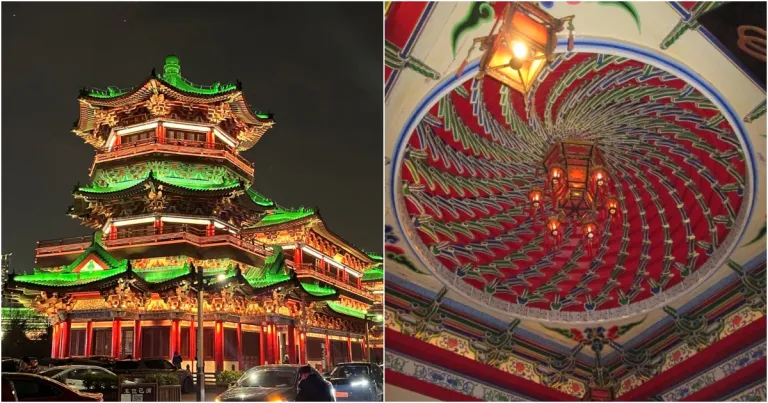
To end the day, we visited the Pavilion of Prince Teng (Teng Wang Pavilion). If you’re a fan of Chinese literature, you’ve likely heard of Teng Wang Ge Xu, the famous poem written about this very place.
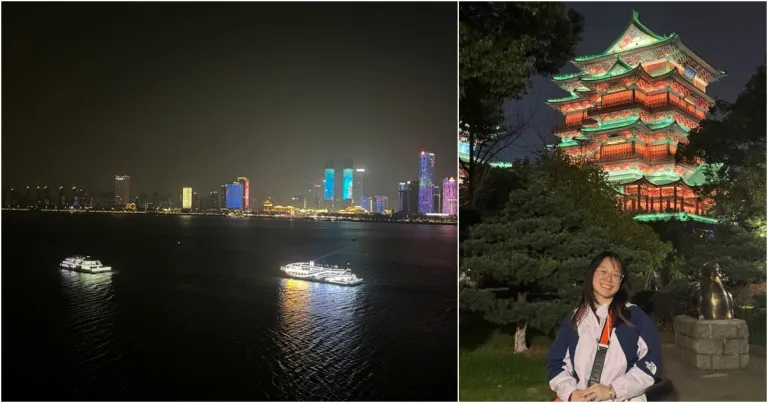
Situated at the intersection of the Gan River and the Fuhe River, the pavilion was originally built over a thousand years ago and has been meticulously renovated over the centuries. The current structure beautifully reflects the Song Dynasty architectural style, with fascinating cultural relics and exhibitions to explore on every floor.
Day 2
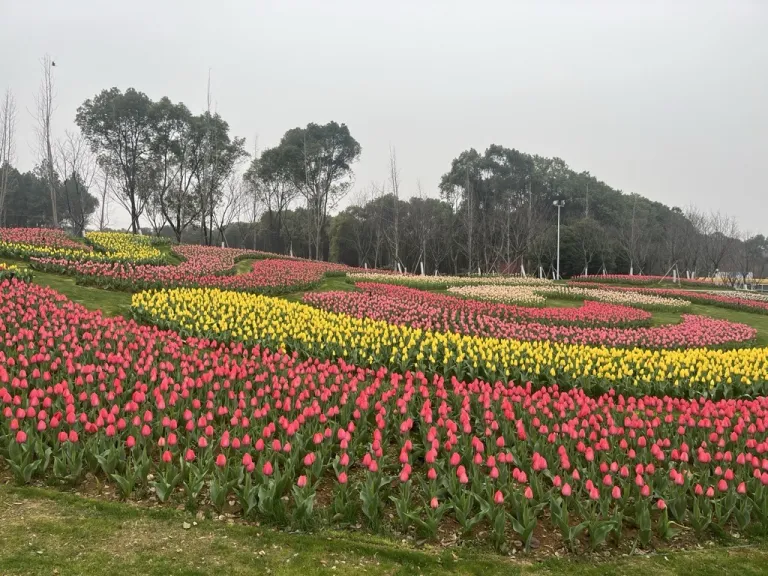
I never would have expected to see sprawling tulip fields in China, but I was happily proven wrong! Nestled in Nanchang, Jiangxi, the Fenghuang Gou Scenic Area is an agricultural ecological park that transforms into a vibrant haven every spring. It’s filled with an enchanting variety of flora, from cherry blossoms and tulips to camellias and Magnolia liliiflora.
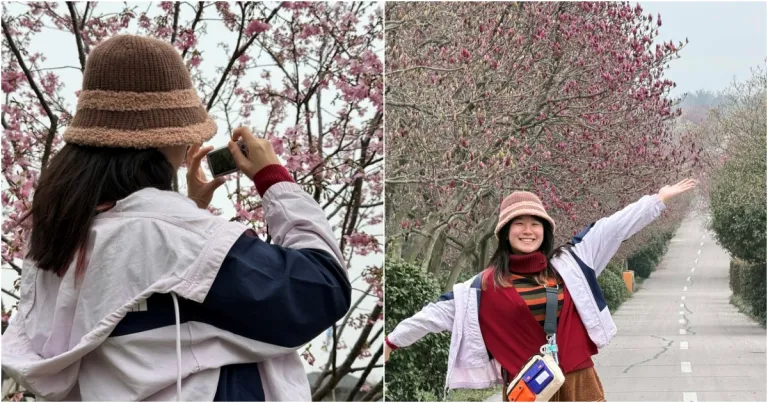
Since we visited in early March, many of the flowers were unfortunately just starting to wake up and weren't in full bloom yet. I recommend going there around the end of March for the best vista.
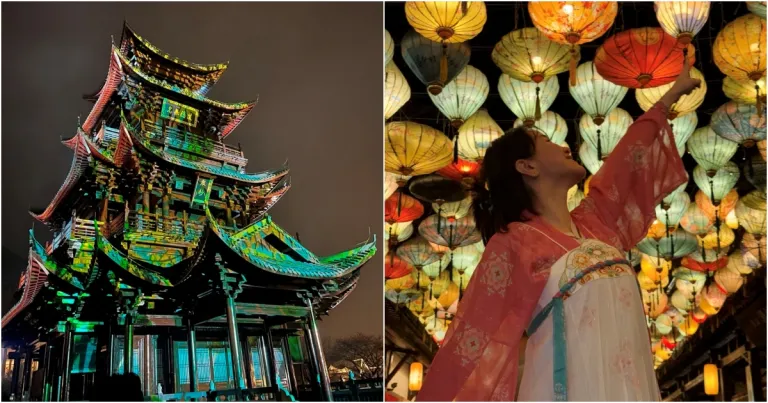
This day was a long travel day spent on the bus as we moved from Nanchang to the city of Shangrao. To make the evening special, we all dressed up in traditional Hanfu, which really set the mood for what came next. Dinner was a truly unique experience: an exquisite meal plated in the shape of a Baguazhen (the Eight Trigrams Array).
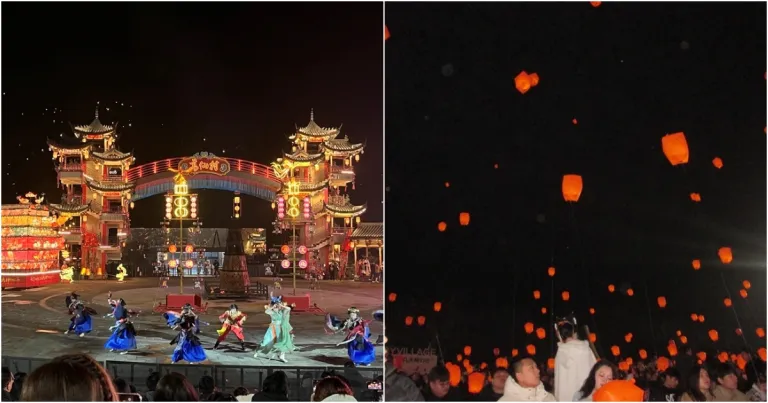
Then, we finally arrived at Gexian Village. We watched some incredible fire shows and spent the evening wandering through the lantern-lit streets. It’s a total dream for anyone who loves photography.
Before we left, everyone gathered at the square for a cultural show and sky lantern release ceremony. Seeing the lanterns drift up, complemented by fireworks, was a truly gorgeous sight. If you’re looking for that perfect, cinematic video for your feed, you definitely won't be disappointed!
Day 3
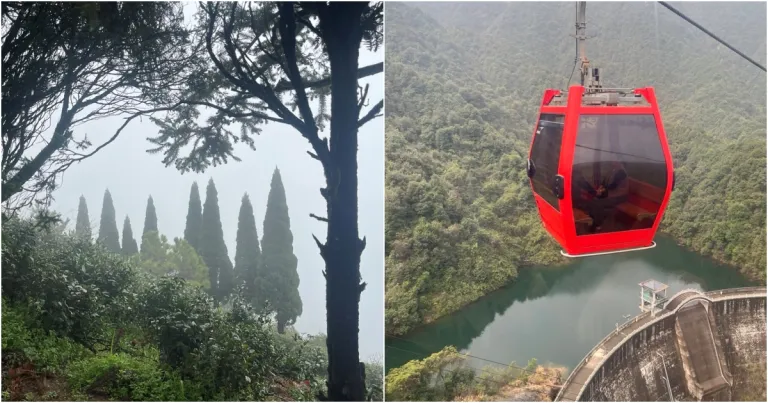
Near Gexian Village was Mount Gexian, where we had to take a gondola up and hike. I dread hiking. Yet, to my surprise, the mountain was actually an easy hike. In summer, if you're too exhausted to hike down, there's even a slide for you to slide your way downhill.
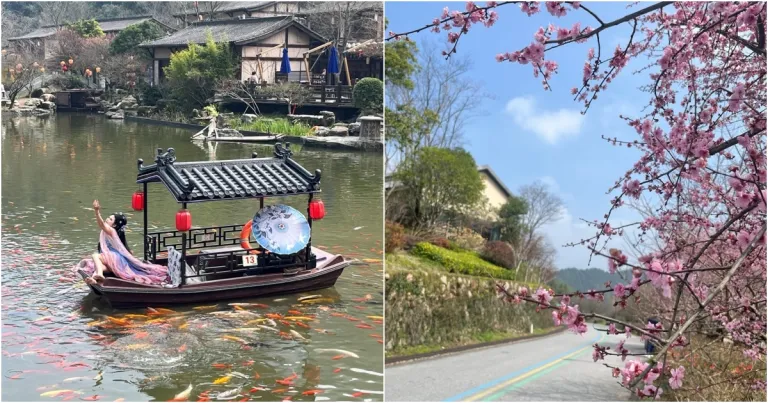
Back to the Gexian Village in the daytime was a whole different feeling. Some plum and cherry trees were starting to bloom, and cute ducks and koi fish were swimming in the shimmering lake. These were the kinds of sights I truly came to love.
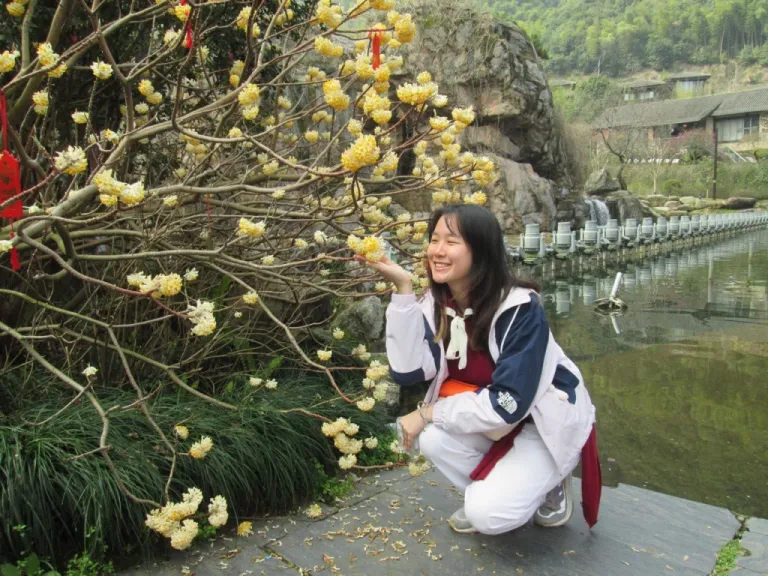
That day also brought a welcome rise in temperature. Honestly, the best weather we could have asked for. Not too hot, not too cold. Just golden.
After lunch, we made our way to the next stop: Wangxian Valley, another beloved attraction in Shangrao, Jiangxi.
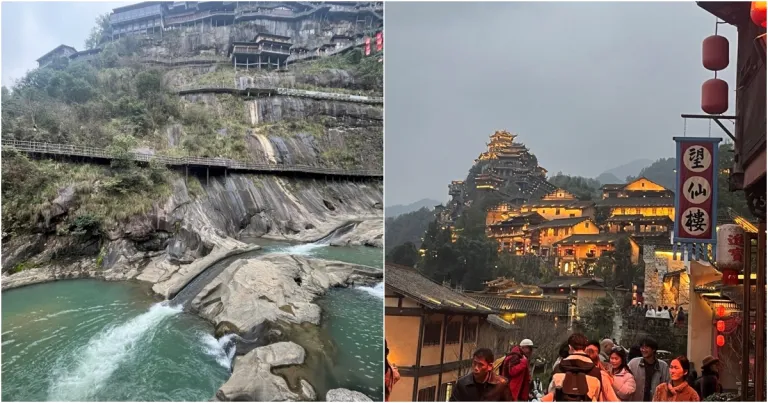
This valley seemed similar to Gexian Village at first glance, but it had more nature spots, like a waterfall and actual valleys! However, most parts have already been transformed into shops selling local products, from textiles to regional delicacies. I would say it had more things to do and explore than Gexian Village, to be honest.
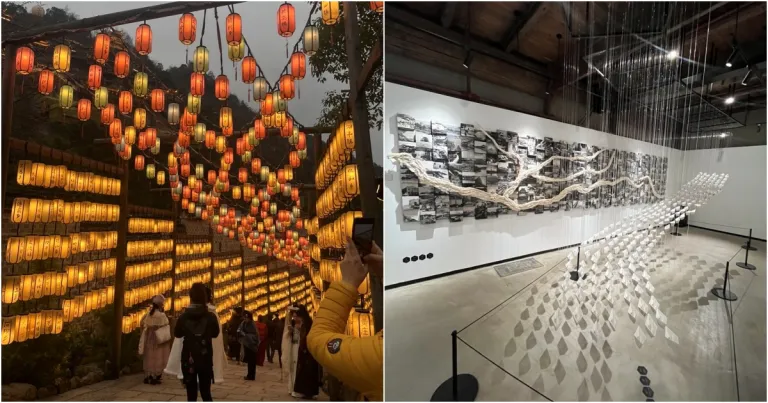
I even visited a museum that showcases China's history of paper, printing, ink, and brushes, for free! Here's also where many of us bought souvenirs and snacks like dried figs and fried arrowroot chips.
Day 4
Day 4 of our Jiangxi, China itinerary was my absolute favourite, and for a good reason. This day was all about Wuyuan, a destination often described as one of the most beautiful countrysides in China. Even before arriving, I was already mesmerised by the sight of canola blossoms along the way.
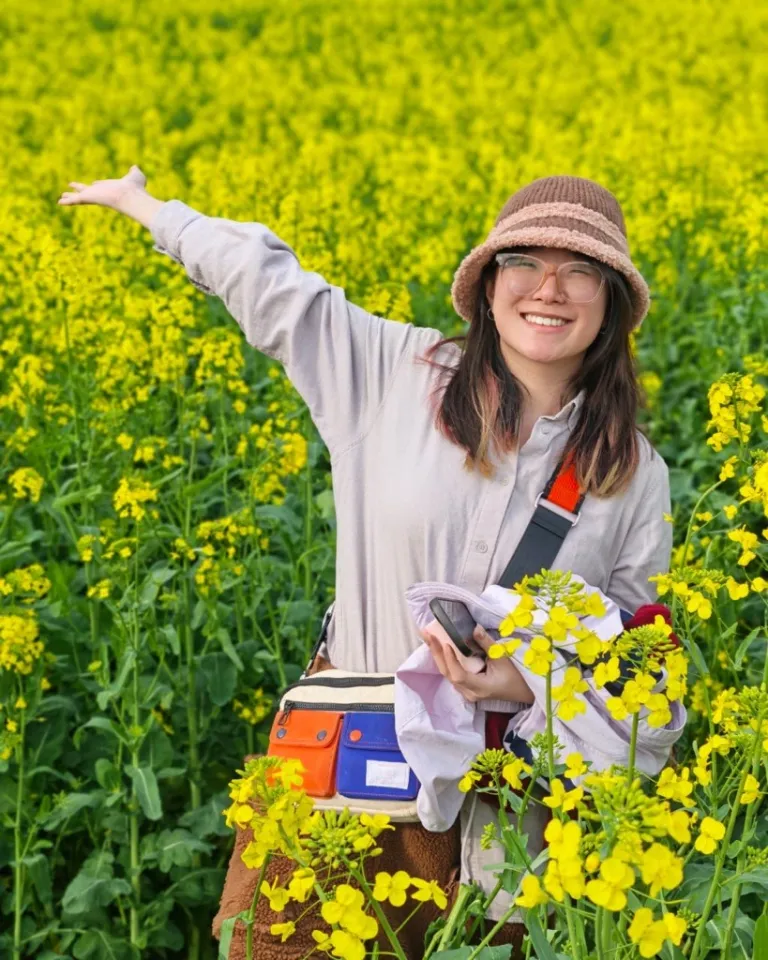
But nothing quite prepared me for Huangling Village, where fields of bright yellow canola flowers stretched across the landscape in full, golden bloom.
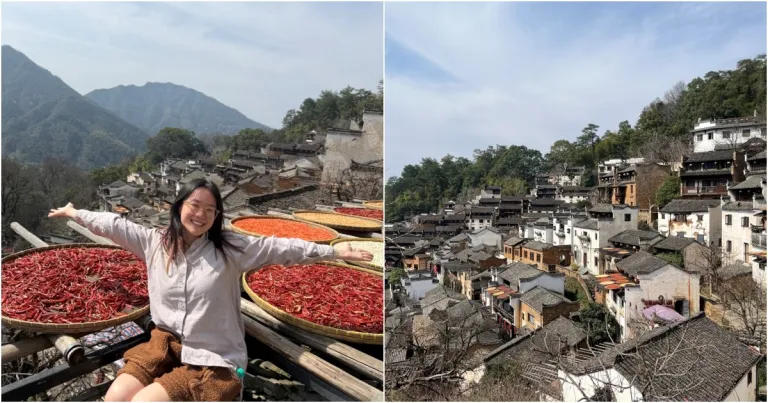
Perched high on a mountain, Huangling Village is an actual ancient village where visitors can wander through original and beautifully restored Hui-style heritage houses with grey tiles and white walls, explore charming lanes, stop for a drink, and take in some seriously gorgeous views. Along the way, you’ll also spot local sellers promoting fresh cherries, adding to the village’s lively countryside charm.
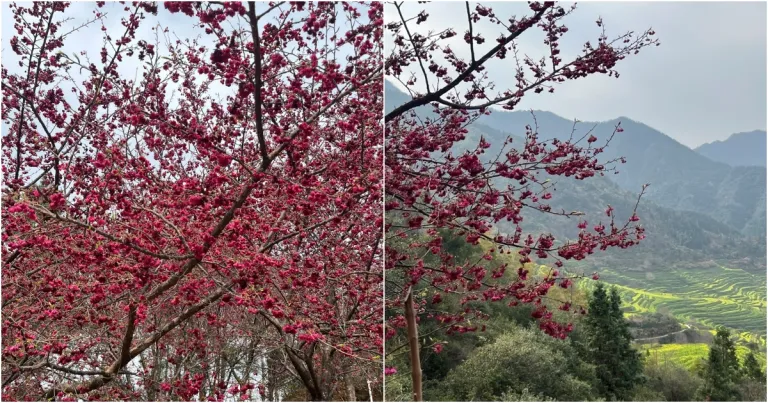
While I was exploring on my own, I stumbled upon a hidden area with soft peony cherry blossoms just beginning to bloom. Another charming spot for me to take plenty of pictures, of course!
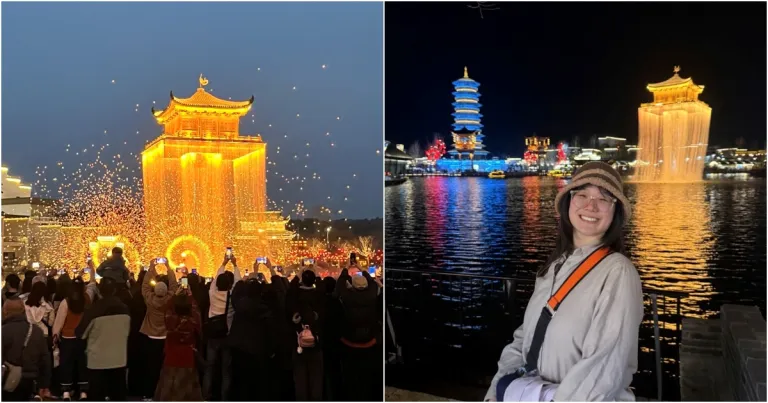
In the evening, we made our way to WuNv Fairyland, also known as Wunvzhou Resort, for a spectacular night experience. The fire and light show, drama performance, and fireworks were genuinely mind-blowing. There was also an indoor exhibition that reminded me a little of Van Gogh Alive and TeamLab.
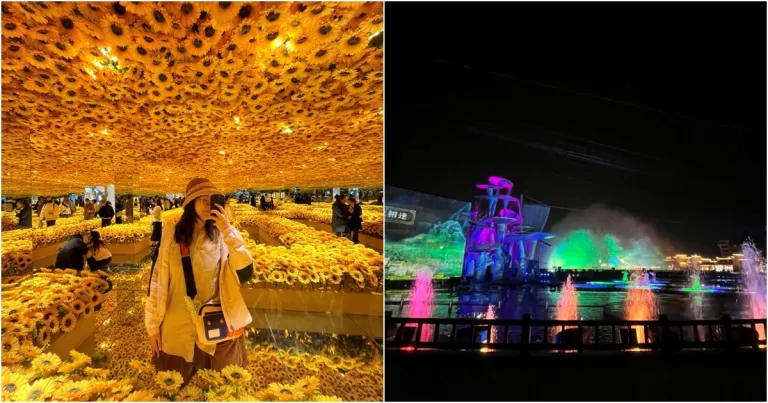
The entire resort is also surrounded by Hui-style buildings, eateries, and even NPCs roaming the streets to challenge visitors to games. Win the games, and you’ll receive free coupons you can exchange for souvenirs. It made my whole visit more interactive and fun, truly.
Day 5
Do you like ceramics? Thanks to my boyfriend’s influence, I’ve developed a particular appreciation for Qinghuaci, better known as blue-and-white porcelain. So, as you can imagine, I was especially excited for Day 5 of our Jiangxi itinerary, when we made our way to Jingdezhen, China’s famed “Porcelain Capital.”
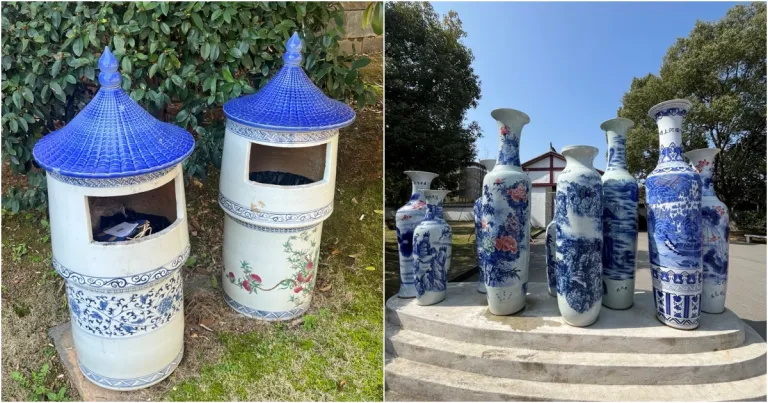
Our first stop was Huangyao, a scenic ceramic cultural site linked to one of China’s major ceramic producers. From the moment we arrived, it was clear that this place lives and breathes porcelain. This scenic spot has almost everything made from ceramics, from lamp posts to rubbish bins.
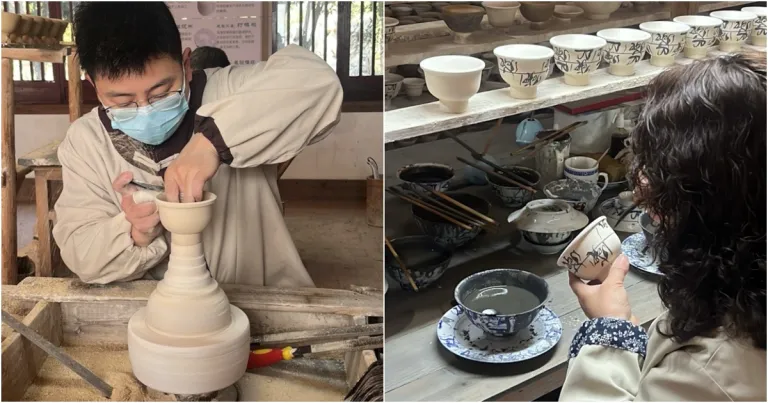
Here, I got to witness how a Qinghuaci was made, step by step. The craftspeople demonstrated incredible precision, from shaping the porcelain to painting those blue patterns by hand. Watching the process up close made me appreciate the artistry even more, and of course, I could not resist bringing a few pieces home.
I ended up buying a bowl and a tiny teacup. The painting on the cup was not the most intricate, but I still treasure both pieces to this day because of the quality. There is something special about owning porcelain from Jingdezhen itself, especially after seeing the craftsmanship behind it.
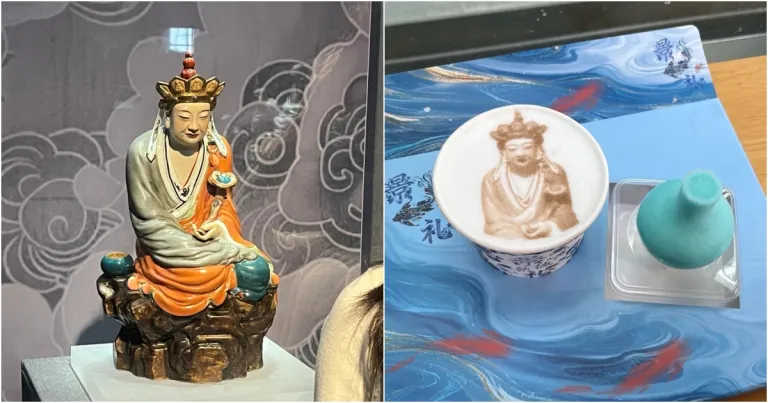
Afterwards, we visited the Jingdezhen Ceramic Museum, also known as the Museum of Ceramics. The highlight of this museum is the viral “Speechless Buddha” statue called 无语佛 in Chinese. It's a ceramic luohan sculpture loved by Chinese netizens for its oddly relatable, unimpressed expression. Its quiet, deadpan look has turned it into a meme sensation, making it a quirky must-see for visitors. And yes, I was definitely one of those who came queuing for it.
I genuinely enjoyed exploring the museum. Beyond the meme-famous statue, the collection was incredibly impressive, with hundreds, if not thousands, of ceramic works on display, including centuries-old blue-and-white porcelain pieces. There were also cute ceramic-inspired desserts and “Speechless Buddha” souvenirs for sale.
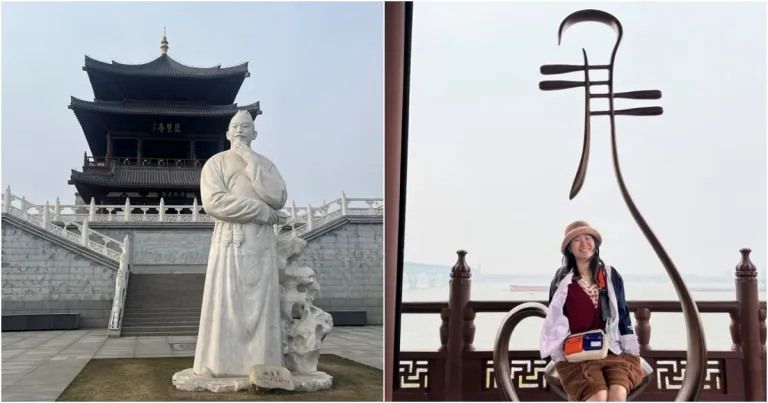
Our journey then brought us to Pipa Ting in Jiujiang, a riverside pavilion closely associated with Bai Juyi, one of the most celebrated poets of the Tang dynasty. The site is especially meaningful because Jiujiang was historically known as Xunyang, the setting of Bai Juyi’s famous poem "琵琶行", or The Song of the Pipa Player.
For many Malaysian Chinese, Bai Juyi is not an unfamiliar name. He is one of those poets we often encounter in Chinese classes in high school, so seeing his statue in person felt strangely nostalgic.
The attraction is near the Changjiang, or Yangtze River. Seeing it in person felt quietly powerful. This is the same river evoked in the proverb “长江后浪推前浪”, where the waves behind push the waves ahead, often used to describe how each new generation rises after the last.
Day 6
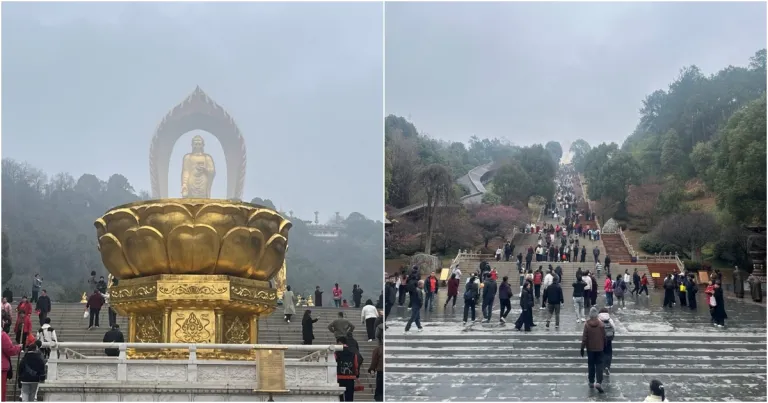
Every day in Jiangxi was packed with activities, and time seemed to pass without me even realising it. Before I knew it, we had reached our final full day in Jiangxi, China. The day began with a visit to Donglin Temple, where we had to make our way uphill to see one of its most impressive highlights.
Donglin Temple is home to the world’s tallest gilded bronze statue of Amitabha Buddha, making it a must-visit if you’re travelling through Jiangxi Province. The statue sits at the top of the temple hill, so getting there does require a fair bit of stamina.
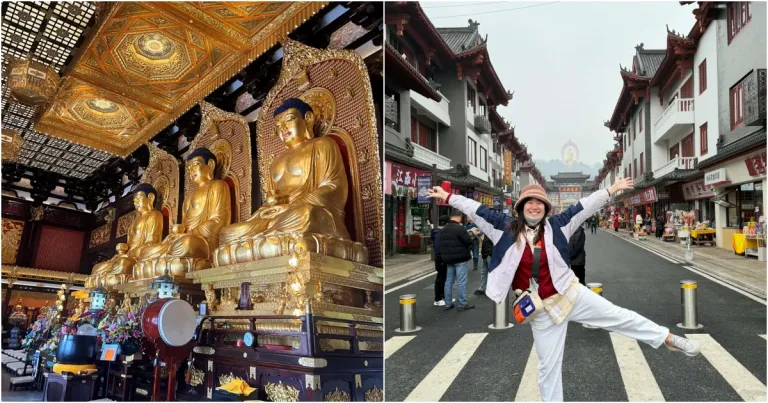
What I appreciated was how the temple also offered free warm tea for visitors, which felt especially comforting after the walk. There is also a nearby street lined with vendors selling local snacks and food.
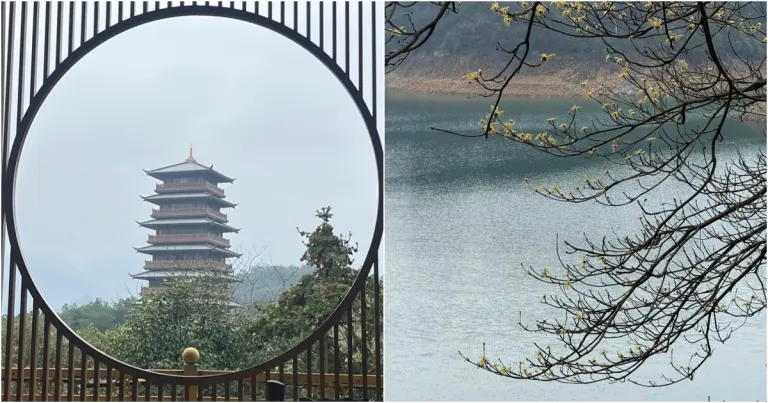
In the afternoon, we continued to the final attraction of our trip: Lushan Xihai. If you understand Chinese, you may have heard the famous phrase “不识庐山真面目”, which refers to not being able to see the true face of Mount Lu. I had always assumed Lushan was simply a mountain, but I later realised that it also refers to a wider scenic area with lakes, islands, mountains and nature experiences.
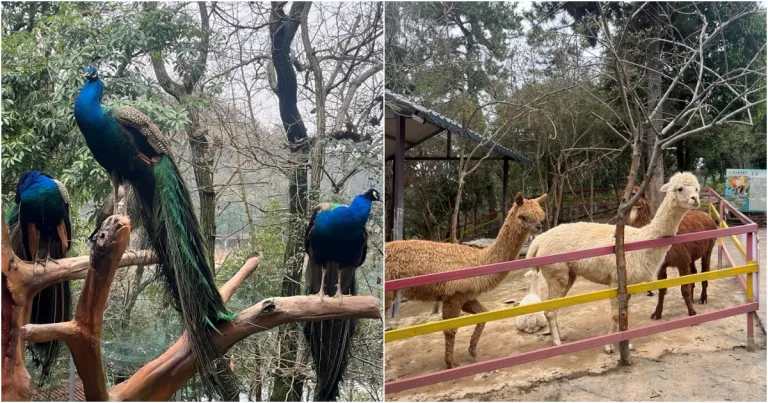
Our time at Lushan Xihai was mostly about hiking, enjoying the views and interacting with animals along the way.
And just like that, Day 6 came to an end. The next day, we departed for Changsha before flying back to Kuala Lumpur, officially wrapping up our Jiangxi adventure.
Jiangxi may not be the first place that comes to mind when travellers think of China, especially compared to familiar favourites like Shanghai or Guangzhou. But that was exactly what made this trip so memorable.
Instead of the usual big-city itinerary, I got to explore a quieter, lesser-known side of China filled with ancient villages, porcelain heritage, mountain temples, scenic landscapes and cultural sites that genuinely surprised me in the best way.
My only advice is to come with an open mind and a little preparation. The food here may take some getting used to, especially if you have a sensitive stomach, so it is worth packing basic medication just in case. In more rural or mountainous areas, facilities can also be simpler than what city travellers may expect, especially the toilets, so tissues, wet wipes and hand sanitiser will definitely come in handy.
Nevertheless, these small inconveniences did not take away from the experience. If anything, Jiangxi gave me a glimpse of a slower, more unexpected side of China, and that made the journey feel even more worthwhile.
All images are credited to the author, Cecelia Chang

About Author

Born in a new village in Selangor, Malaysia, Cecelia loves three things in life: Good food, good views, and good deals. She also enjoys exploring new places and experiencing new things on her travels.