
How to Find Sensory Respite in Airports And Why Changi's Calm Room Gets It Right
How to use Changi’s Calm Room and similar spaces abroad.

Ever felt overwhelmed even before stepping on the plane? Airports are relentless by design. The announcements, the crowds, the fluorescent lighting that never dims: it all adds up. For neurodivergent travellers and those with sensory issues, however, that same environment can quickly tip from uncomfortable into genuinely distressing.
Airports across Southeast Asia and beyond are increasingly building dedicated quiet spaces into their terminals. Knowing how to find them, and what to look for, can transform a difficult transit into a manageable one.
How to find sensory respites in any airport
Before specifically walking through Changi's calm room specifically, it helps to know the general landscape. Not every airport labels these spaces the same way, and finding them is not always straightforward.
Designated calm rooms and sensory rooms
These are the most direct equivalents of what we are looking for. Many newer or recently renovated terminals particularly in Europe, North America, and increasingly Asia now feature dedicated calm rooms built specifically for neurodivergent travellers. Pittsburgh, Seattle, San Francisco, and Dublin airports all have them, as do several major Asian hubs.
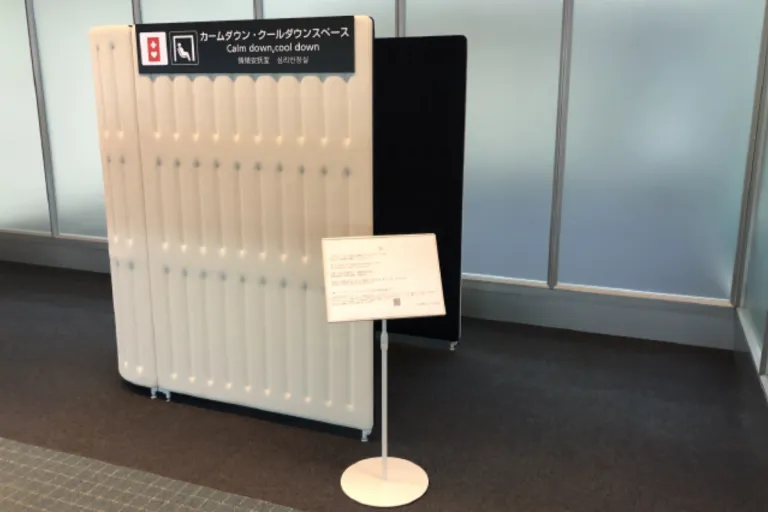 Image credit: Haneda Airport
In Japan, both Haneda and Narita airports in Tokyo have stepped up meaningfully. Haneda offers "calm down, cool down" spaces designed for passengers with developmental, intellectual, or mental disabilities, while Narita provides quiet rooms that similarly prioritise a low-stimulation environment. If Tokyo is a regular transit point for you, it is worth knowing these options exist at both airports before you fly.
A quick search before your trip, or a look at your airport's accessibility page, will usually confirm whether a calm room exists and where it sits in the terminal.
Ask staff directly
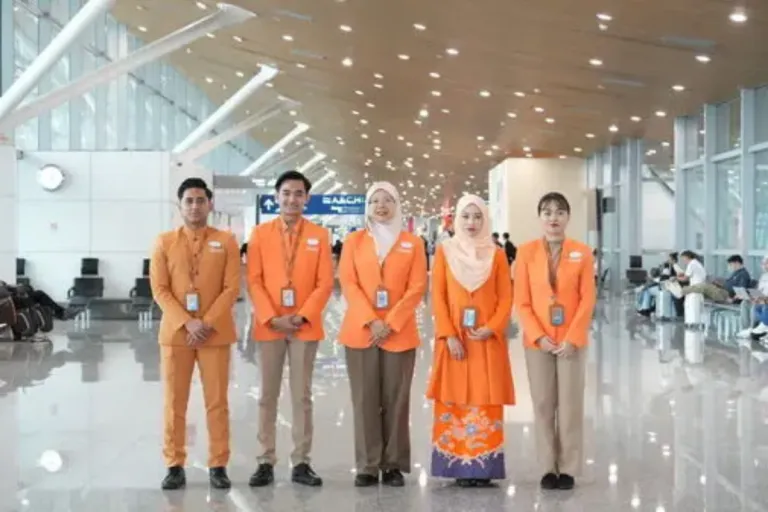 Image credit: Malaysia Airports
Airport staff are often your fastest route to a quiet space, even when signage is unclear. Most major international airports now train their teams in accessibility support, so asking directly at an information counter or even a gate will usually get you a helpful answer. At airports participating in the sunflower lanyard scheme, wearing one discreetly signals to staff that you may need extra assistance, without requiring any explanation.
Use multifaith and prayer rooms as alternatives
When a dedicated calm room is not available, multifaith or prayer rooms are often the next best option. They tend to be quieter, less trafficked, and away from the main terminal flow. They can be a useful fallback option during a long transit or a delayed flight.
Pre-register where booking is required
Some airports require advance booking for sensory room access. Dublin Airport's sensory rooms, for instance, are free but bookable in 60-minute sessions. Meanwhile, Kuala Lumpur International Airport's (KLIA) Butterfly Effect initiative asks travellers to pre-register online at least three days before and collect a Butterfly kit lanyard at designated counters before they can access priority lanes and facilities. If you are transiting through KLIA Terminal 2, doing this ahead of time makes the experience significantly smoother. Don't forget to bring proof of diagnosis or doctor's note in case they require it for verification.
Case study: Changi Airport's calm room
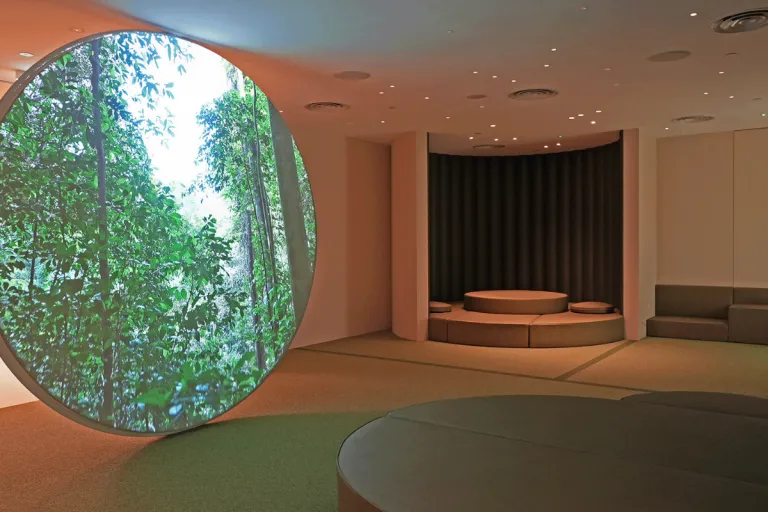 Image credit: Changi Airport
Changi is a masterclass in sensory abundance: think butterfly gardens, indoor waterfalls, a sprawling Dreamscape installation. So it says something that one of its most thoughtful spaces does the complete opposite. The calm room in Terminal 2 is designed around absence: no overstimulation, no spectacle, just a quiet place to recalibrate.
Finding it
Make your way to Level 2 of the transit area in Terminal 2. The calm room is near the Dreamscape indoor garden, just across from Transfer F. If you are unsure, ask any Changi staff member: they are trained in accessibility support and will direct you without any fuss.
What to expect
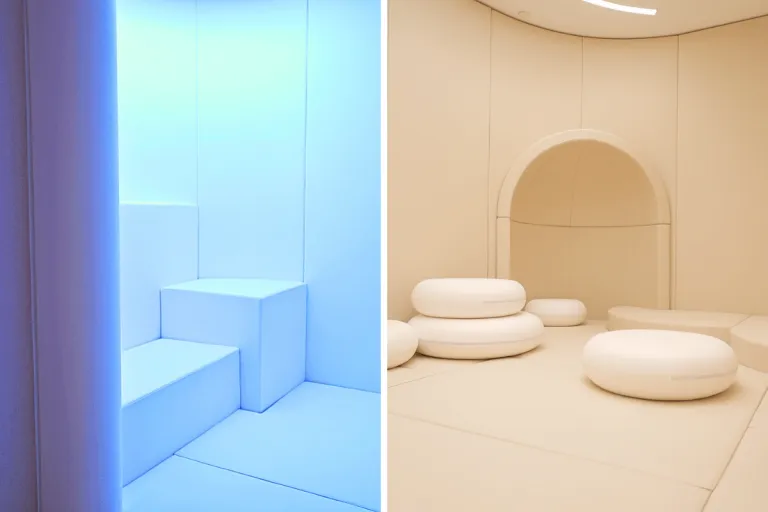 Image credit: Changi Airport
The moment you step inside, the contrast with the rest of the terminal is immediate. Soft lighting replaces the glare of the concourse, and the acoustics feel noticeably gentler. Small cubby holes allow you to store your shoes, bags, and carry-ons, keeping the space uncluttered and restful for everyone who uses it. Caregivers are welcome to accompany the traveller they are supporting.
What's most reassuring about this space is the lack of barriers. There is no booking system, no counter to check in at — you simply walk in. It operates 24 hours a day, every day, which means it is available whether your flight departs before dawn or your connection lands well past midnight.
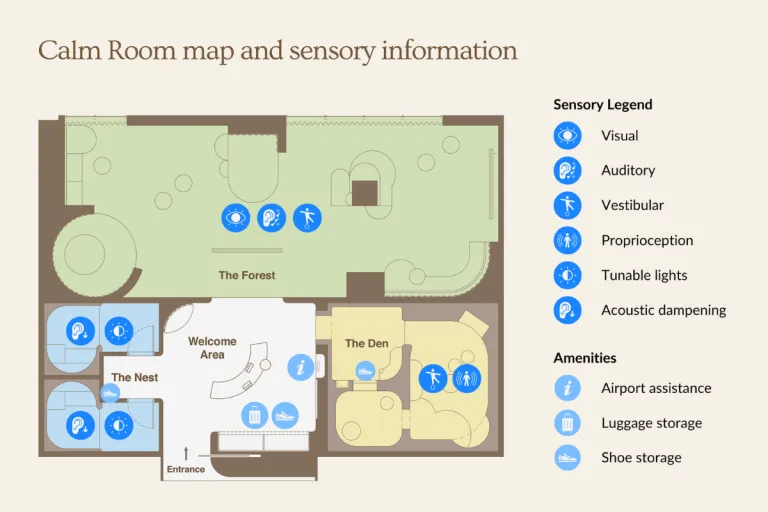 Image credit: Changi Airport
Before you travel: practical tips
Check your transit airport's accessibility page before flying, as calm room locations and booking policies vary.
Pre-register for KLIA's Butterfly kit lanyard online to streamline access on arrival.
At Haneda and Narita, look for quiet room signage or ask staff at the accessibility counter upon arrival.
Ask about sunflower lanyard schemes at your airport.
If no calm room exists, multifaith rooms are a reliable quiet alternative.
Also read: What Went Wrong With My Alipay In China: How Singaporeans Can Avoid This Mistake
Hope this helps you or your travel companion have a more tolerable journey!
Please note: The calm room is a welfare service for neurodivergent travellers with sensory processing differences and their caregivers. It is not a general rest area or sleeping lounge. Using it as such takes the space away from those who genuinely need it.
Featured image credit: Fly Pittsburg

About Author

Her motto is "experience everything at least once". An adrenaline junkie at heart, she is always down for spontaneous adventure, especially to exotic destinations. She finds the most meaningful aspect of travel is cultural immersion, and talking to locals is an underrated travel hack.