
A Guide to Bandung’s Stunning Natural Attractions and Heritage Sites
With mighty volcanoes and seemingly endless tea plantations, it’s a place of brilliant natural beauty. One plus point: it’s breezy almost-temperate climate!

Bandung may be known for its shopping outlets, creative cafés, and lively culinary scene, but the capital of West Java also makes an excellent base for exploring dramatic volcanic landscapes and historically significant landmarks.
The city lies within the mountainous Bandung Basin, with cool highland destinations spread across the surrounding regencies. South Bandung is home to crater lakes and tea plantations, while the northern highlands offer waterfalls, forested retreats, and scenic dining experiences. Back in the city centre, distinctive buildings reveal Bandung’s colonial-era architecture and its role in modern Asian and African history.
Since these attractions are spread across a wide area, it helps to group them geographically. Here is a 3D2N Bandung itinerary covering some of the region’s most memorable natural attractions and heritage sites.
Day 1 – A tour of grand landmarks
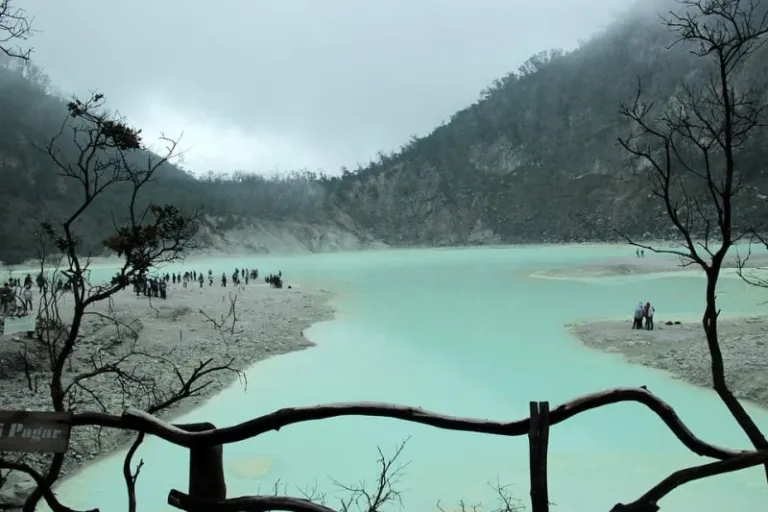
Begin your trip with an early drive to Kawah Putih, one of the best-known natural attractions in the Bandung region. Located near Ciwidey, approximately 50 kilometres south of central Bandung, this volcanic crater lake is known for its pale, otherworldly water and misty surroundings.
The lake’s appearance can change according to the weather, temperature, and sulphur concentration, shifting between shades of white, turquoise, green, and blue. Its stark volcanic landscape creates a dramatic contrast with the forests and tea plantations surrounding it.
Leave Bandung early, particularly when travelling on a weekend or public holiday, as traffic towards Ciwidey can become heavy. Vehicles are generally parked away from the crater, with shuttle transportation available for the final stretch depending on the type of admission purchased.
The area contains high levels of volcanic sulphur, so visitors should avoid remaining beside the lake for too long. Bring a mask if you are sensitive to strong smells and follow any instructions issued by the attraction’s staff.
As you travel through the southern highlands, look out for the tea plantations and strawberry farms lining parts of the route.
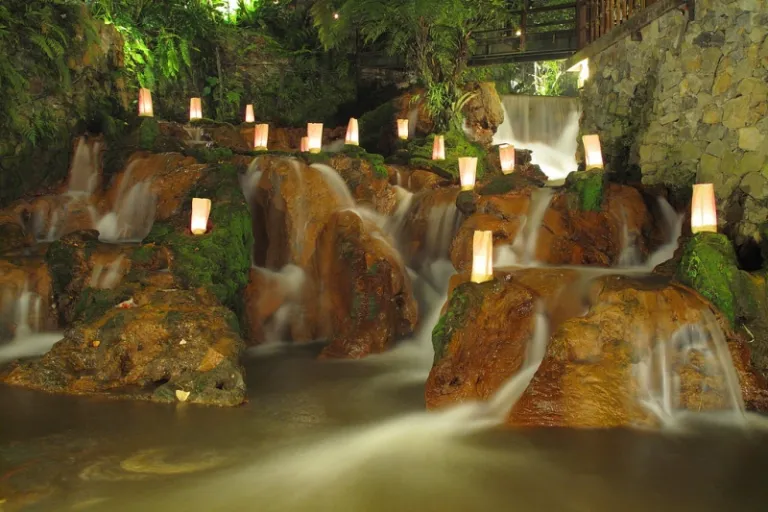
Image credit: Chen Wu
Continue to Situ Patenggang, also commonly written as Situ Patengan, a scenic lake surrounded by forest and tea plantations in the Rancabali area. Its cool highland setting makes it a pleasant place for a lakeside walk or boat ride after visiting Kawah Putih.
The lake is closely associated with a local Sundanese legend involving the lovers Ki Santang and Dewi Rengganis. Visitors may hear the story connected to Batu Cinta, or Love Stone, and Pulau Asmara, a small island within the lake.
Several attractions and accommodation options now occupy the wider lakeside area, including Glamping Lakeside Rancabali and its ship-shaped Pinisi Resto. However, travellers who prefer the area’s natural scenery can simply spend time around the lake and neighbouring tea estates.
Return to Bandung after exploring the southern highlands. Since the journey can take several hours depending on traffic, avoid planning too many additional stops that evening.
Day 2 – Pure, unadulterated nature
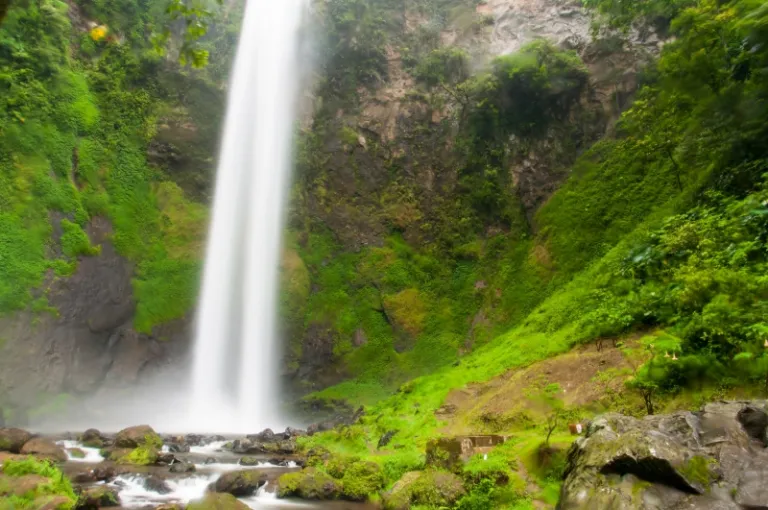
Image credit: Husni Mubarok
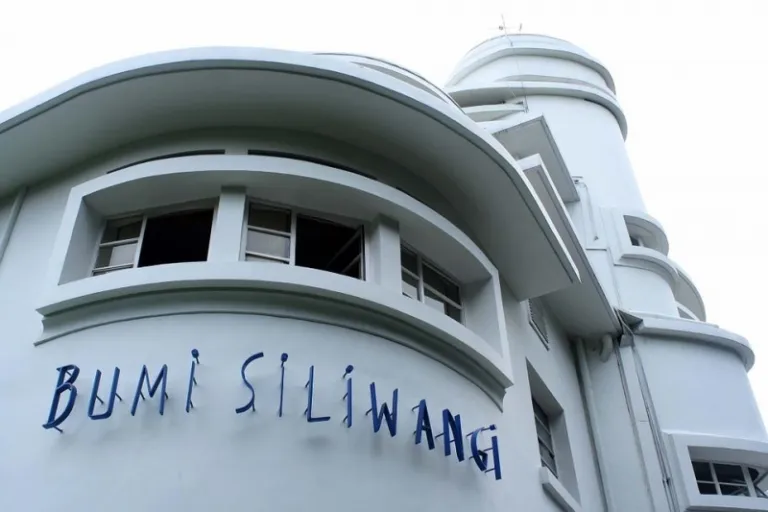
Begin your second day in northern Bandung with a visit to Villa Isola, now known as Bumi Siliwangi. Completed in 1933, the striking Art Deco residence was designed by architect Charles Prosper Wolff Schoemaker for Dutch media proprietor Dominique Willem Berretty.
The building now serves as the rectorate of Universitas Pendidikan Indonesia. Its curved form, landscaped gardens, and elevated position make it one of Bandung’s most recognisable architectural landmarks.
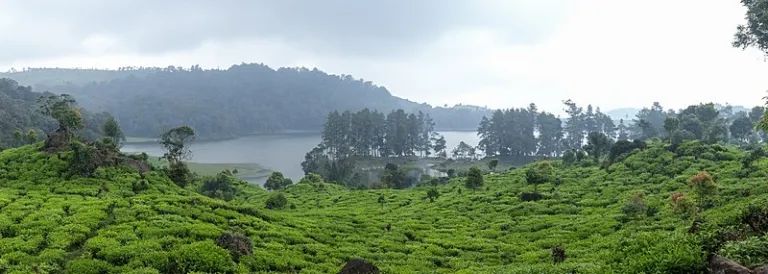
Image credit: Crisco 1492
As Bumi Siliwangi remains a functioning university building rather than a conventional tourist attraction, access to its interior may be restricted. Visitors should respect campus regulations and appreciate the architecture from permitted public areas unless a tour or exhibition grants access inside.
From there, travel towards Curug Cimahi, which is also promoted as Air Terjun Pelangi, or Rainbow Waterfall. Rising to approximately 87 metres, it is one of the tallest waterfalls in the Bandung area.
Reaching the viewing area requires descending a long staircase through a forested setting, so wear suitable footwear and be prepared for the climb back up. The waterfall’s flow and surrounding conditions may vary according to the weather, while paths can become slippery after rain.
Curug Cimahi was once widely promoted for coloured lighting that illuminated the waterfall after dark. However, visitors should check current operating hours and whether evening lighting is available before planning a night visit, as attraction features and schedules can change.
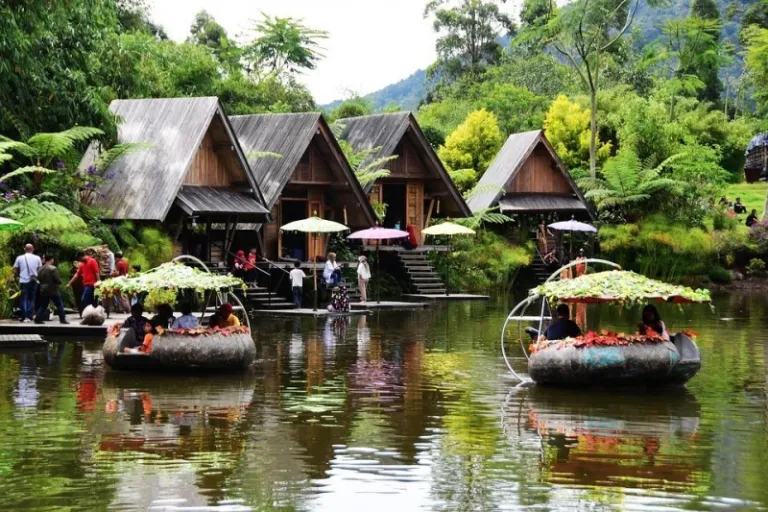
Continue to Dusun Bambu, an outdoor dining resort and family attraction surrounded by greenery in West Bandung. The complex includes restaurants, accommodation, landscaped areas, and recreational activities.
Visitors can enjoy Sundanese and Indonesian food in scenic settings, including restaurants beside the water or amid the surrounding hills. Available activities and individual dining concepts may change, so check the official website before choosing where to eat or determining how much time to spend here.
End your day with dinner at Kampung Daun Culture Gallery & Café. Located in a leafy valley in the Lembang area, the restaurant is designed to resemble a traditional village, with private dining huts, streams, pathways, and abundant vegetation.
Its atmospheric outdoor setting makes it a memorable place to enjoy Sundanese and Indonesian dishes after a day in the northern highlands. Advance reservations are worth considering during weekends and holiday periods.
Day 3 – A peek into the past
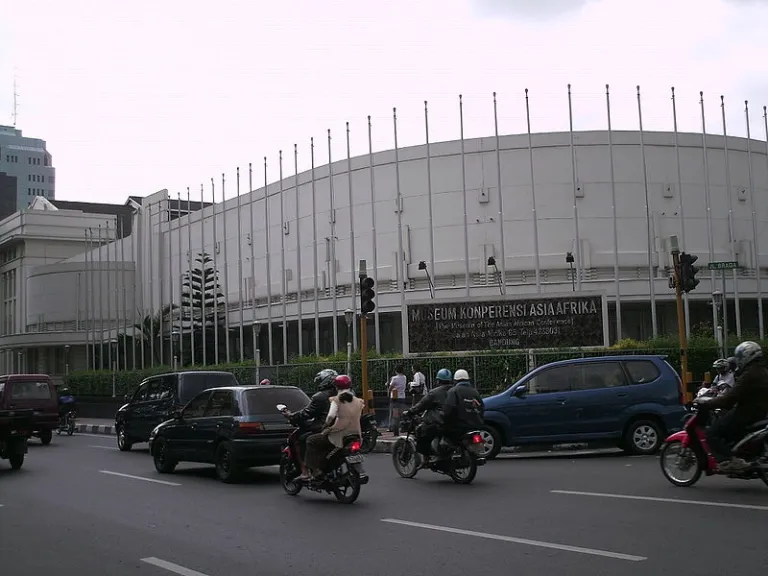
Image credit: Jagawana
Dedicate your final day to Bandung’s historic centre, beginning at the Museum of the Asian-African Conference on Jalan Asia Afrika.
The museum occupies part of Gedung Merdeka, the venue associated with the 1955 Asian-African Conference. Representatives from 29 Asian and African countries attended the landmark gathering, which promoted cooperation among newly independent and decolonising nations during the Cold War era.
Inside, visitors can learn about the conference through photographs, documents, dioramas, and other historical materials. The museum offers valuable context on Bandung’s place in international history and the development of solidarity between Asian and African countries.
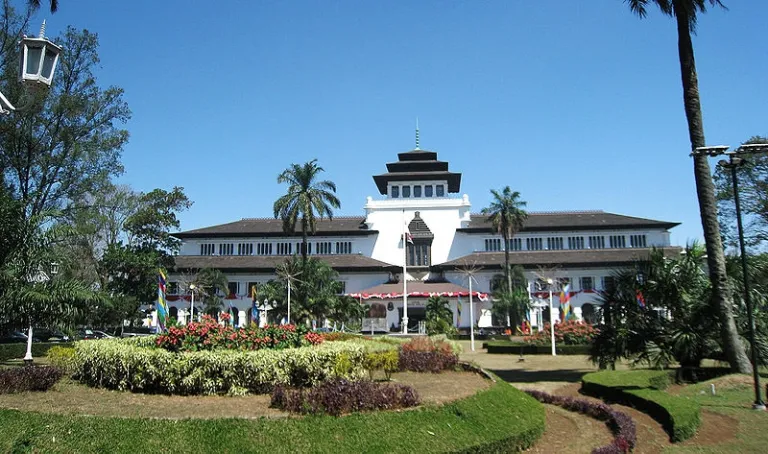
Image credit: Gunawan Kartapranata
Admission arrangements and operating hours can change. The museum currently uses scheduled visiting sessions and may require advance online registration, so check its official website before arriving.
Afterwards, take some time to explore Jalan Asia Afrika and nearby Braga Street. The surrounding district contains preserved colonial-era buildings, cafés, restaurants, and pedestrian areas that make it easy to continue your historical walk through central Bandung.
Next, head to Gedung Sate, another of the city’s most important architectural landmarks. Constructed during the Dutch colonial period and completed in 1920, the building was designed under architect J. Gerber with contributions from a wider architectural team.
Its design combines European architectural influences with elements adapted to Indonesia’s climate and local decorative traditions. The building takes its popular name from the distinctive ornament on its roof, which resembles a skewer of satay.
Gedung Sate continues to function as the seat of the West Java provincial government. Visitors interested in learning more about the building can also explore Museum Gedung Sate, which uses interactive displays to explain its architecture, construction, and history.
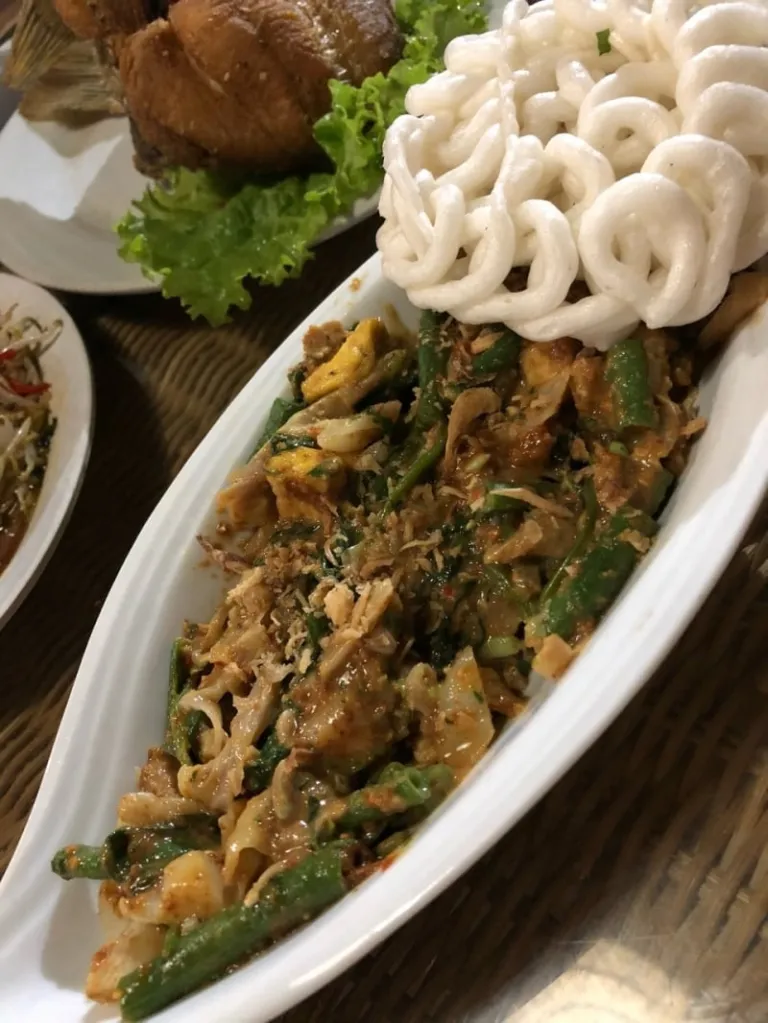
Finish your itinerary with a meal at Sangkuriang Restoran. Located near the Dago area, the restaurant serves Sundanese and Indonesian food in a relaxed setting with gardens, ponds, and traditional gazebos.
Its location makes it a convenient final stop after visiting central and northern Bandung, particularly for travellers who want one more taste of local cuisine before departing.
This 3D2N itinerary offers a glimpse of Bandung beyond its malls and factory outlets. From the surreal landscape of Kawah Putih and the calm waters of Situ Patenggang to internationally significant heritage sites in the city centre, the Bandung region brings together nature, architecture, culture, and history.
Distances may appear manageable on a map, but Bandung’s traffic can significantly lengthen journey times. Start early, avoid combining attractions on opposite sides of the city in a single day, and leave enough flexibility to enjoy each stop without rushing.
