
Germany Christmas Markets 2026: A Complete Guide to Must-Try Foods and Festive Finds
Pssst.. aim for late Nov to around 20 Dec for more choices!
Germany in December is not complete without a visit to a Christmas market. There are markets tucked into medieval town squares, spread beneath cathedral spires, set against Baroque palaces and even built around riverside promenades and historic courtyards.
If you're planning a Germany trip in late 2026, here's a state-by-state guide to some of the Christmas markets worth putting on your itinerary, including their official 2026 dates, what each one is best for, what to eat and buy, and the easiest way to get there.
Do note that schedules can still change. We've highlighted dates that remain provisional as of September 2026, so check the market's official website again before travelling.
Also read: 10 Dazzling German Castles That Are Straight Out of a Storybook
1. Baden-Württemberg: Go beyond one Christmas market
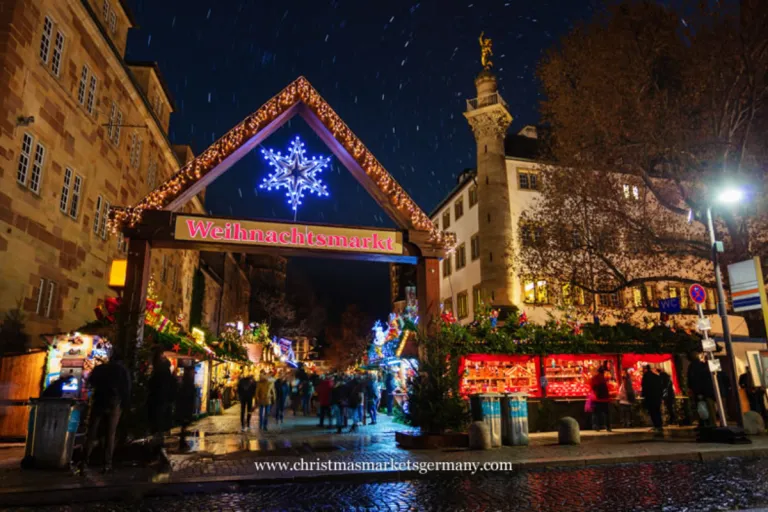
Image credit: Christmas Markets Germany | Official Website
If there's one state where we'd recommend turning your Christmas-market visit into a mini rail trip, it's Baden-Württemberg. Stuttgart, Esslingen and Ludwigsburg offer three quite different experiences, yet they're close enough to combine in a single stay.
The Stuttgart Christmas Market runs from 25 Nov to 23 Dec 2026. This is the big-city option, with one particularly fun detail: the roofs of the market stalls are part of the attraction. Traders decorate them with elaborate festive scenes, so remember to look up while walking around.
Just outside Stuttgart, the Esslingen Medieval & Christmas Market runs from 24 Nov to 22 Dec 2026. Around 180 stalls are expected across the Old Town, accompanied by jugglers, fire performers, craftspeople and a daily cultural programme. It feels noticeably different from the usual Christmas market, with medieval games, archery and traditional craft demonstrations adding to the experience.
Then there's the Ludwigsburg Baroque Christmas Market, also from 24 Nov to 22 Dec 2026. Set on the city's Baroque Marktplatz and featuring around 150 vendors, it's the more elegant option, characterised by huge illuminated angel figures and the architecture surrounding the square.
What to buy: Look for handmade Christmas decorations, nativity figures, wooden toys, felt crafts and jewellery.
What to eat: Try Kässpätzle, Maultaschen and Deie, a regional flatbread. Esslingen also serves its own apple-based festive drinks alongside the usual Christmas-market favourites.
Getting there: Use Stuttgart Hbf as your main transport base. Both Esslingen and Ludwigsburg are straightforward trips by local or regional train.
2. Bavaria: The Germany Christmas trip most people picture
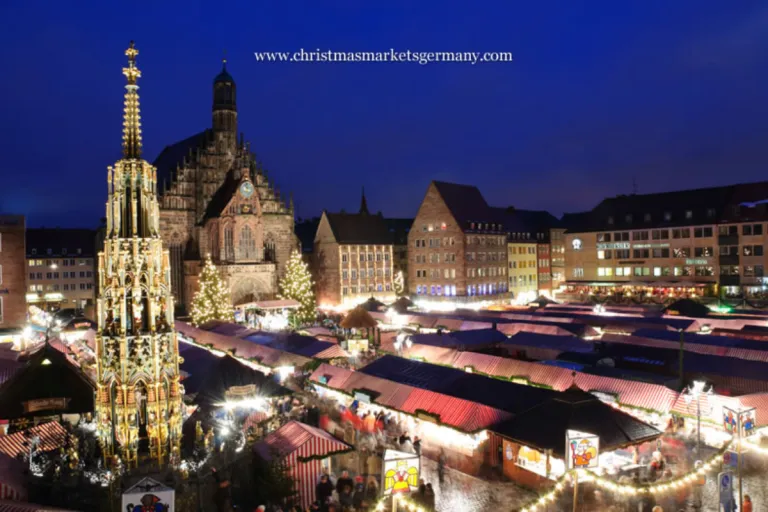 Image credit: Christmas Markets Germany | Official Website
Wooden stalls, medieval squares, gingerbread and Christmas lights are probably what many travellers imagine when they first think of Germany in December. Bavaria delivers plenty of that.
Start with the Nuremberg Christkindlesmarkt, from 27 Nov to 24 Dec 2026. It's one of Germany's oldest and best-known Christmas markets, built around its famous little wooden stalls and strong regional traditions. The opening ceremony takes place on 27 Nov at 5.30pm.
Then head south to the Munich Christkindlmarkt at Marienplatz, from 20 Nov to 24 Dec 2026. More than 130 stalls fill the centre of Munich, accompanied by Advent music, children's activities and the city's Krampus run. There's also a specialised nativity market near St Peter's Church.
For something smaller, consider Rothenburg ob der Tauber's Reiterlesmarkt, from 20 Nov to 23 Dec 2026. It closes on 22 Nov for Totensonntag. The market itself is smaller than Munich or Nuremberg, but Rothenburg's medieval streets are a huge part of the appeal.
What to buy: Bavarian Christmas ornaments, wooden crafts, decorative stars and handmade gifts. Munich's official market also carries items ranging from nativity pieces and jewellery to woollen products.
What to eat: Don't leave Nuremberg without trying Nürnberger Lebkuchen and the city's small Nürnberger Rostbratwürste. Roasted almonds are another Christmas-market staple you'll encounter almost everywhere.
Getting there: Munich and Nuremberg are major ICE rail hubs. Rothenburg requires a little more planning and is normally reached by regional train, usually changing at Steinach.
3. Berlin: One city, many completely different Christmas markets
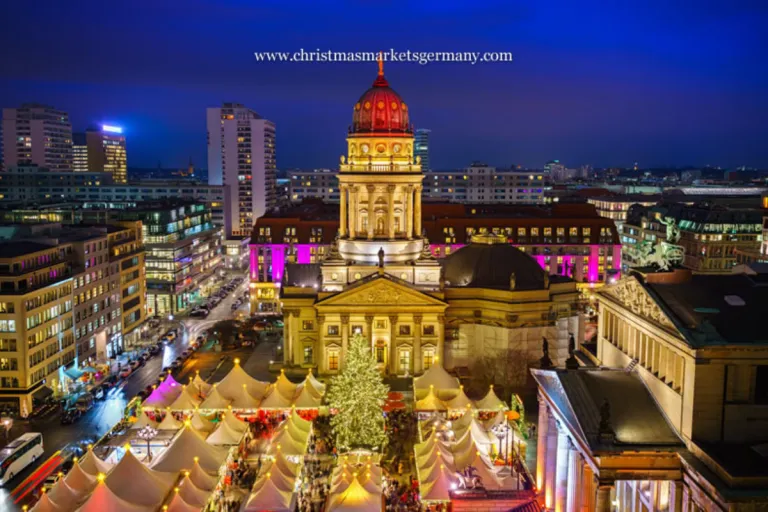 Image credit: Christmas Markets Germany | Official Website
Berlin isn't a destination where you visit one Christmas market and call it a day. Its markets are spread across different neighbourhoods and can feel surprisingly different from one another.
One of the more polished options is WeihnachtsZauber at Gendarmenmarkt, running from 23 Nov to 31 Dec 2026. Expect fine arts and crafts, an international stage programme and heated dining tents serving more elaborate festive food than you'd find at the average market stall.
For a more romantic backdrop, try the Charlottenburg Palace Christmas Market from 23 Nov to 27 Dec 2026, although it closes on 24 Dec. Wooden huts and food stalls sit in front of the illuminated palace, with candied apples and wood-oven bread among the traditional treats.
Travelling after Christmas? Put the Kaiser Wilhelm Memorial Church Christmas Market on your list. It runs from 23 Nov 2026 to 3 Jan 2027, with around 170 stalls and a 400-metre canopy of festive lights in City West.
What to buy: Artisan crafts, woodwork, jewellery, ornaments and handmade gifts.
What to eat: Candied apples, waffles, wood-fired breads and hearty German market food.
Getting there: Don't try to walk between every Berlin market. Use the U-Bahn and S-Bahn, and group your stops by neighbourhood.
4. Brandenburg: Make Potsdam your Christmas base
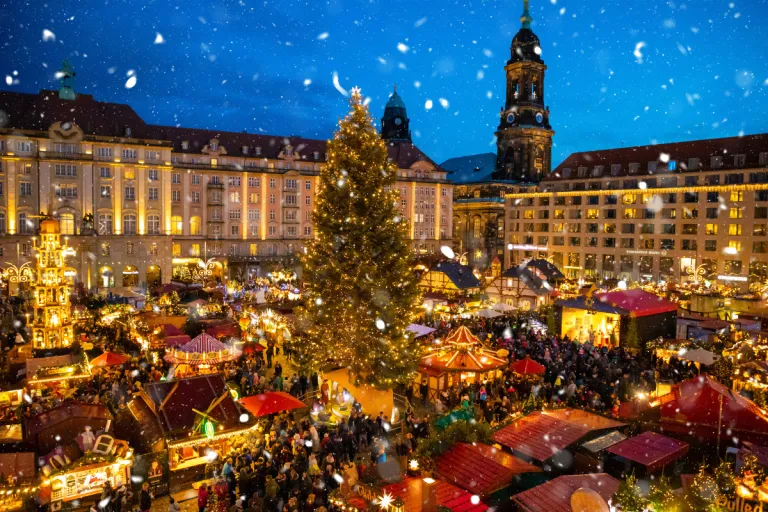 Image credit: Tatiana Byuvzanova | Canva Pro
Berlin may get most of the international attention, but neighbouring Brandenburg gives travellers several good reasons to hop on the train to Potsdam.
The city's main Potsdamer Weihnachtszauber runs from 23 Nov to 27 Dec 2026, making it useful for travellers whose Germany holiday extends past Christmas Day.
The Bohemian Christmas Market at Weberplatz in Babelsberg, meanwhile, runs from 27 Nov to 6 Dec 2026. Its focus on Bohemian culture, crafts and food gives it a distinctive identity compared with larger city-centre markets.
Then there's the Potsdam Chocolate Market from 4 to 20 Dec 2026, which is an easy sell for anyone whose Christmas shopping strategy mainly involves edible gifts.
What to buy: Bohemian handicrafts, artisan glassware, handmade gifts, chocolate and cocoa products.
What to eat: Look out for Bohemian specialities and freshly baked breads in Babelsberg, followed by chocolate creations at Potsdam's dedicated Chocolate Market.
Getting there: Potsdam is an easy rail trip from Berlin. Use Potsdam Hbf for the historic centre, while Babelsberg is served by its own S-Bahn station.
5. Bremen: Do two Christmas markets in one evening
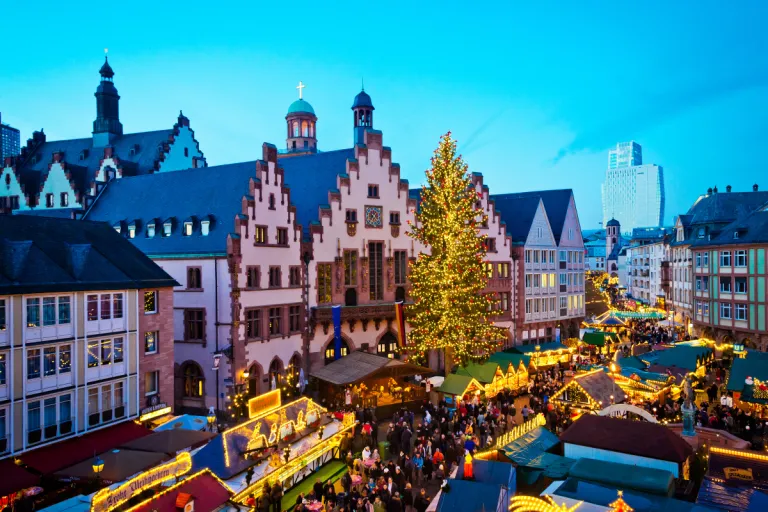 Image credit: Christmas Markets Germany | Official Website
Bremen makes Christmas-market planning refreshingly straightforward because its two headline experiences are only a short walk apart.
The Bremen Christmas Market runs from 23 Nov to 23 Dec 2026, with more than 170 stalls around the historic Marktplatz. The backdrop includes Bremen's UNESCO-listed Town Hall and Roland statue, putting some of the city's major landmarks right in the middle of the festive action.
Follow the illuminated route down towards the Weser and the mood changes at Schlachte-Zauber, which runs over the same dates. Here, the market takes on a maritime, historical feel with wooden stalls, craftspeople, tavern-style spaces and ships illuminated along the riverside.
What to buy: Candles, ceramics, jewellery, Christmas decorations, toys and handmade crafts.
What to eat: Roasted almonds and festive bakes are easy to find around Marktplatz. Along the Schlachte, look for smoked fish, freshly baked bread and waffles.
Getting there: Arrive at Bremen Hbf, then walk or take a tram towards the historic centre. Once you're there, explore both markets on foot.
6. Hamburg: From flying Santa to an adults-only Christmas market
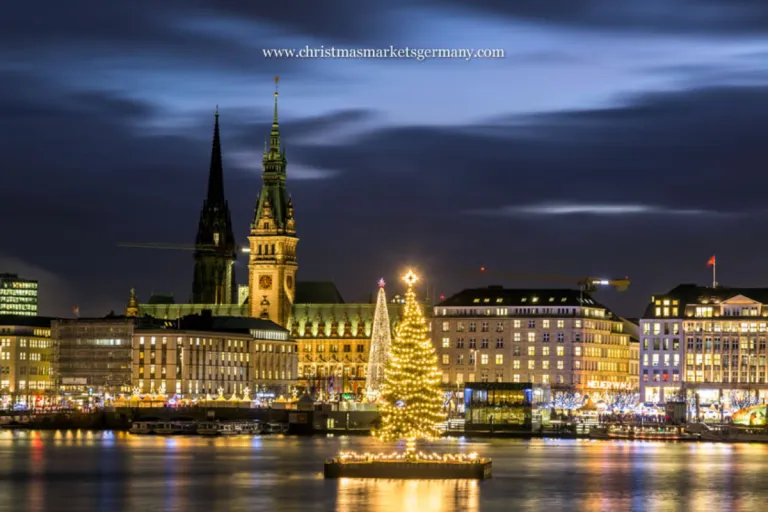 Image credit: Christmas Markets Germany | Official Website
Hamburg proves that German Christmas markets don't all follow the same formula.
For the classic experience, head to the Historic Christmas Market at Rathausmarkt from 23 Nov to 23 Dec 2026. The market sits directly in front of Hamburg's imposing Rathaus, with decorated stalls and themed shopping areas. Its signature attraction is the flying Santa, who passes above the market in his sleigh.
For something entirely different, there's Santa Pauli, running from 9 Nov to 23 Dec 2026 at Spielbudenplatz. This adults-oriented Christmas market mixes conventional festive stalls with St Pauli nightlife, live entertainment and burlesque-style performances.
What to buy: At Rathausmarkt, browse toys, wood carvings, Christmas ornaments and handicrafts. Santa Pauli leans more towards quirky gift ideas.
What to eat: Roasted almonds, Lebkuchen and other Christmas-market favourites are easy to find at Rathausmarkt.
Getting there: Take the U-Bahn to Rathaus for the Historic Christmas Market. Jungfernstieg is also nearby. Santa Pauli is at Spielbudenplatz, close to the Reeperbahn.
7. Hesse: An easy option if you're flying through Frankfurt
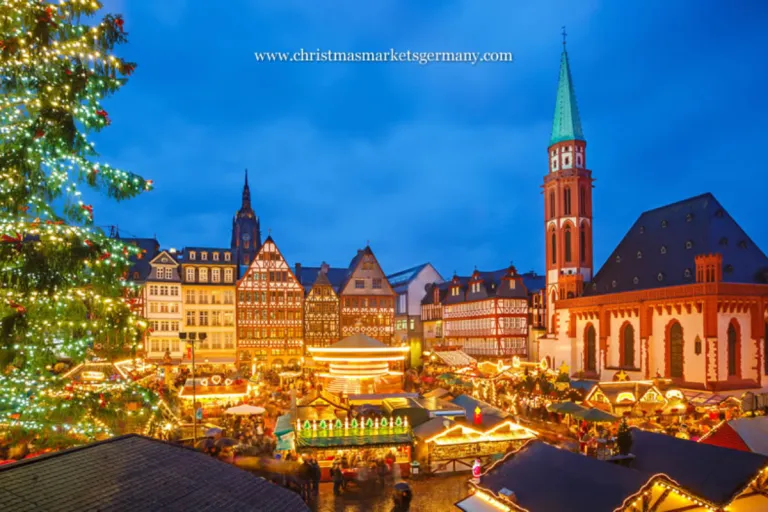 Image credit: Christmas Markets Germany | Official Website
If Germany's Christmas markets are only one part of a wider European trip, Hesse is particularly convenient because Frankfurt is one of the country's biggest international gateways.
The Frankfurt Christmas Market runs from 23 Nov to 22 Dec 2026, stretching through areas including Römerberg, Paulsplatz, Hauptwache and Mainkai. There are more than 230 stalls, so this is much bigger than the single-square market you might initially picture.
Around 40 minutes away, Wiesbaden's Sternschnuppenmarkt runs from 24 Nov to 23 Dec 2026. More than 100 stalls fill Schlossplatz and the area in front of the Marktkirche, surrounded by the market's distinctive illuminated lily decorations. There's also a Hessian WinterStubb and a Ferris wheel elsewhere in the festive city centre.
What to buy: Handmade gifts, festive decorations and regional products.
What to eat: Frankfurt's essential festive snack is Bethmännchen, small marzipan pastries traditionally decorated with almonds. Pair them with hot apple wine if you'd like to try something distinctly local.
Getting there: Frankfurt Airport and Frankfurt Hbf make arrival easy. Wiesbaden is connected to Frankfurt by S-Bahn and regional rail.
8. Mecklenburg-Vorpommern: Christmas markets in northern Germany
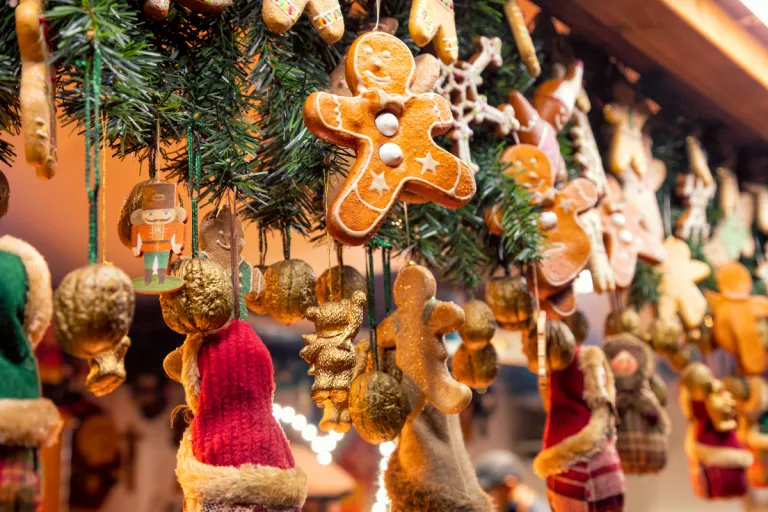 Image credit: dmitrynaumov | Canva Pro
Head towards Germany's Baltic side and you'll find markets that often receive less international attention than Bavaria or Saxony.
The Rostock Christmas Market runs from 23 Nov to 22 Dec 2026 and is one of the largest festive events in northern Germany, combining traditional stalls with rides, family areas, crafts and food.
The Schwerin Christmas Market runs from 23 Nov to 30 Dec 2026, giving travellers a useful option between Christmas and New Year. The state's capital is much smaller than Berlin or Hamburg, which can make for a more manageable festive city break. Schwerin's official events calendar confirms the 2026 market dates.
If handmade products matter more to you than scale, wintersonnenWERKE in Schwerin-Mueß takes place from 19 to 20 Dec 2026. The event focuses on regional craftspeople and handmade products.
What to buy: Keep an eye out for amber, glasswork, ceramics, gemstones, metal pieces, linen, wool and silk.
What to eat: Bratwurst, Christmas biscuits and fresh festive bakes are among the staples to look for.
Getting there: Rostock and Schwerin are both connected by rail and fit naturally into itineraries heading north from Berlin or east from Hamburg.
9. Lower Saxony: Three very different Christmas stops
Image credit: Christmas Markets Germany | Official Website
Lower Saxony gives travellers a useful mix of big-city convenience and smaller historic towns.
The Hannover Christmas Market is currently expected to run from 23 Nov to 22 Dec 2026, although the city still describes the dates as provisional. Its main appeal is variety: the central market combines a traditional Christmas market with a medieval section and a Finnish Christmas Village.
The Braunschweig Christmas Market runs from 25 Nov to 29 Dec 2026, although it closes on 24 and 25 Dec. Its setting around the cathedral and historic Burgplatz gives it a noticeably different feel from Hannover.
Then there's the Goslar Christmas Market & Christmas Forest, from 25 Nov to 30 Dec 2026. The standout feature here is the Christmas Forest itself, where dozens of illuminated fir trees transform a square in the UNESCO-listed Old Town.
What to buy: Wooden gifts, ceramics, handicrafts and Christmas decorations. Hannover's Finnish area also introduces Nordic craft products.
What to eat: Try Flammlachs and Glögi at Hannover's Finnish Village, Braunkohl and local Mumme-based drinks in Braunschweig, and baked apples and roasted almonds in Goslar.
Getting there: Hannover Hbf is the state's most useful rail hub. Braunschweig and Goslar can both be incorporated into a regional train itinerary.
10. North Rhine-Westphalia: Possibly Germany's easiest Christmas market-hopping trip
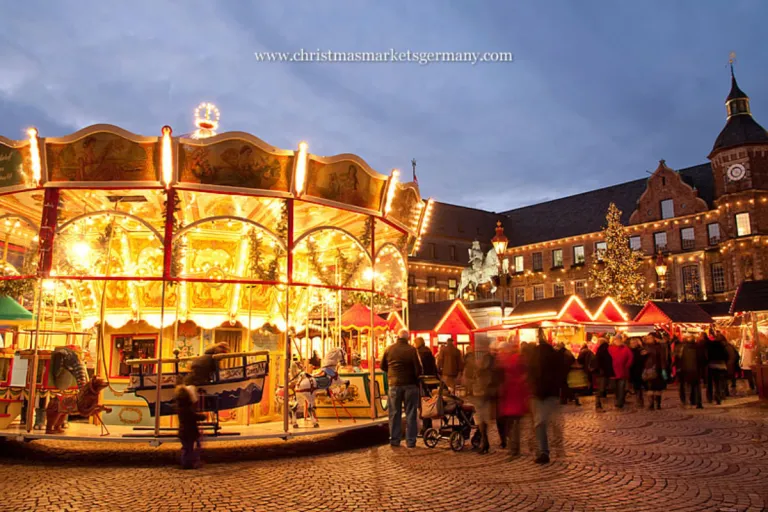 Image credit: Christmas Markets Germany | Official Website
If you want to visit several major markets without spending half your holiday moving hotels, North Rhine-Westphalia is hard to beat.
The Aachen Christmas Market runs from 20 Nov to 23 Dec 2026, spread around Aachen Cathedral and Rathaus. On 22 Nov, it opens only from 6pm to 9pm due to Remembrance Sunday.
The Düsseldorf Christmas Market runs from 19 Nov to 30 Dec 2026, giving travellers a longer window for year-end visits. Its festive areas are spread around the city centre rather than concentrated in a single square.
And then there's Cologne. The Christmas Market at Cologne Cathedral is provisionally scheduled for 16 Nov to 23 Dec 2026 and will be closed on 22 Nov. The market sits immediately beside the city's landmark cathedral and Köln Hauptbahnhof, making it exceptionally easy to add to a rail itinerary.
What to buy: Aachener Printen makes an easy edible souvenir, while Cologne and Düsseldorf offer plenty of crafts, ornaments and festive gifts.
What to eat: Printen is also the obvious thing to taste in Aachen. Elsewhere, expect roasted almonds, baked treats and the usual mix of warming Christmas-market dishes.
Getting there: Cologne, Düsseldorf and Aachen are connected by frequent trains. Cologne's Cathedral market is right beside Köln Hbf, while Düsseldorf's main markets are clustered around its centre.
11. Rhineland-Palatinate: Christmas among cathedrals and Roman history
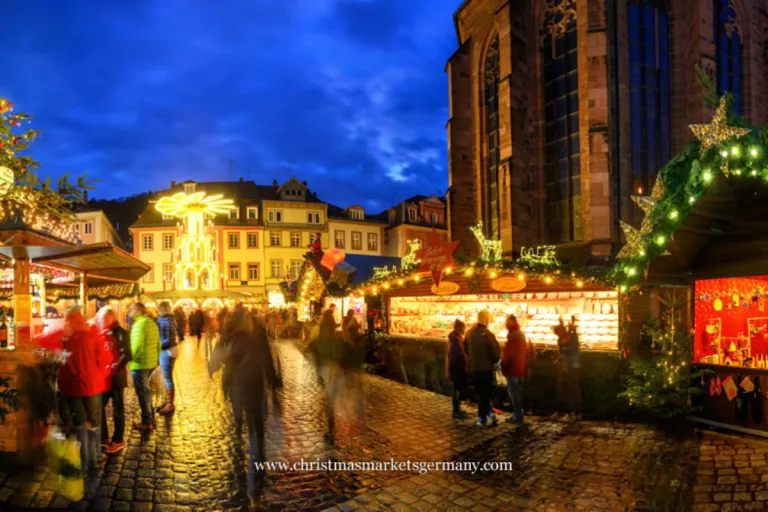 Image credit: Christmas Markets Germany | Official Website
There are few better excuses for lingering in an old German city centre than a Christmas market, and both Mainz and Trier deliver particularly atmospheric historic settings.
The Mainz Christmas Market runs from 26 Nov to 23 Dec 2026, filling the squares around the 1,000-year-old St Martin's Cathedral with decorated stalls and festive lighting.
Further west, the Trier Christmas Market runs from 20 Nov to 22 Dec 2026, although it is closed on 22 Nov for Totensonntag. The setting stretches between Trier Cathedral and the medieval Hauptmarkt, giving travellers the unusual combination of festive stalls and one of Germany's richest Roman and medieval cityscapes.
What to buy: Handmade toys, festive crafts and traditional Christmas decorations.
What to eat: Trier is particularly associated with Moselle Winzerglühwein, while Mainz delivers plenty of roasted almonds and seasonal baked goods.
Getting there: Mainz is particularly convenient from Frankfurt Airport. Trier has regional rail links towards Koblenz, Saarbrücken and neighbouring Luxembourg.
12. Saarland: One compact Christmas market that's easy to explore
Image credit: Christmas Markets Germany | Official Website
Germany's smallest non-city state doesn't require an exhausting Christmas-market itinerary.
The main event is the Saarbrücken Christkindl-Markt, running from 23 Nov to 30 Dec 2026. It stretches for around 700 metres between historic St Johanner Markt and Bahnhofstraße, with more than 80 stalls offering crafts, festive decorations and regional food.
Its relatively late closing date is another advantage for travellers arriving in Germany after Christmas.
What to buy: Regional handicrafts, Christmas ornaments and locally produced gifts.
What to eat: Saarland specialities sit alongside the usual festive snacks and hot drinks.
Getting there: Arrive at Saarbrücken Hbf and simply walk down Bahnhofstraße towards St Johanner Markt. This is one of the more straightforward markets on this list to reach without complicated transport planning.
13. Saxony: Come for the Christmas traditions, stay for the Stollen
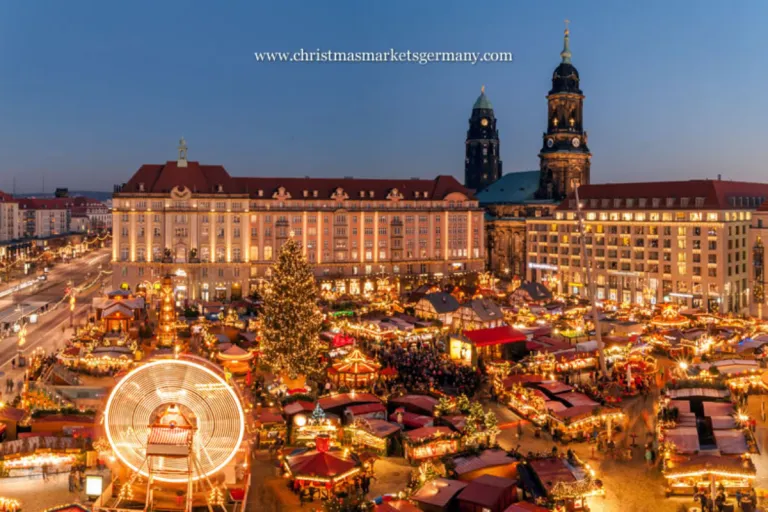 Image credit: Christmas Markets Germany | Official Website
If your ideal Christmas trip involves traditional crafts and centuries-old customs, Saxony should be high on the itinerary.
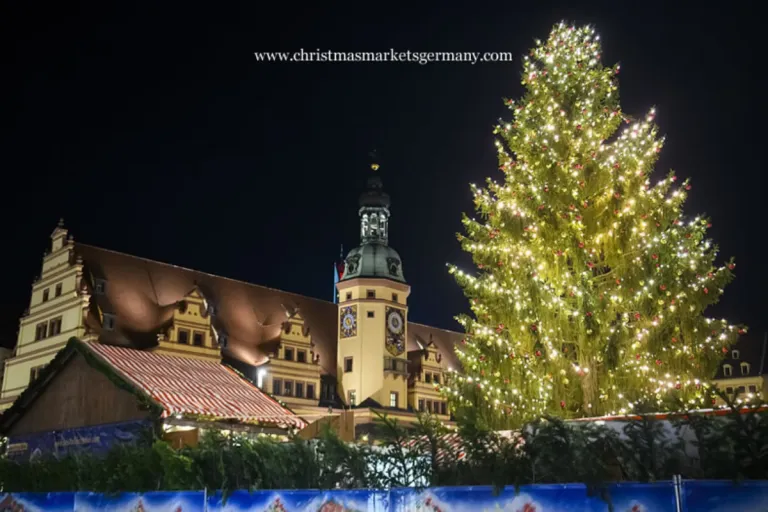
The Dresden Striezelmarkt runs from 25 Nov to 24 Dec 2026. Dating back to the 15th century, it brings together more than 200 traders, Saxon craftsmanship and some of the region's most recognisable Christmas traditions.
The Leipzig Christmas Market runs from 24 Nov to 23 Dec 2026. With roughly 250 to 300 stalls spread through the historic centre, this is the better option for travellers who enjoy wandering between multiple festive zones rather than staying within one main square.
What to buy: This is prime territory for Erzgebirge woodcraft, including wooden figures, nutcrackers, candle arches and traditional Christmas pyramids.
What to eat: Dresdner Christstollen should be at the top of your list. Dresden's Christmas season and this fruit-filled festive bread are closely intertwined.
Getting there: Both Dresden and Leipzig are major rail destinations. Dresden's Striezelmarkt is on Altmarkt, while Leipzig's market spreads across the city centre close to Leipzig Hbf.
14. Saxony-Anhalt: Half-timbered towns made for December
 For travellers who want something smaller than Berlin, Munich or Cologne, Saxony-Anhalt's Harz towns make a strong case for slowing the itinerary down.
The Quedlinburg Christmas Market runs from 25 Nov to 22 Dec 2026, surrounded by the town's UNESCO-listed half-timbered architecture.
The more unusual event is Advent in den Höfen, held on 28–29 Nov, 5–6 Dec and 12–13 Dec 2026. Historic private courtyards open for Advent, revealing small craft stalls and spaces that visitors wouldn't normally experience in the same way.
Nearby Wernigerode Christmas Market runs from 20 Nov to 22 Dec 2026 and is closed on 22 Nov. If you're travelling later, a separate Winter Market continues from 23 Dec 2026 to 6 Jan 2027.
What to buy: Regional crafts, handmade decorations and artisan gifts.
What to eat: In Quedlinburg, look out for Zimtsterne, Lebkuchen and Schmalzkringel. Wernigerode also leans heavily into Harz regional specialities.
Getting there: Both towns are in the Harz and are reached primarily by regional rail. Connections through larger hubs such as Magdeburg or Halle are common.
15. Schleswig-Holstein: Christmas with a northern European twist
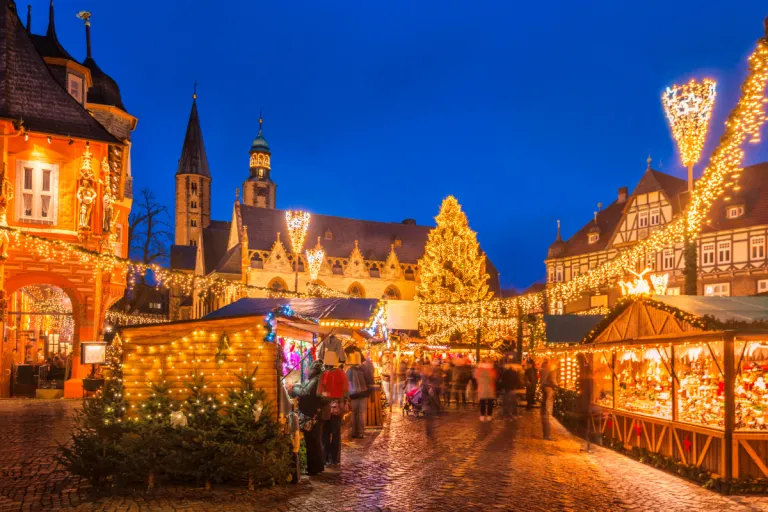 Image credit: Juergen Sack | Canva Pro
Germany's far north brings you closer to Scandinavia, both geographically and culturally.
The Lübeck Traditional Christmas Market runs from 23 Nov to 30 Dec 2026 inside the city's UNESCO-listed Old Town.
If you're serious about Christmas shopping, add the Lübeck Craft Market at St Peter's Church from 24 Nov to 14 Dec 2026, where the focus shifts towards artisan-made products rather than conventional festive stalls.
Further north, the Flensburg Christmas Market runs from 16 Nov to 30 Dec 2026. The Südermarkt section ends on 23 Dec, and the market is closed on 22, 25 and 26 Dec. Its proximity to Denmark gives Flensburg a more Nordic feel than many markets farther south.
What to buy: Ceramics, wool and textile goods, jewellery, amber, woodwork and, of course, Lübeck marzipan.
What to eat: Marzipan is practically compulsory in Lübeck. In Flensburg, look out for northern German and Nordic-influenced seasonal food.
Getting there: Hamburg makes a convenient gateway. Lübeck is an easy train ride away, while Flensburg lies much farther north near the Danish border.
16. Thuringia: Medieval cities, local food and markets that feel manageable
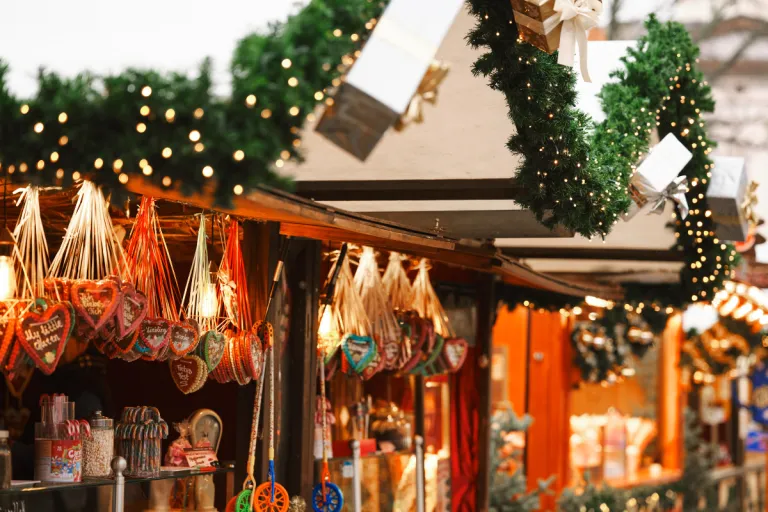 Image credit: Roberta SA | Canva Pro
Finish your Germany Christmas-market circuit in Thuringia, where several historic cities are close enough to combine by train.
The Erfurt Christmas Market runs from 24 Nov to 22 Dec 2026, beneath the city's cathedral and Severikirche. It's the state's biggest Christmas market, but its Old Town setting keeps it feeling closely connected to the city rather than like a separate fairground.
The Jena Christmas Market runs from 25 Nov to 22 Dec 2026. One tradition to look out for is Christmas brass music from the Rathaus tower at 5pm.
And for those travelling over New Year, there's the Weimarer Weihnacht from 24 Nov 2026 to 3 Jan 2027, which is particularly useful once many of Germany's more traditional Advent markets have already closed. Weimar's official city calendar confirms the season begins on 24 Nov and continues into early January.
What to buy: Thuringian crafts, handmade Christmas gifts and regional food products.
What to eat: Go straight for a Thüringer Rostbratwurst. In Erfurt, also look out for Erfurter Schittchen and traditional Pfefferkuchen.
Getting there: Erfurt Hbf is a major ICE stop and the easiest base. Weimar and Jena are both straightforward regional-train trips from there.
When should you visit Germany's Christmas markets in 2026?
 Image credit: Kzenon | Canva Pro
For the widest choice, aim for late November to around 20 Dec. That's when most of the markets in this guide overlap.
Don't automatically assume that "Christmas market" means they'll still be running over Christmas itself. Many traditional markets finish on 22, 23 or 24 Dec. If you're arriving after Christmas Day, destinations such as Berlin, Düsseldorf, Potsdam, Schwerin, Braunschweig, Goslar, Lübeck, Saarbrücken and Weimar give you more options.
Also pay close attention to 22 Nov 2026, which is Totensonntag, or Remembrance Sunday. Some markets close entirely or operate restricted hours on that date. Cologne Cathedral Christmas Market, for example, is scheduled to close, while Aachen will operate only from 6pm to 9pm.
Also read: 12 Best Oktoberfest Celebrations Around the World (That Aren’t in Munich!)
The easiest way to plan a Germany Christmas market trip
Rather than trying to tick off as many cities as possible, choose a region and build around the rail network.
A Bavaria itinerary could combine Munich, Nuremberg and Rothenburg. North Rhine-Westphalia makes Cologne, Düsseldorf and Aachen particularly easy to pair. Around Stuttgart, you can comfortably visit Stuttgart, Esslingen and Ludwigsburg without constantly changing accommodation. For something more traditional and craft-focused, Saxony works beautifully with Dresden and Leipzig.
And don't feel you need to see every market after dark. A good approach is to arrive during daylight, explore the city and browse the stalls before returning around dusk when the lights come on. You'll get both the practical side of the market and the atmosphere everyone came for.
After all, Germany's Christmas markets aren't really about finding one that's objectively the "best". The fun is deciding whether your version of Christmas looks more like a medieval town square, a cathedral glowing above rows of wooden huts, an illuminated palace or a paper bag full of warm Lebkuchen that somehow disappears before you make it back to the hotel.

About Author
Aimi is the ultimate daydreamer with a flair for adventure and an avid novel reader with a soft spot for all things fairytale. She is known for her friendly demeanor, albeit with a bit of a short temper. Forever striving to live her cutesy yet demure life.