
Erawan Museum: What to See Inside Bangkok’s Giant Three-Headed Elephant
The Erawan Museum is a gleaming gem close to the bustling heart of the Thai capital of Bangkok. Filled with striking imagery and plenty of colour, it’s definitely worth taking a few hours to visit.

Crowned by a monumental three-headed elephant, the Erawan Museum is one of the most distinctive cultural attractions near Bangkok. Here is what you will find inside its elaborately decorated halls, symbolic galleries and mythology-inspired gardens.
Bangkok has no shortage of elaborate temples and museums, but few landmarks make quite the same first impression as the Erawan Museum.
Located in Samut Prakan, just outside central Bangkok, the museum is instantly recognisable by the enormous three-headed elephant rising above its pastel-pink base. The structure is not simply an eye-catching exterior. Visitors can enter the building below it and continue upwards into the body of the elephant itself.
Inside, art, architecture, religion and mythology come together across three symbolic levels. The surrounding gardens extend the experience with shrines, sculptures and figures drawn from Thai literature.
Here is what to look out for during a visit to the Erawan Museum.
A beautiful striking building
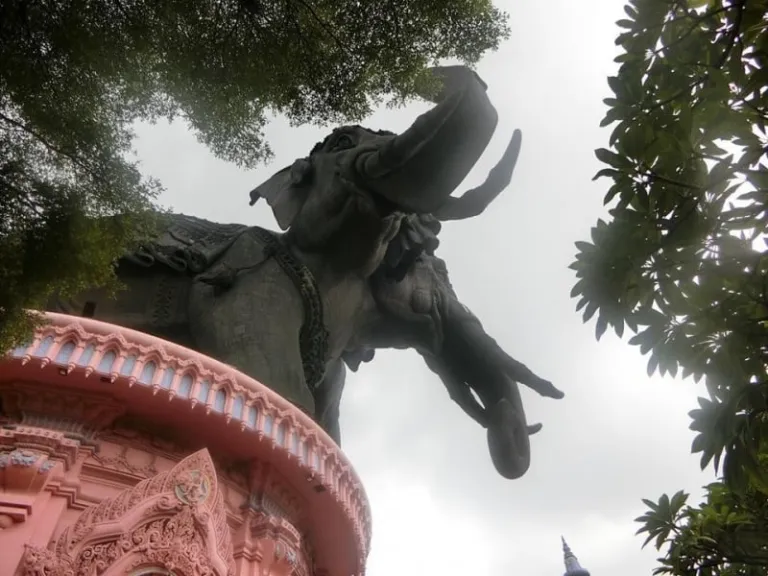
The first thing visitors see is the museum’s defining feature: a vast three-headed elephant mounted above the main building.
Known as Erawan in Thailand and Airavata in Hindu mythology, the elephant is traditionally associated with Indra, the ruler of the heavens. It is commonly depicted with three heads in Thai art, although older religious texts describe it as an even more elaborate celestial creature.
The museum’s elephant measures 29 metres tall and 39 metres long. Together with its base, the entire structure rises to approximately the height of a 14-storey building.
Its exterior was assembled from thousands of individually fitted copper sheets placed over a complex internal frame. Much of the elephant’s weight is channelled through its four legs and into the supporting structure below.
Although its scale can be appreciated from the road, take time to walk around the grounds for different views of its three heads, curved tusks and detailed exterior.
Representation of the world
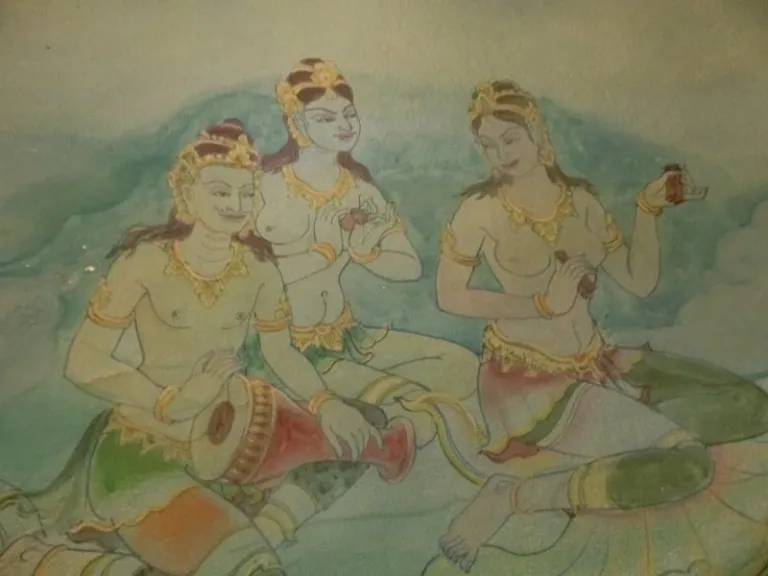
The museum is divided into three main sections representing different realms in Buddhist cosmology.
The underground level is known as Suvarnabhumi, while the central hall represents Human Earth. The highest section, located within the elephant’s body, represents the Cosmos or Heaven.
Rather than presenting its collection in conventional rows of display cases, the museum uses its architecture to guide visitors upwards through these realms. Changes in colour, lighting and decoration help give each level a distinct atmosphere.
The museum also brings together ideas and imagery from Buddhism, Hinduism, Christianity and Mahayana Buddhism. These traditions appear throughout its columns, sculptures and decorative details.
A grand entrance
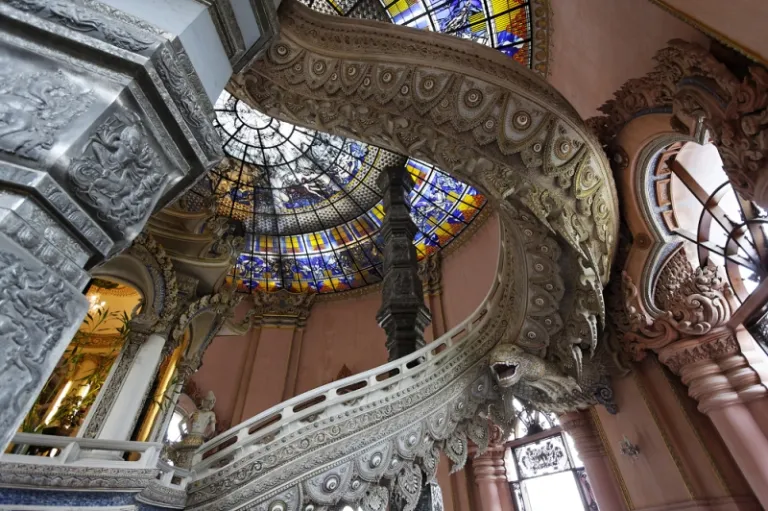
Image credit: Ddalbiez
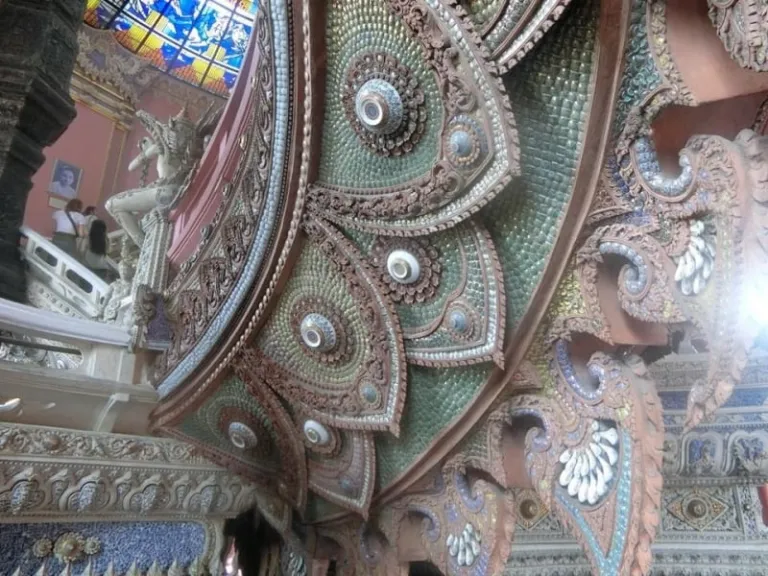
After removing your shoes, you enter the museum’s main circular hall.
The interior is predominantly pink, with sweeping staircases curving around a central shrine. Decorative plasterwork, mosaics, ceramics and sculptures cover much of the room, making the architecture itself one of the museum’s main exhibits.
Four large pillars help support the elephant above. Each is decorated with imagery connected to a different religious tradition, including Buddhism, Hinduism, Christianity and Mahayana Buddhism.
Look upwards to see the stained-glass ceiling, one of the hall’s most memorable features. Created by German artist Jacob Schwarzkopf, the glass represents the four natural elements through four principal colours: yellow for earth, white for wind, red for fire and blue for water.
Zodiac signs and celestial imagery surround the central design, reinforcing the museum’s wider themes of the earth and the universe.
Fascinating interiors
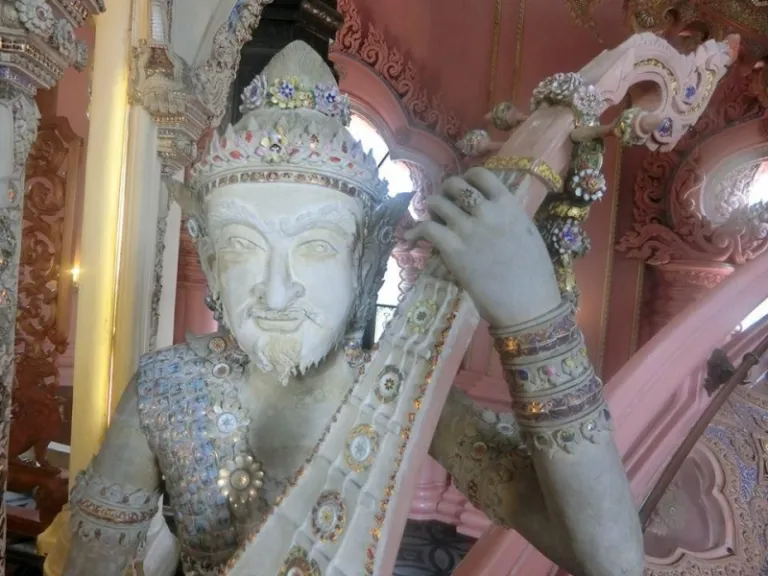
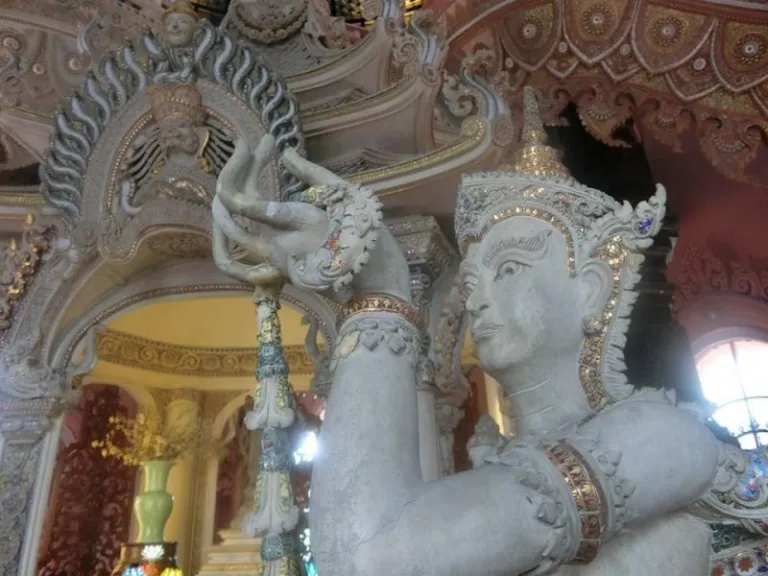
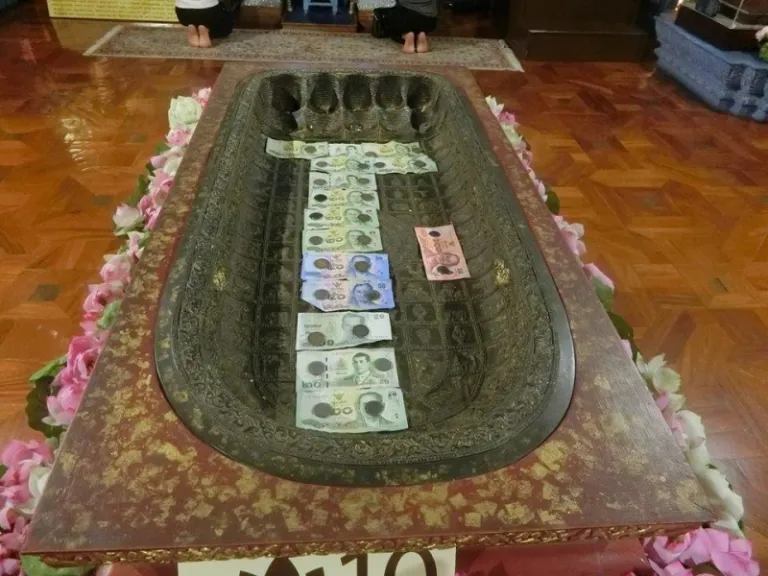
From the Human Earth hall, a pair of curved staircases leads towards the museum’s upper level.
The passage becomes narrower as you climb, while painted figures of gods and celestial beings appear along the walls. The transition is designed to create the impression of leaving the human world and moving towards heaven.
Visitors who cannot manage the stairs may use the lift located within one of the elephant’s legs.
The staircase eventually emerges inside the body of the elephant, where the colours and atmosphere change considerably from the brighter hall below.
The quiet Cosmos level
The uppermost gallery is known as the Cosmos level.
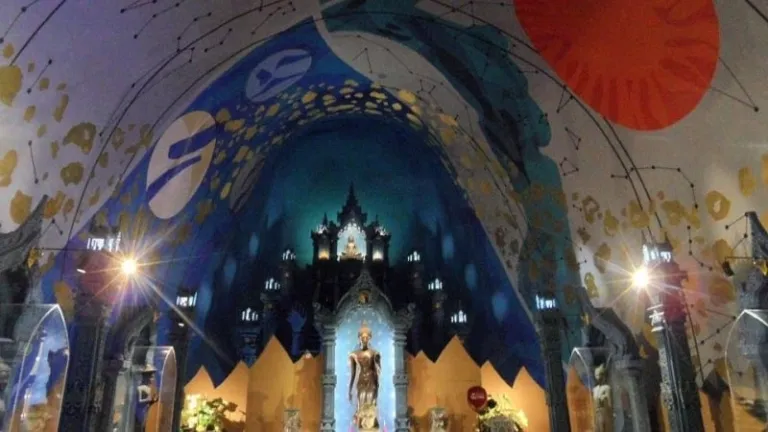
Unlike the richly decorated central hall, this room is dimly lit and contemplative. Its curved blue ceiling is painted with planets, stars and other celestial forms, representing the wider universe.
A Buddha footprint occupies the centre of the room, while Buddha images from different periods of Thai history are displayed around the walls. A Sukhothai-style Buddha forms the main focus at the front of the chamber.
The space continues to function as a place of worship, so visitors should speak quietly and be considerate of people who have come to pray.
The combination of subdued lighting, religious art and the unusual curved interior makes this one of the museum’s most distinctive sections.
An underground museum
The lowest level of the museum represents Suvarnabhumi and the world beneath Human Earth.
This gallery houses objects from the private collection of museum founder Lek Viriyaphant. Exhibits include religious images, ceramics, porcelain and examples of traditional Benjarong ware.
The lower ceilings, curved walls and enclosed display areas give this level a different character from the open hall upstairs.
Lek Viriyaphant was also behind two other major cultural landmarks in Thailand: the Ancient City in Samut Prakan and the Sanctuary of Truth in Pattaya. Like those attractions, the Erawan Museum was created not only to preserve individual artefacts, but also to communicate broader ideas about religion, art and Asian philosophy.
Sublime grounds and gardens
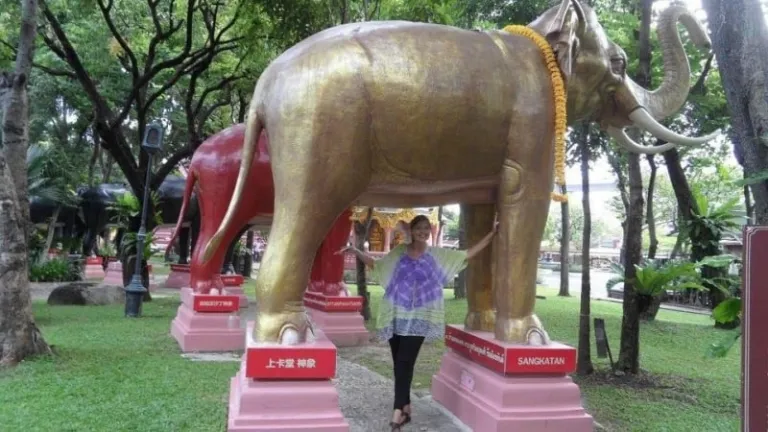
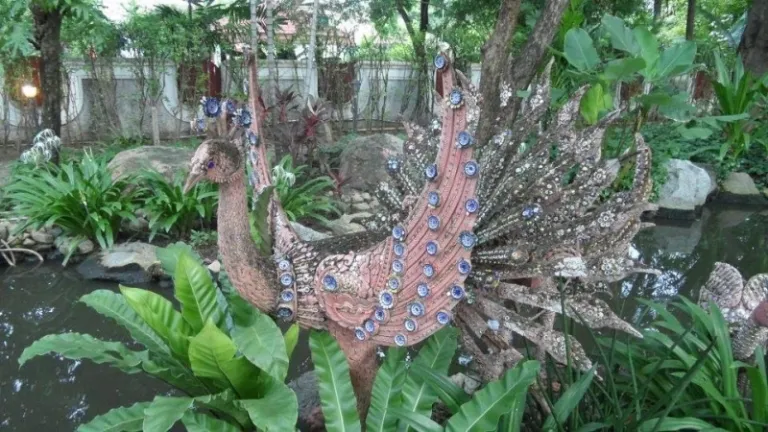
The museum experience continues outdoors, where landscaped gardens surround the main structure.
Paths pass ponds, footbridges, shrines and sculptures inspired by the Himmapan Forest, a mythical realm described in Buddhist and Hindu traditions. Figures of nagas, elephants and other legendary creatures appear among the trees and water features.
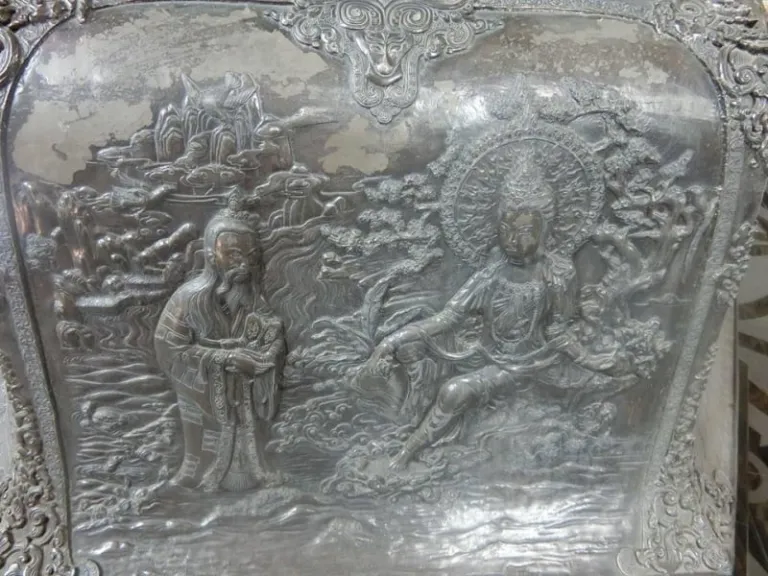
Several shrines are used by local worshippers, including those dedicated to Brahma, Ganesha, Trimurti, Guan Yin and Indra riding Erawan.
The grounds also follow a pilgrimage route linking ten sacred points around the museum. Visitors may receive flowers, incense and a lotus with their admission ticket for use at the relevant worship areas.
You do not need to follow the complete religious route to enjoy the gardens, but it is important to remember that the museum remains an active spiritual site rather than merely a photography location.
Practical information for visiting the Erawan Museum
Location: 99/9 Moo 1, Bang Mueang Mai, Mueang Samut Prakan, Samut Prakan
Opening hours: Daily from 9am to 6pm
Last ticket sale: 5pm
Admission: ฿500 for adults and ฿250 for children
Getting there: Take the BTS Sukhumvit Line to Chang Erawan Station, also known as E17. From there, follow the signs towards the museum and continue on foot or take a short local ride.
Dress code: Wear clothing that covers the shoulders and knees. Sleeveless tops and very short skirts or shorts may not be accepted.
Other rules: Food and drinks are not permitted inside the museum building. Remove your shoes before entering designated areas, keep noise to a minimum and avoid disturbing worshippers.
Audio guides are available in several languages, including Thai, English, Chinese, Korean and Russian.
Allow approximately two hours to see the three museum levels and walk through the gardens without rushing. Visiting earlier in the day may offer more comfortable temperatures for exploring the outdoor areas.
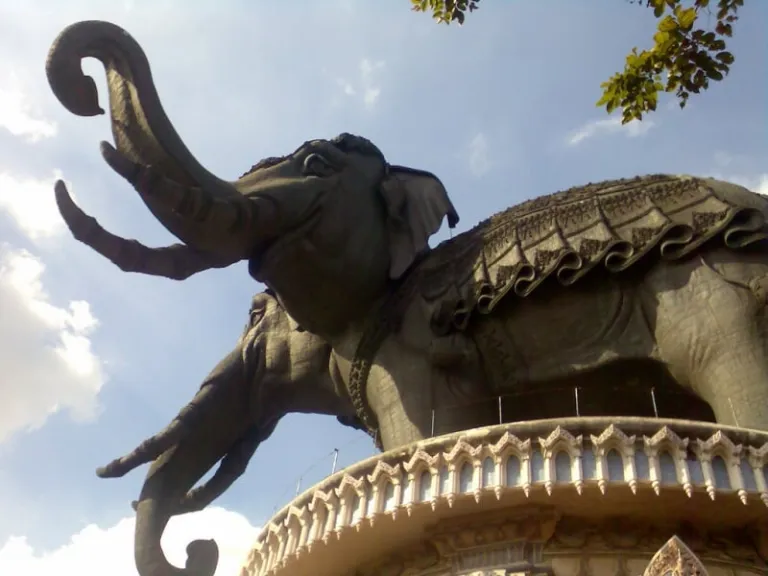
Image credit: neajjean
Is the Erawan Museum worth visiting?
The Erawan Museum is worth considering for travellers interested in Thai mythology, religious art and unusual architecture.
It is farther from central Bangkok than attractions such as the Grand Palace or Wat Pho, but the direct BTS connection makes the journey considerably easier than it once was. It can also be paired with the Ancient City, another attraction founded by Lek Viriyaphant in Samut Prakan.
The giant elephant may be what first draws visitors in, but the museum’s symbolic progression from the underground realm to the Cosmos gives the attraction more depth than its dramatic exterior initially suggests.
