
A DIY Tour of Doi Inthanon: Hiking and More!
Don’t just take a peek at Thailand’s highest peak! Here are some other things you can do to fully enjoy Thailand’s natural beauty.

Thailand may be best known for tropical beaches, buzzing cities and affordable shopping, but its northern highlands reveal a completely different side of the country. Doi Inthanon National Park combines misty forests, waterfalls, mountain viewpoints and walking trails around Thailand’s highest peak.
Located within day-trip distance of Chiang Mai, the park can be explored independently if you plan your transport carefully. Here is what you need to know before organising a DIY Doi Inthanon tour.
About Doi Inthanon
Standing 2,565 metres above sea level, Doi Inthanon is Thailand’s highest mountain. It lies within Doi Inthanon National Park, a protected area covering approximately 482 square kilometres southwest of Chiang Mai.
The park was named in honour of King Inthawichayanon, one of Chiang Mai’s last rulers, who supported the preservation of northern Thailand’s forests. His remains were placed near the summit following his death.
Beyond the country’s highest point, the park contains cloud forests, waterfalls, walking trails, agricultural communities and the Royal Twin Pagodas.
How to get to Doi Inthanon
Chiang Mai is the nearest major city to Doi Inthanon. The main park entrance is approximately 70 kilometres southwest of the city centre, while the summit is considerably farther along the mountain road.
Visitors can travel by songthaew, join a guided tour, hire a private driver or drive themselves.
Public transport
Travelling to Doi Inthanon by public transport is possible but inconvenient.
Yellow songthaews run from the Chiang Mai Gate area to Chom Thong, where passengers can transfer to another songthaew travelling towards the park headquarters. Services do not follow a reliable tourist timetable and drivers may wait until enough passengers have boarded before departing.
The second songthaew does not normally continue to major attractions such as the summit, Royal Twin Pagodas or principal hiking trails. As the sights are spread across considerable distances, this option is unsuitable for travellers hoping to see the park’s main highlights in one day.
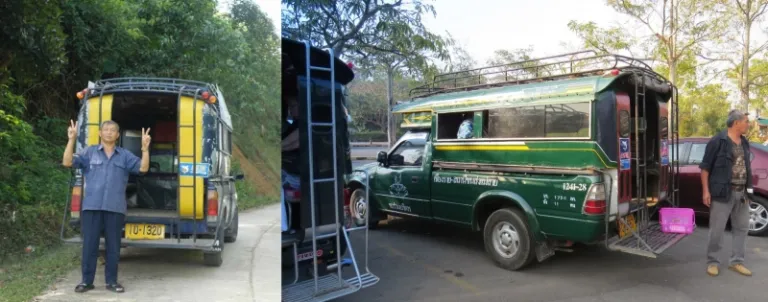
Image credit: Hanumann (left), Kathy (right)
Joining a day tour is the easiest option for travellers who do not want to navigate the mountain roads. Tours commonly include hotel transfers, the summit, Royal Twin Pagodas, Wachirathan Waterfall and either a village or nature trail.
Prices vary considerably according to group size, itinerary and inclusions. Before booking, check whether the national park entrance fee, Royal Twin Pagodas admission, meals and any required local hiking guide are included.
Hiring a private car and driver offers greater flexibility. Confirm the intended stops and total price before departure, as attractions such as Mae Ya Waterfall require substantial detours from the main summit road.
Tour groups
The easiest and fool-proof option is to join a tour group. Tour groups can easily be found on trusted third-party travel websites or offered by accommodations in Chiang Mai. If you want more freedom on which attractions to visit in National Park, you can opt to hire a car and driver from Chiang Mai. Do keep in mind that you’ll need to tell your driver which attractions you want to stop by in advanced as prices may fluctuate according to distance. The price for a day trip by a tour group or private hire range from US$75 to US$100.
Self-drive
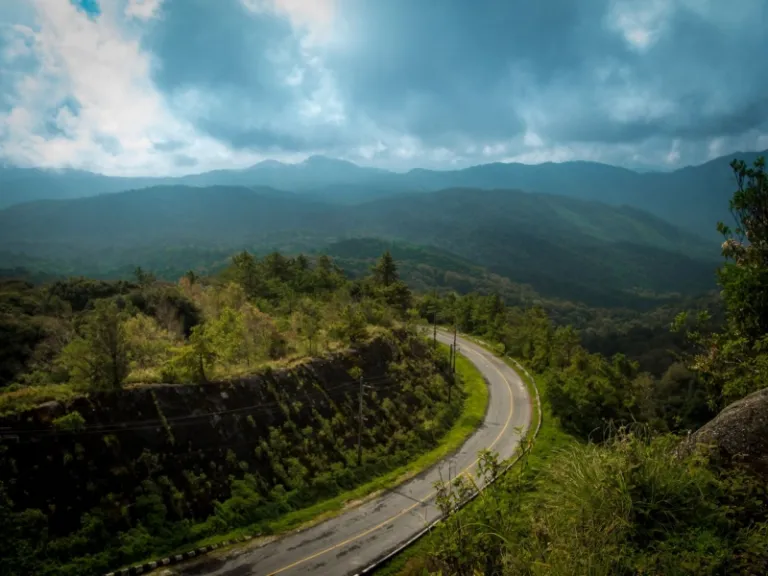
Image credit: Grant Mallory
Renting a car provides the greatest flexibility for a DIY Doi Inthanon trip. Route 1009 leads through the park and continues towards the summit, with parking available near many major attractions.
The road becomes steep and winding at higher elevations. Drive cautiously around blind corners and be prepared for rain, fog and reduced visibility.
Visitors driving in Thailand should carry their national driving licence and an appropriate International Driving Permit. Anyone renting a scooter must possess a valid motorcycle licence and confirm that their travel insurance covers motorcycle use.
The long ascent, sharp bends and cold conditions make the scooter journey unsuitable for inexperienced riders.
Things to do or see at
National Park offers an endless number of things to do and see. You might even need to spend a few weeks here if you want to see it all! If you don’t have the luxury of time, here are the main highlights of the national park you simply cannot miss when you’re there:
1. Summit
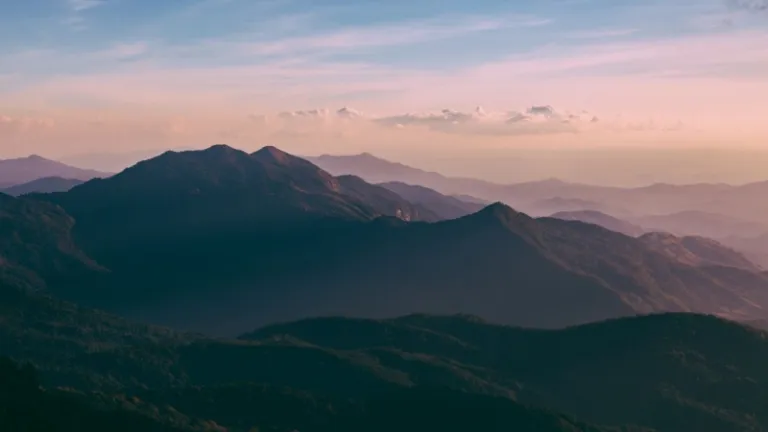
Image credit: Ash Edmonds
The road continues almost all the way to Doi Inthanon’s 2,565-metre summit, so reaching Thailand’s highest point does not require a demanding climb. From the parking area, a short path leads to the summit marker and a memorial dedicated to King Inthawichayanon.
Do not expect uninterrupted panoramic views from the summit itself, as the highest point is surrounded by dense forest and is frequently covered in mist. The nearby Ang Ka Luang Nature Trail is arguably the greater highlight, leading visitors along a short boardwalk through a cool, moss-covered cloud forest.
Temperatures near the summit can be surprisingly low, particularly around sunrise and during the cool season.
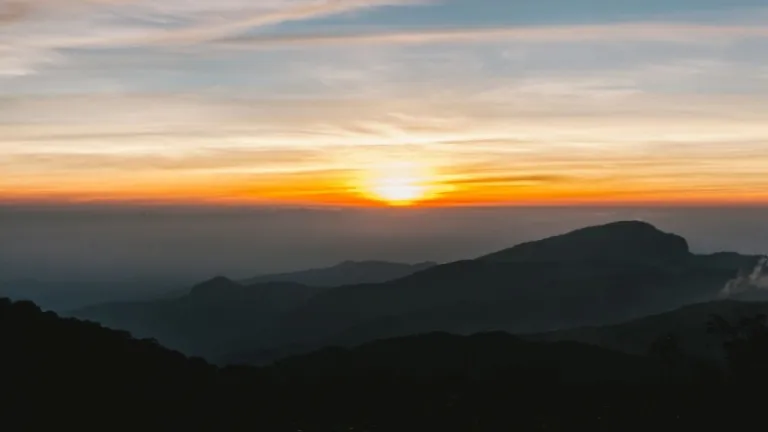
Image credit: NARENRITTATONGJAI
2. The Royal Twin Pagodas
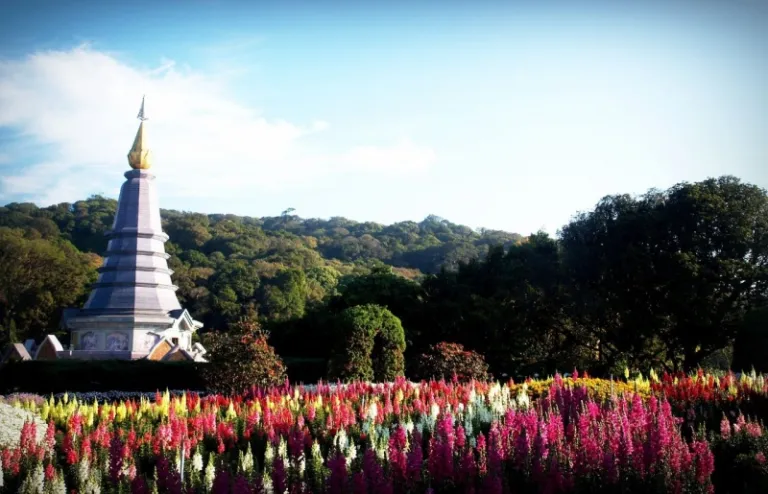
Image credit: 41330
Approximately five kilometres below the summit stand two pagodas built in honour of King Bhumibol Adulyadej and Queen Sirikit.
Phra Mahathat Naphamethanidon was completed in 1987 to commemorate King Bhumibol’s 60th birthday. The neighbouring Phra Mahathat Naphaphonphumisiri was completed in 1992 for Queen Sirikit’s 60th birthday.
Landscaped gardens surround both structures, while viewpoints overlook the mountains and valleys to the west. Escalators assist visitors in reaching the upper levels, although their availability may depend on maintenance and weather conditions.
A separate admission fee applies because the pagodas are not administered directly by the national park.
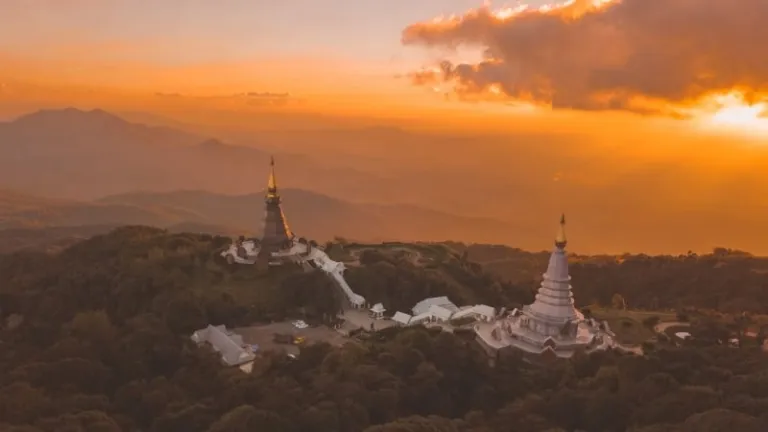
Image credit: Bharath Mohan
3. Waterfalls
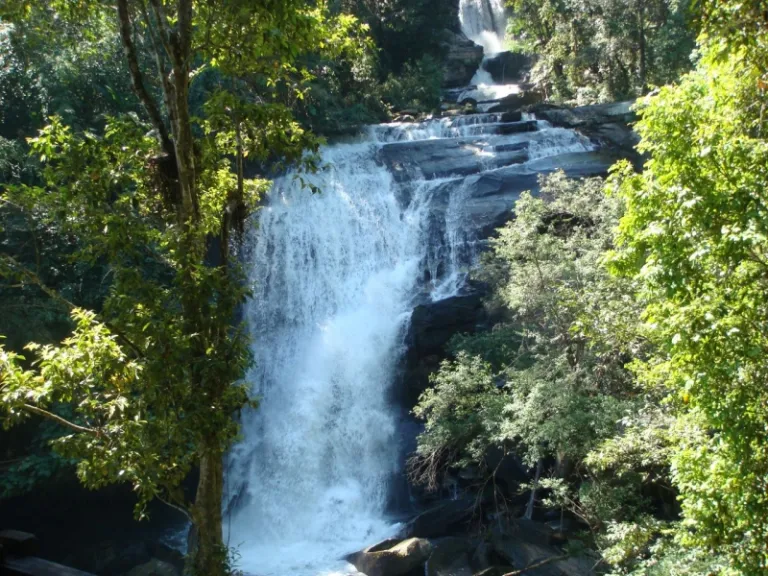
Image credit: Yuval Haimovits
Doi Inthanon contains numerous waterfalls, several of which can be reached by short paths from nearby parking areas. Water levels are usually highest during and shortly after the rainy season, although conditions vary throughout the year.
Mae Klang Waterfall is located near the lower park entrance, while the multi-tiered Mae Ya Waterfall lies along a separate road south of the main route. Mae Ya requires additional travel time but is among the park’s most impressive cascades.
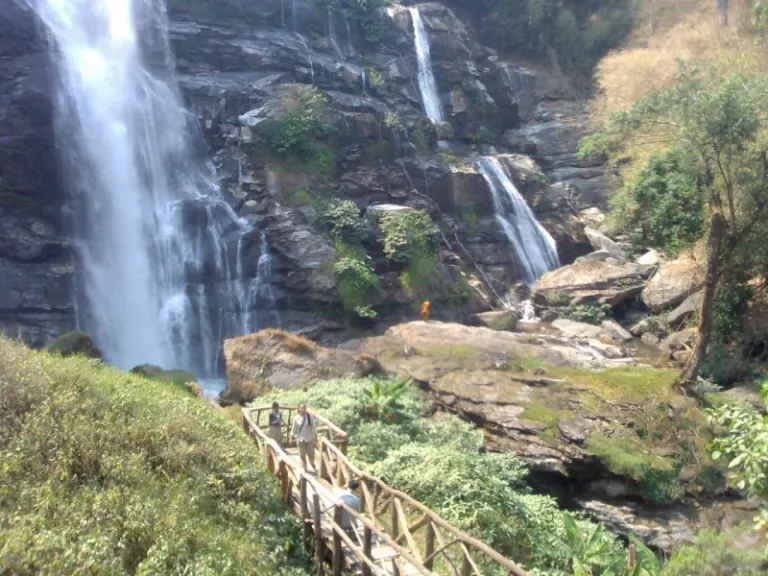
Image credit: Chris Davis
Wachirathan Waterfall is one of the easiest stops to incorporate into a summit itinerary. Its powerful flow creates considerable spray, so the surrounding paths can become wet and slippery.
Swimming should not be presented as a standard activity at the park’s waterfalls. It is prohibited at Wachirathan, and conditions elsewhere can be dangerous because of strong currents, slippery rocks and sudden changes in water level. Follow posted signs and instructions from park officials.
4. Hiking Trails
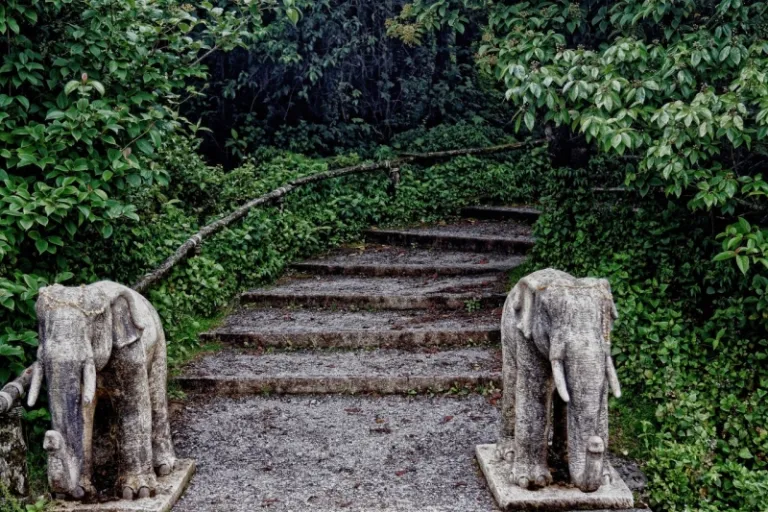
Image credit: jay joslin
Doi Inthanon offers several trails ranging from short boardwalks to longer guided walks.
Ang Ka Luang Nature Trail is the easiest option. Located close to the summit, the short boardwalk passes through an atmospheric cloud forest filled with mosses, ferns and other high-altitude vegetation.
Kew Mae Pan Nature Trail offers a longer hike through forest and open mountain scenery. A local guide is compulsory, and the trail normally closes from June through October to allow the ecosystem to recover during the rainy season. Exact reopening dates can vary, so confirm access before travelling.
Pha Dok Siew Nature Trail is another guided option, passing through forest, farmland and waterfalls before reaching a Karen community. Trail conditions and guide arrangements should be checked locally.
Wear shoes with sufficient grip, particularly during or shortly after wet weather.
5. Royal Agricultural Station Inthanon
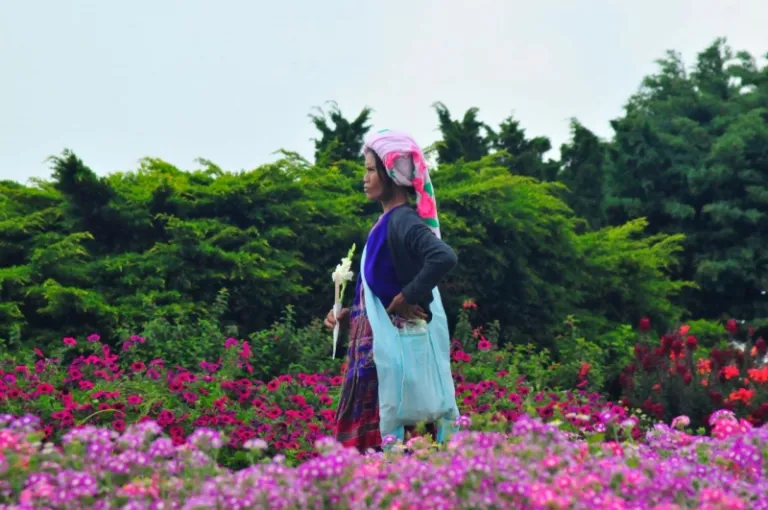
Image credit: Boudewijn Huysmans
Royal Agricultural Station Inthanon was established in 1979 as part of the Royal Project’s efforts to improve highland livelihoods, promote alternative crops and reduce opium cultivation.
The station conducts research into temperate flowers, vegetables, fruit and other highland produce. Visitors can explore landscaped areas and learn more about agricultural practices adapted to the mountain environment.
A small separate entrance fee may apply.
Where to stay at Doi Inthanon
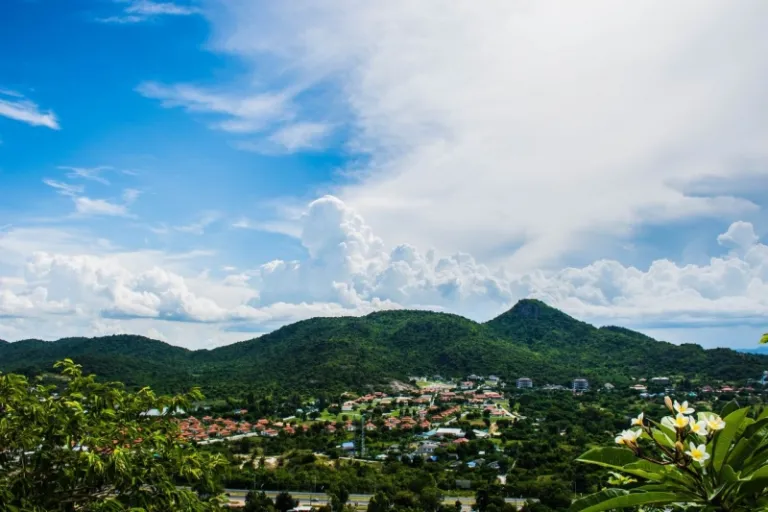
Image credit: Pongdanai
Although Doi Inthanon is commonly visited as a day trip, staying overnight allows more time for its waterfalls, trails and agricultural communities.
Camping
The main campsite is located near the park headquarters. It generally operates during the cooler months, although opening dates can change according to weather and park conditions.
Tents and basic camping equipment may be available for rent. Confirm current availability and charges directly with the park before travelling. Temperatures can fall close to freezing during the coolest periods, so proper warm clothing and sleeping equipment are essential.
Bungalows
National park accommodation is also available near the headquarters area. Prices depend on the size and type of bungalow.
Reservations are managed by Thailand’s Department of National Parks, but online availability and payment procedures can change. Contact the park or check the official booking system before arrival rather than relying on obtaining a bungalow on the day.
Tips when visiting Doi Inthanon
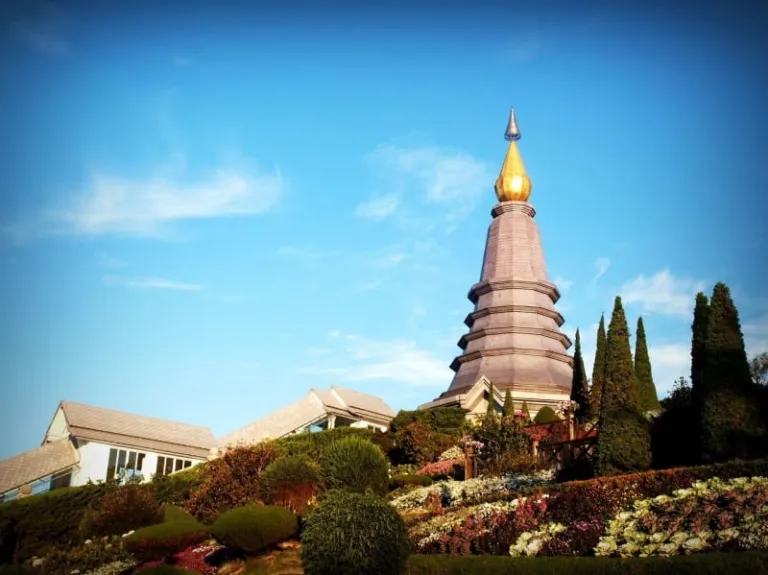
Image credit: 41330
Foreign visitor admission is currently 300 baht for adults and 150 baht for children aged three to 14. Vehicle charges are 30 baht for a car and 20 baht for a motorcycle.
The Royal Twin Pagodas currently charge a separate entrance fee of 100 baht per person. Fees should be reconfirmed before visiting.
Keep your park ticket with you, as it may be checked at different attractions and access points.
Pack a jacket or several light layers. Conditions near the summit can be considerably colder than in Chiang Mai, especially early in the morning.
Food is available at several locations, including around the summit, pagodas, markets and major waterfalls. Operating hours may be limited, so bringing water and some snacks is still advisable.
Visit on a weekday if possible. Weekends, New Year, Songkran and other Thai public holidays can bring heavy traffic and large crowds.
Northern Thailand’s burning season, generally occurring between February and April, can reduce visibility and affect air quality.
Check current weather, trail closures and park announcements before setting out.
Doi Inthanon is much more than a quick photo stop at Thailand’s highest point. Give yourself enough time to explore its cloud forests, waterfalls, viewpoints and walking trails, and it can become one of the most rewarding additions to a Chiang Mai itinerary.

About Author

Sara’s passions in life are travelling, writing and eating. When she’s not in a window seat of a plane, she’s either cafe-hunting or exploring new neighbourhoods.