
Angkor vs. Bagan: Which Should You Visit?
Trying to decide between Cambodia’s Angkor and Myanmar’s Bagan? Let this guide, covering the historical sites and beyond, help you pick!

Angkor in Cambodia or Bagan in Myanmar?
Both rank among Southeast Asia’s most extraordinary archaeological landscapes. Angkor is known for immense stone temples and intricate Khmer carvings, while Bagan spreads thousands of Buddhist monuments across a vast plain beside the Ayeyarwady River.
As of July 2026, however, this is no longer an equal practical choice. Bagan is in Myanmar’s Mandalay Region, where ongoing conflict has prompted official warnings against non-essential travel. Angkor is therefore the more realistic option for most leisure travellers at present.
This comparison explores what makes both destinations remarkable, while recognising that conditions in Myanmar will need to improve before many travellers can responsibly consider Bagan again.
Important travel note
Myanmar’s security situation remains volatile, and travel restrictions can be introduced at short notice. Anyone considering a future trip to Bagan should consult the latest advice issued by their own government and confirm that suitable travel insurance is available.
Conditions can change, so current advisories should always take precedence over itinerary inspiration.
A little background
Bagan flourished between the 11th and 13th centuries, when it served as the capital of a powerful regional empire. Its rulers and residents built an exceptional collection of Buddhist temples, stupas, monasteries and pilgrimage sites.
Today, the UNESCO-listed cultural landscape contains 3,595 recorded monuments and structures, together with murals, inscriptions, sculptures and active places of worship.
Angkor encompasses the remains of successive capitals of the Khmer Empire from the ninth to the 15th century. The archaeological park covers approximately 400 square kilometres and includes Angkor Wat, Bayon, Ta Prohm and numerous smaller temples, reservoirs and ancient urban features.
Angkor Wat was constructed in the early 12th century under King Suryavarman II and was originally dedicated to the Hindu god Vishnu. It later became an important Buddhist site.
Entrance Fees
Verdict: Angkor > Bagan for present-day accessibility
Angkor Archaeological Park currently offers a one-day pass for US$37, a three-day pass for US$62 and a seven-day pass for US$72. The three-day pass can be used within seven days, while the seven-day pass remains valid for 30 days.
The latest publicly reported Bagan Archaeological Zone fee is 30,000 kyats, with a validity period of three days. Travellers should verify the fee locally if leisure travel becomes advisable again, as prices and procedures may change.
Gigantic Temples
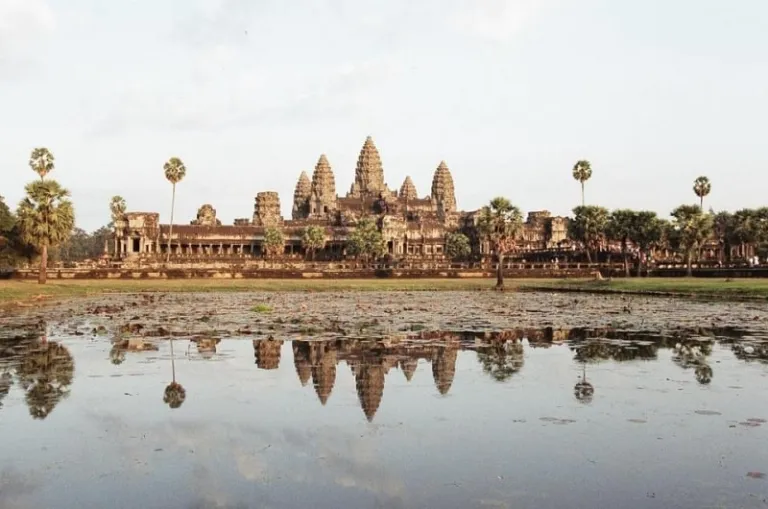
Angkor Wat
Verdict: Angkor > Bagan
Angkor wins when it comes to monumental scale. Even a brisk walk through Angkor Wat can take well over an hour, especially once you begin exploring its courtyards, galleries, bas-reliefs and central towers.
Nearby, Bayon is distinguished by its monumental stone faces and densely carved galleries. Ta Prohm offers a completely different atmosphere, with enormous tree roots curling over parts of the temple complex. It also gained international fame as a filming location for Lara Croft: Tomb Raider.
Bagan has several imposing monuments of its own, but Angkor’s largest temples feel more like entire architectural worlds than individual buildings.
Varieties of Temples
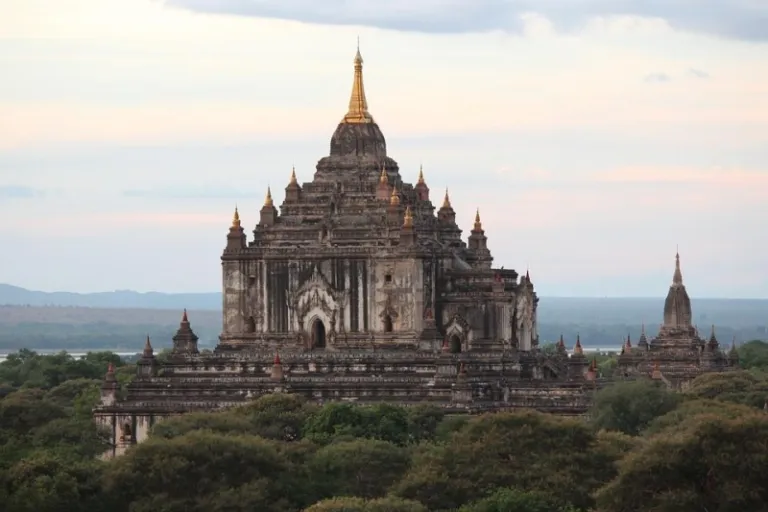
Than Bin Nyu temple
Verdict: Bagan > Angkor
Bagan’s strength is the extraordinary variety of monuments scattered across its plains.
Dhammayangyi is known for its immense mass and unusually precise brickwork, while Thatbyinnyu rises above much of the surrounding landscape. Ananda Temple is admired for its balanced design and standing Buddha images, and Myazedi is associated with one of Myanmar’s most historically important multilingual inscriptions.
Shwezigon Pagoda, Lawkananda Pagoda and numerous smaller temples demonstrate how Bagan remained both an archaeological landscape and a living centre of Buddhist worship.
Angkor offers considerable architectural variety too, but Bagan’s sheer concentration of differently shaped temples, stupas and monasteries gives it the edge in this category.
Sunrise/Sunset Viewpoints
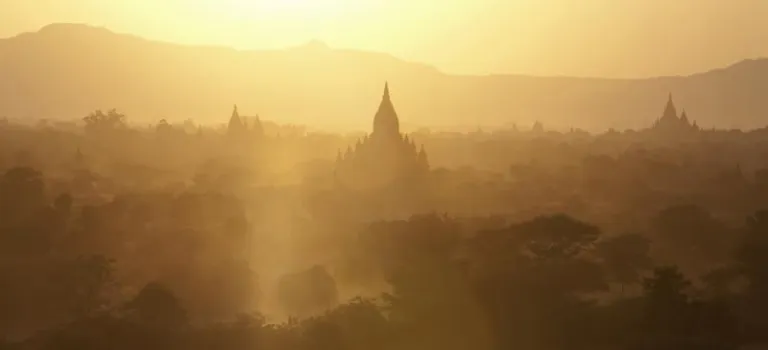
Sunrise view of Bagan
Verdict: Angkor > Bagan for now
Bagan’s temple-filled horizon remains one of Southeast Asia’s most recognisable landscapes. However, visitors should no longer expect to climb monuments such as Shwesandaw or Pyathetgyi for sunrise and sunset. Access has been restricted to protect the structures and improve visitor safety.
When travel becomes advisable again, use authorised ground-level viewpoints or designated viewing areas and follow instructions from heritage officials.
At Angkor, sunrise at Angkor Wat remains the classic experience. Arrive early, expect crowds and remember that cloud cover can be unpredictable. For a quieter visit, consider exploring the temple after the initial sunrise crowd begins to disperse.
Food
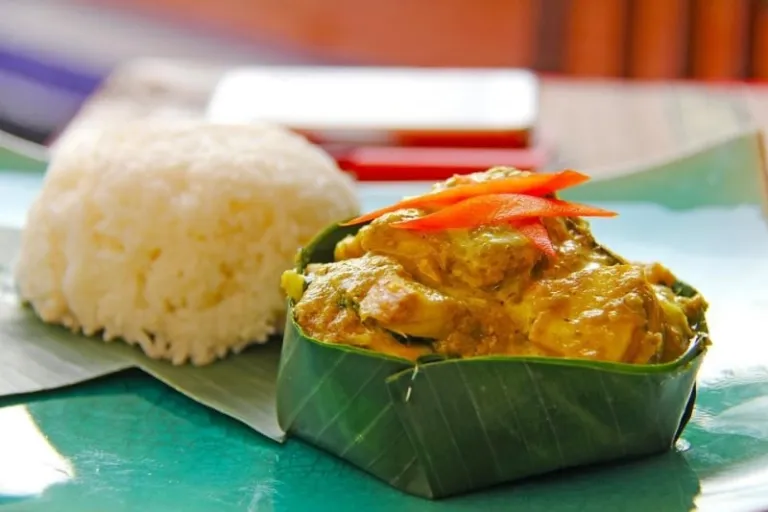
Fish Amok curry with rice
Verdict: Angkor > Bagan
Siem Reap has a broad dining scene ranging from market stalls and family-run Khmer restaurants to cafés and contemporary tasting menus. Fish amok remains one of the best-known Cambodian dishes, although travellers should also try Khmer curry, nom banh chok and grilled meats served with local herbs and sauces.
Bagan traditionally offers Burmese dishes such as tea-leaf salad, curries, noodles and rice accompanied by several small side dishes. Its restaurant scene is generally quieter and less extensive than Siem Reap’s.
Because menu prices can vary considerably by restaurant and season, fixed meal estimates are best avoided.
Nightlife
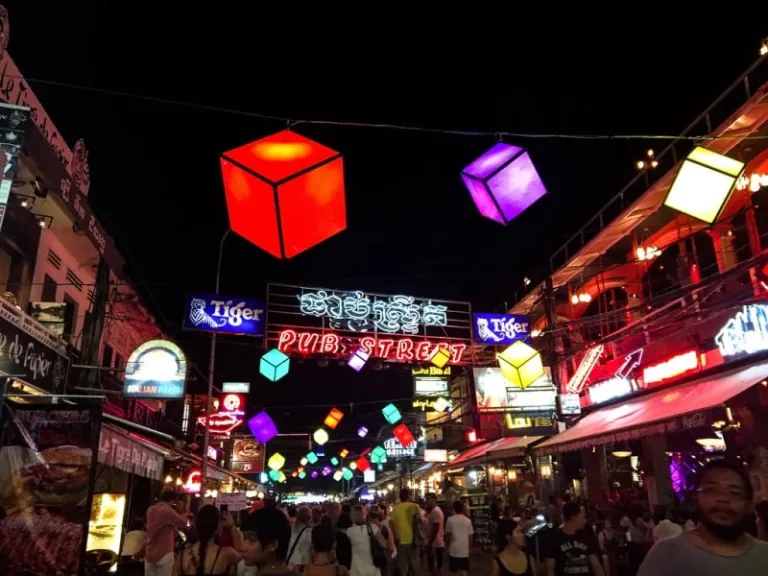
Pub Street | Image credit: Adam Foster
Verdict: Angkor > Bagan
Siem Reap is the clear winner for nightlife. Pub Street and the surrounding lanes contain restaurants, bars, night markets and late-opening cafés catering to a wide range of budgets.
Travellers looking for an evening performance can also consider Phare, The Cambodian Circus, which combines theatre, music and acrobatics while supporting Cambodian artists.
Bagan has traditionally been much quieter after dark, with most evenings centred on dinner at a hotel or local restaurant.
Ease of Communication
Verdict: Angkor > Bagan
Siem Reap has a well-developed tourism industry, and English is commonly used at hotels, restaurants, ticket offices and major attractions. Travellers may still encounter language barriers, but arranging transport and guided tours is generally straightforward.
Communication outside tourism-oriented businesses can vary in both countries. Learning a few polite phrases and using a translation app can make interactions easier.
Currency Use
Verdict: Angkor > Bagan
The Cambodian riel is Cambodia’s official currency, although US dollars remain accepted by many tourism businesses. Change may be returned in riel, and worn or damaged US banknotes can be refused. Carrying some riel is therefore useful for markets, smaller purchases and transport.
Myanmar uses the kyat. Exchange rates, cash availability and payment conditions can be unpredictable, especially during periods of political and economic instability. Travellers should check current financial and legal guidance before any future visit.
Final Verdict: Where should you visit?
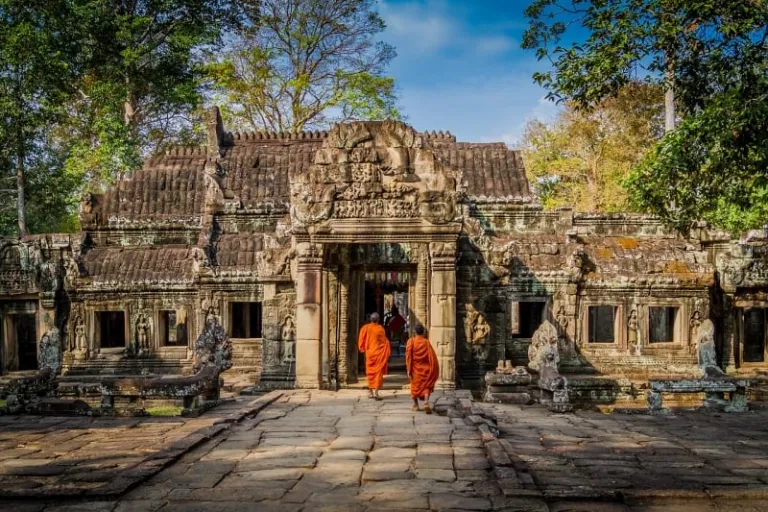
A temple in Angkor
Final Verdict: Where should you visit?
If you are choosing between Angkor and Bagan for a trip in the near future, Angkor is the clear recommendation.
Its monumental temples, established tourism infrastructure and wide selection of accommodation, restaurants and guides make it easier to plan and experience responsibly.
Bagan remains one of Southeast Asia’s great cultural landscapes. Its thousands of Buddhist monuments and expansive plains deserve recognition, but its appeal should not overshadow Myanmar’s present security situation. For now, it is more responsible to postpone a leisure visit and reconsider only when official travel advisories and local conditions improve.

About Author

Zaw enjoys three things in life the most: eating, making new friends, and travelling. To enjoy all three things that he loves, he often travels where he can eat new dishes and make new friends. Zaw has travelled extensively in Southeast Asia (Myanmar, Singapore, Thailand, Cambodia, Vietnam) and it does not matter whether he has to travel alone or with the group. All that matters to him is to travel.